


Is Thailand a good place to live with kids?
For my family, yes. Living in Thailand with kids has been one of the best decisions we ever made. Life is more relaxed, people truly love children, and we can afford more time together as a family. It is not perfect, of course. Traffic, heat, and visas can be stressful. But overall, we are happier here than we ever were in Germany.
Our Experience Living in Thailand as a Family
Are you thinking about moving to Thailand with your kids? Do you have doubts and don’t know what to expect? You’re not alone.
Many families are looking to escape Western countries and create a better, more enjoyable life for their children. I’ve got you covered! We moved to Thailand in 2019 with our two-year-old daughter, and two years later, our second daughter was born here.
So here it is, our experience of living in Thailand with kids. I want to take the fear out of it. I go through transport, housing, safety, food, childcare, and education. Let’s go!
Quick Picks
🏠 Check out my guide on the Top 10 All-Inclusive Family Resorts in Thailand
💊 Compare our health insurance pick (the plan we actually use)
📚 Read next: Thailand with a Baby & Thailand for First-Timers
Our Journey to Thailand
We were unhappy with our life in Germany. Stuck in the 9-5 grind, we barely saw our daughter and had little time together as a family. The worst part was feeling trapped. To afford our trendy downtown apartment in Hamburg, we had to go to jobs we didn’t really like every day.
We had too little time and flexibility to take the trips we wanted. Like many people, this lifestyle just made us unhappy. We wanted more out of life. More control, more freedom. So, we decided to become digital nomads.
In October 2019, after about a year of preparation, we finally boarded a plane to Bangkok, a one-way ticket. We were so scared. But at the same time, we knew that leaving the conventional lifestyle was the right decision.
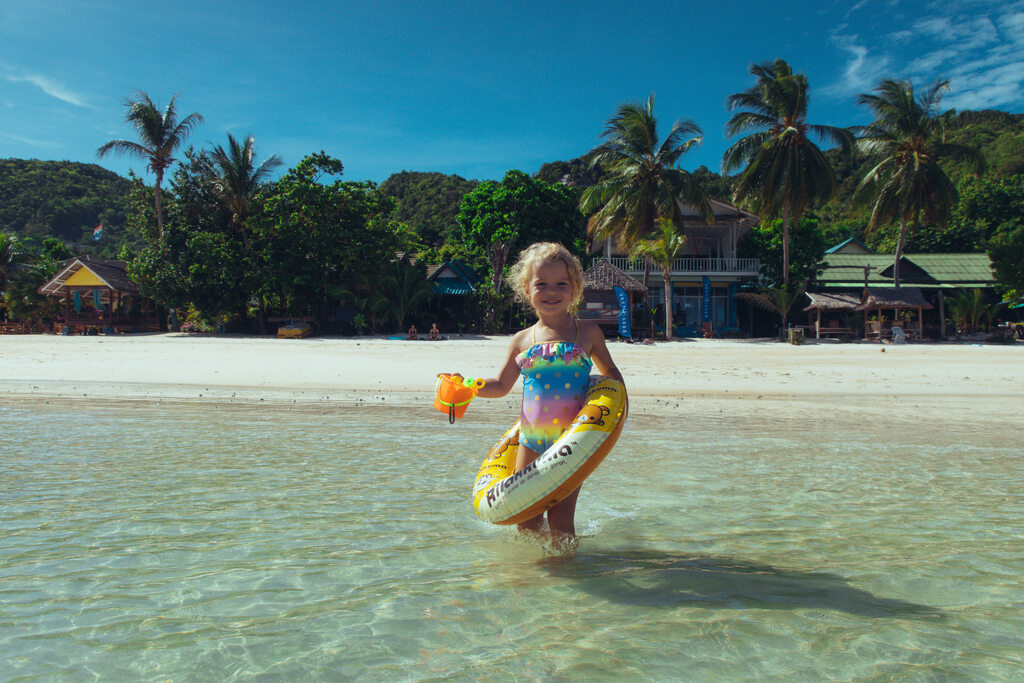
Why We Chose Thailand – Initial Expectations and Fears
We already knew Thailand from several child-free vacations and loved it. For a start like this we needed somewhere familiar. Easy to travel, safe, and affordable.
Still, Thailand does not meet German safety standards, the traffic above all. And as vegetarians? We were worried about the food.
Plus, we had no idea how our daughter Lila would communicate. At least we spoke English. She didn’t.
Arrival in Thailand – The First Day in Thailand as a Family
After 20 hours of travel, we planned a few quiet days in Bangkok before heading to Chiang Mai. Instead, chaos hit fast. Lila got sick, the hotel was awful, and the heat was brutal.
I’ll never forget walking down Khao San Road with two-year-old Lila in my arms. Overwhelmed by the noise and smells, she just fell asleep.
Still, Thailand’s warmth quickly won us over. Locals adored Lila, and Dustin and I found amazing coworking spots with city views. A few days later, we flew north to Chiang Mai: ready for a school for Lila, and our first real “office.”
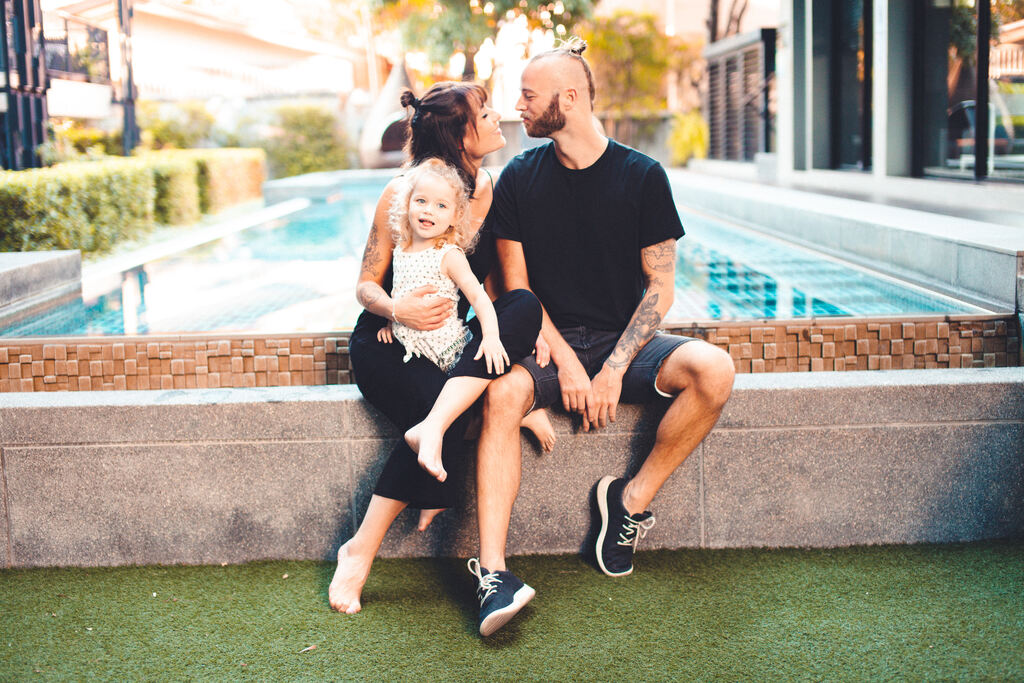

Settling in Chiang Mai and Koh Phangan
In Chiang Mai, we treated ourselves to a lovely hotel in Nimman (Art Mai, highly recommend!). We explored the area by bike, picked a corner we liked, and walked into condos asking about rentals. Within days, we found an affordable apartment with a pool (LIV@Nimman) and even a nearby international kindergarten that had space for Lila.
Looking back, we were incredibly lucky. My planning was… let’s say minimal. It all worked out, but it easily could’ve gone wrong.
In January, we moved to Koh Phangan, right in the middle of high season. Finding an affordable place was tough, and kindergartens were scarce back then. Still, we somehow got Lila a spot again.
That’s how our Thailand chapter began.
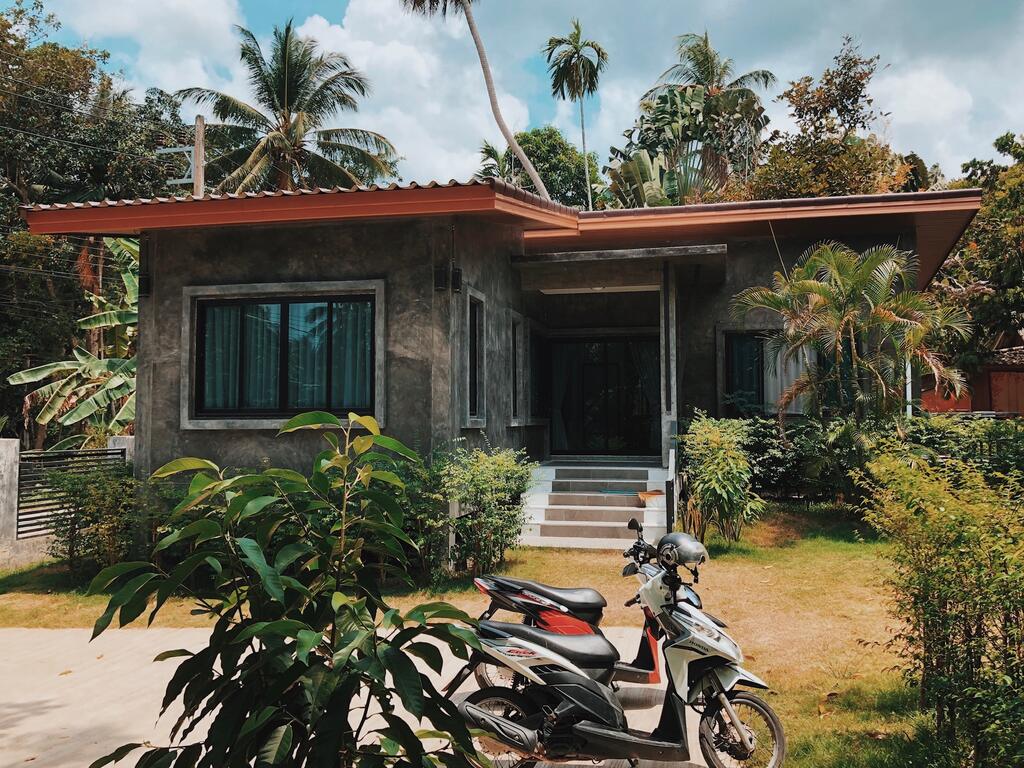
Finding Accommodation in Thailand
Today, 6,5 years later, the situation in Thailand has changed a lot. Prices rose. To get a proper family home, you need to book well in advance.
Here’s the approach I recommend:
First, find a school or kindergarten. Once you’ve got a spot confirmed, look for a home nearby. It saves so much time and stress.
For long-term rentals, Facebook Marketplace works best. You’ll find local landlords and house managers there, and sometimes even real estate agents.
If nothing solid turns up, look at Airbnbs you like and message the hosts directly. Tell them your budget and ask, “Could you commit to this rate for a longer stay?” You’d be surprised how often it works.
In Thailand, a one-month deposit is standard, usually in cash or bank transfer. Once that’s done, you’re set to move in.
👉 Check out the 10 best all-inclusive family resorts in Thailand for a smooth start!
Special Tips for Renting Accommodation in Thailand
- If you notice anything broken in the house, take a photo immediately and send it to the landlord or house manager. This increases the chances that the item will be replaced or that you won’t be held responsible for it. Unfortunately, we’ve experienced situations where we pointed out broken items only at the end of the rental period and ended up having to pay for them, even though we didn’t cause the damage.
- Also, don’t be surprised if the landlord takes a photo of you with the money in hand. This is often considered proof that the first rent or deposit has been paid.
The Best Places to Live in Thailand with Kids
If you’re wondering about the best place to live in Thailand with a family, the truth is: it depends on what kind of life you want. We’ve tried several places over the years, from Bangkok to quiet island life, and each has its own charm (and challenges). Here’s what living in each of them was really like for us.
Living in Bangkok with Family
We lived in Bangkok for a while but found it really hard with small kids. You basically live in the car, going from one indoor playground to another. The traffic can be a nightmare, and just a short drive to a park can take forever. We all missed nature so much.
The city has incredible hospitals, top international schools, and endless entertainment options, but the air quality and noise were tough for us. If you love big-city life, Bangkok might still be one of the best places to live in Thailand for foreigners, but for us, it just didn’t feel like home.
👉 Check family-friendly hotels and apartments in central Bangkok:
Living in Chiang Mai with Kids
We spent about eight months in Chiang Mai and loved it. If you don’t necessarily need a beach, you’ll probably fall in love with this place. It still feels like “real Thailand”: warm, local, and surrounded by mountains. The cost of accommodation is among the lowest in the country, and the community of expat families is amazing.
The only downsides? International schools are surprisingly expensive, about the same price as in Bangkok and roughly double compared to Koh Samui or Koh Phangan. And then there’s the burning season, usually around March and April, when the air quality can get really bad for a few weeks. Still, it’s one of the safest places to live in Thailand and perfect for families.
👉 See my favourite family stays in Chiang Mai here:

InterContinental Chiang Mai
- From $121 (€111) per night (Classic Room)
- Modern rooms with city or mountain views

Shangri-La Chiang Mai
- From $124 (€113) per night (Deluxe Room)
- Large outdoor pool with a dedicated children’s area
- Close to Night Bazaar and Old City
Life on the Islands (Koh Samui, Phuket, Koh Phangan)
Phuket is more expensive but lovely. Especially if you stay in family-friendly areas and avoid the loud party spots (e.g. Patong). The schools are excellent, the beaches are stunning, and you’ll find plenty of high-end accommodation options.
Koh Phangan has changed a lot over the years. It’s become very expensive, but without much improvement in infrastructure. We eventually left and settled on Koh Samui, which truly feels like our haven now.
Samui has great international schools, a big family community, and lots of beautiful homes to choose from. For us, it’s the best place to live in Thailand with kids.
👉 These are our families’ favorites in Samui and Phuket:

Anantara Bophut Resort
- From $250 (€232) per night (Premier Room)
- Lush gardens, calm beach, close to the Fisherman’s Night Market, read my review here!

Pullman Phuket Arcadia Naithon Beach
- From $331 (€305) per night (Family Room)
- Overlooking Naithon Beach with direct access
- Read my honest review here!
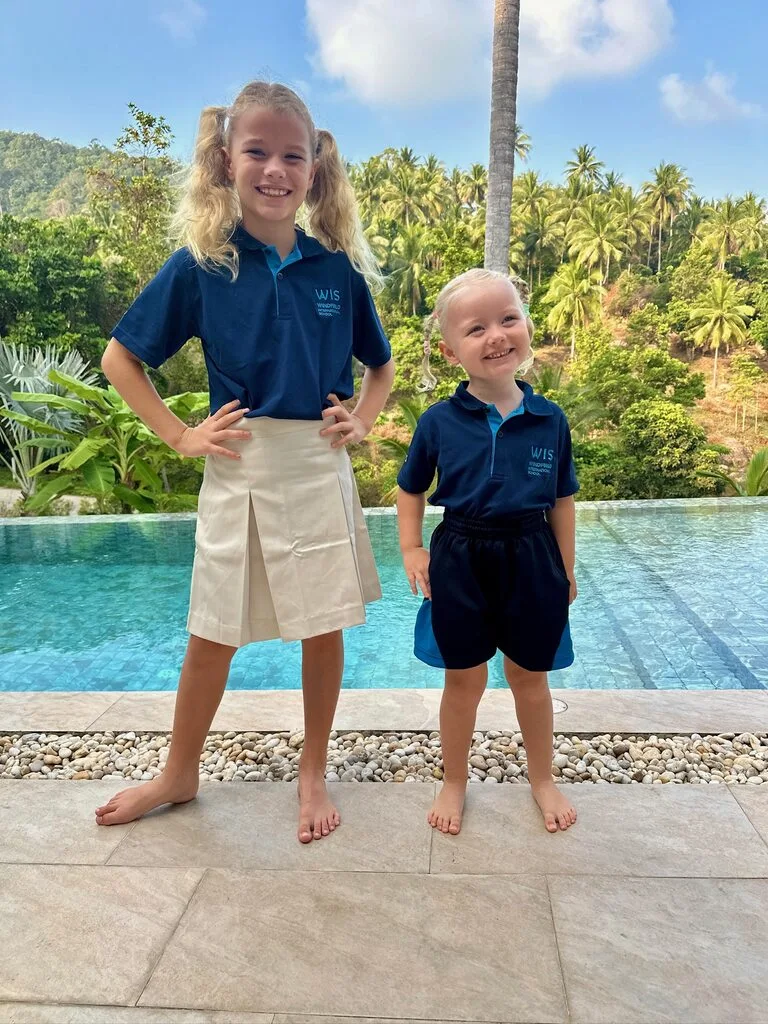
Raising Kids in Thailand – Schools, Culture and Community
The school system in Thailand follows a structure that is similar to many Western education systems.
Structure of the Thai Education System
Pre-Primary Education
- Age Group: 3-6 years
- Levels: Kindergarten (K1 to K3)
Primary Education
- Age Group: 6-12 years
- Levels: Grades 1-6
Secondary Education
- Age Group: 12-18 years
- Levels: Divided into lower secondary (Grades 7-9) and upper secondary (Grades 10-12)

Education Options for Expat Families in Thailand
Whether your child can attend a Thai government school really depends on the region, and a bit of luck. In some areas, foreigners are welcome; in others, it’s strictly for Thai students.
When we tried to enroll Lila in a Thai kindergarten on Koh Phangan in 2019, they simply shook their heads. Foreigners weren’t allowed. Yet on nearby Koh Tao, friends of ours had no problem getting their kids into the local school, likely because there were fewer options there.
International Schools and Kindergartens in Thailand
According to the International School Database, Thailand has around 100 international schools offering various curricula, including IB, British, American, and others. There’s no clear count of international kindergartens, but in areas with many expats or tourists, you’ll find plenty of options.
Many Thai families also choose international schools or kindergartens so their children can learn English. You can read more in my guides on international schools and kindergartens in Koh Phangan.
How to Apply for an International School or Kindergarten
Honestly, I’ve found the process quite straightforward in Thailand. Once we know our next destination, I search for private schools and kindergartens with British Curriculum (our desired choice), read reviews, and ask in Facebook forums where other expat parents send their kids.
Then I contact the schools and reserve a spot, usually paying a deposit as well. I know this requires a lot of trust in something you haven’t seen in person, but sometimes you have no other choice.
As a digital nomad, I’ve learned that you can’t control and plan everything down to the last detail, especially when different cultures and language barriers come into play. However, we’ve generally been more pleasantly surprised than disappointed.
What Thai Culture Teaches My Girls
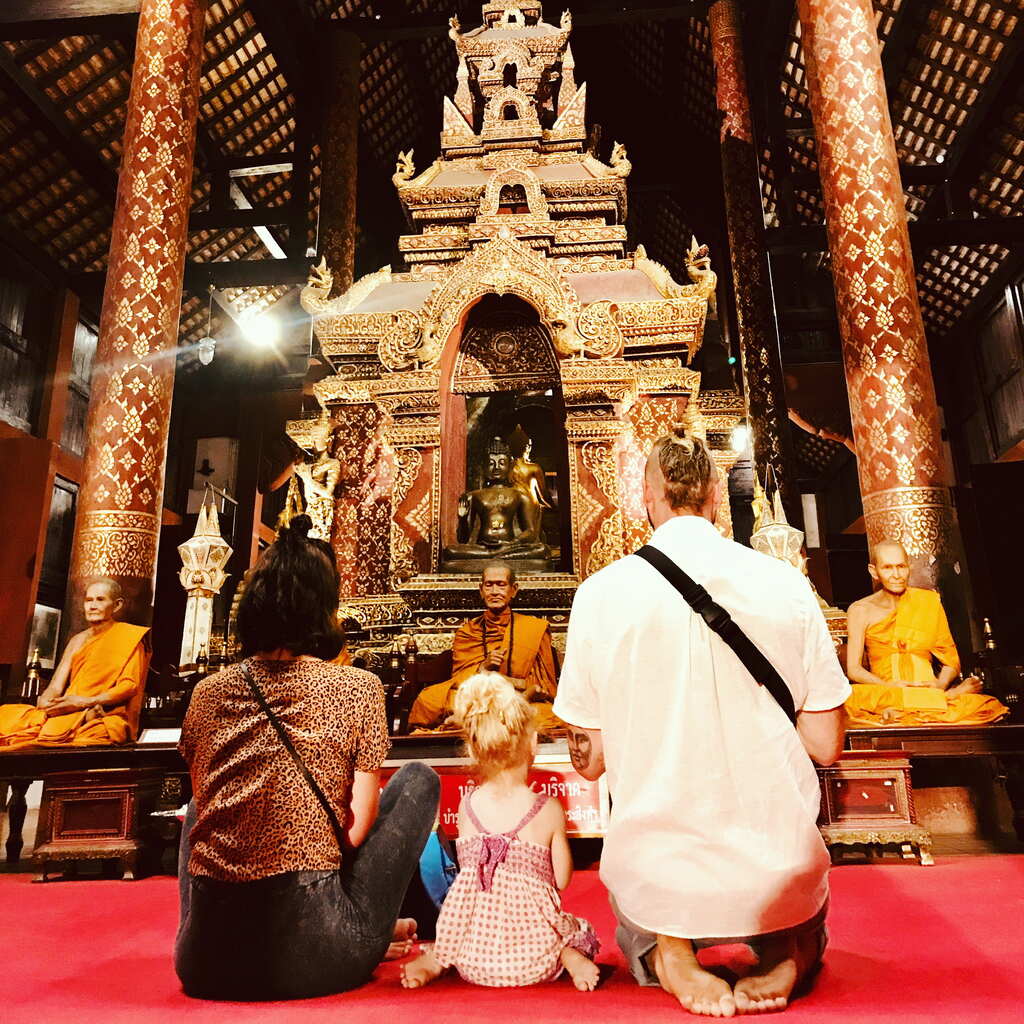
I will never forget how Lila came back from her first day at a Thai kindergarten and showed us how they meditate in the morning, with a wai and in the Buddha seat. How cute is that?!
About 94% of Thais follow Buddhism (Theravada), which shapes everyday life. You can see it in the gentle way people treat animals, the deep respect for elders, and the calm, peaceful attitude that’s everywhere.
And when it comes to children, Thai people absolutely adore them. I’ve never seen anyone get annoyed with my girls, even during meltdowns.
Best Visa Options in Thailand for Families
In 2019, we entered Thailand with a Visa on Arrival. After that, my husband enrolled as a student at a Muay Thai boxing school in Chiang Mai. After six weeks, we flew to Ho Chi Minh City in Vietnam and applied for an ED visa (student visa) for my husband and a dependent visa for our daughter and me at the Thai embassy.
A day later, we picked up our visas and re-entered Thailand. This visa allowed us to stay in the country for a whole year. We could have extended the ED visa twice more but opted for the Elite Visa (Thailand Privilege) instead.
The Elite Visa, depending on the package you choose, allows you to stay in Thailand for 5, 10, or 20 years. It’s very expensive, but for us, it was worth it to avoid the constant visa runs with a toddler and visits to the immigration office.
Meanwhile, Thailand has introduced a Digital Nomad Visa. This visa allows you to stay in the country for up to 5 years at a very low cost. Here’s the official government website with info on the DTV.
Another affordable option for moving to Thailand is to apply for the ED visa (Non-Immigrant ED Visa) for your children. This is possible at international schools that are licensed for this. It also provides options for parents to obtain a visa to stay with their children who are studying in Thailand (one parent can get a guardian visa per child). Here’s the official info on the ED Visa.
Healthcare Standards in Thailand
Healthcare is often a big concern for families, but Thailand’s system is excellent. The country has some of the best hospitals in Asia, with modern facilities and highly trained doctors. On small islands, care can be basic, but in cities and larger islands, you’ll find world-class hospitals.
I gave birth to our second daughter, Ruby, at Bangkokhospital Samui in 2021, and it was a better experience than in Germany. My husband and I also had surgeries at Bumrungrad Hospital in Bangkok, and Lila spent a week at First Western Hospital in Koh Phangan. Every experience was professional, kind, and efficient.
We now use the new SafetyWing Nomad Insurance Complete Plan, which covers everything, from inpatient and outpatient care to cancer treatment (my biggest fear!) and even checkups.
💡 Pro tip: If hospitals know you have Western insurance, prices can rise fast. Choose a plan that pays the hospital directly and covers a lot of treatments. It will save you a lot of money.

Daily Life in Thailand
Lifestyle and Local Customs
You quickly get used to the lifestyle here in Thailand. Sabai sabai – everything is a bit slower, but it will be fine.
It took me a few months to shed my German efficiency. When moving to Thailand, you learn to trust the Thai people. When they say the long-tail boat is coming soon, it’s coming soon. That could mean anything from 5 minutes to an hour. But it’s not worth stressing or getting upset over.
For these situations, I always carry water, AirPods, and something to read. I recommend this to anyone planning to stay longer in Thailand.
Communication
When living in Thailand with kids, you’ll eventually need a Thai number, which means getting a SIM card. My tip: Don’t buy a SIM card directly at the airport. Instead, go to an AIS store and get your SIM there. You can also convert it to an e-SIM if needed. TRUE is also a good provider and sometimes offers better coverage in remote areas.
Climate
Anyone who visits us from Europe always groans, “How do you stand this heat?!” The answer is simple: the body gets used to everything! The sweating has lessened after moving to Thailand and I don’t find the usual 30 degrees Celsius (86 degrees Fahrenheit) hot anymore. In fact, when it’s only 27 degrees Celsius (80.6 degrees Fahrenheit), I wear a sweater.
The different seasons in Thailand vary quite a bit from region to region (here’s my full guide on Rainy Season in Thailand). But generally, you can assume the following:
Hot Season (March to May)
- Temperature: High temperatures ranging from 30°C to 40°C (86°F to 104°F).
- Climate: Generally dry with occasional thunderstorms. The heat can be intense, particularly in April, which is typically the hottest month.
Rainy Season (June to October) in the north, October – December in the southeast
- Temperature: Slightly cooler than the hot season, with temperatures ranging from 25°C to 35°C (77°F to 95°F).
- Climate: Characterized by heavy rainfall and high humidity. Rain is usually in the form of short, intense downpours, often in the late afternoon or evening.
Cool Season (November to February)
- Temperature: Most comfortable temperatures ranging from 20°C to 30°C (68°F to 86°F).
- Climate: Dry and cool, especially in the northern regions. This is the most pleasant time of year to visit, with mild temperatures and low humidity.
Regional Variations
- Northern Thailand: Experiences cooler temperatures during the cool season, especially in mountainous areas like Chiang Mai and Chiang Rai.
- Southern Thailand: More consistent temperatures year-round, with the west coast (Phuket, Krabi) experiencing the rainy season slightly earlier than the east coast (Koh Samui, Koh Phangan).
Transportation in Thailand
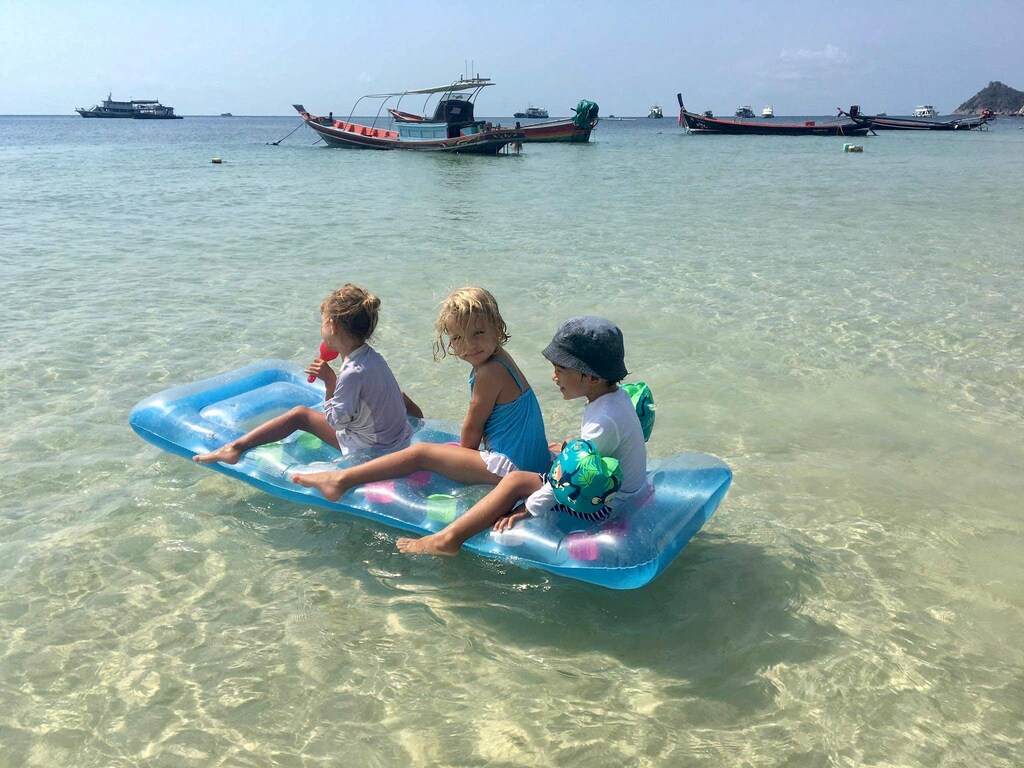
People often ask how we get from A to B in Thailand. The answer depends entirely on where you live and how comfortable you are with a scooter or car.
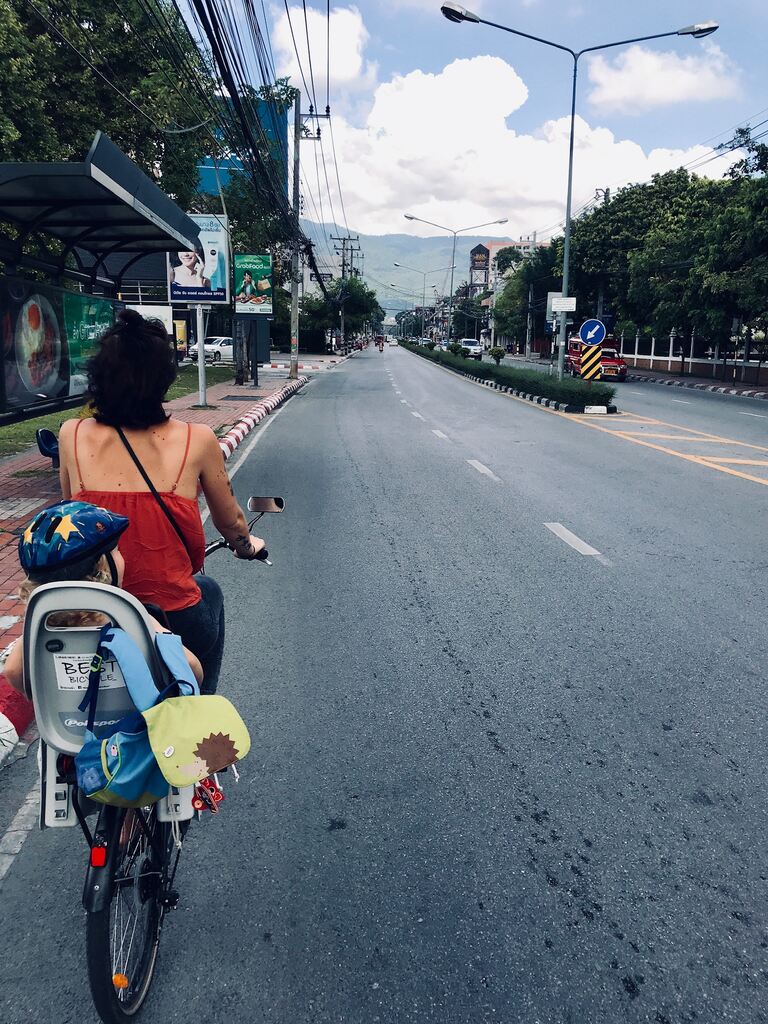
In large cities like Bangkok, you can easily get around with the MRT (Mass Rapid Transit) and Grab (taxi). However, in places like Phuket and Koh Samui, you’ll definitely need a car (be aware that most rental cars don’t come with kids’ car seats; if you need one, you can order it on Lazada, the Thai Amazon).
In rural areas or on small islands like Koh Phangan or Koh Tao, we prefer to ride scooters, even though the quality of the roads and general road safety can be poor.
However, it’s also more dangerous, especially during the high season when the tourist masses arrive, bringing many inexperienced and sometimes drunk drivers. That’s definitely a downside of living in Thailand with kids.
Tips for Safe Scooter Riding in Thailand With Children
- Rent or buy a larger scooter with more space and power. We have an ADV 160 and a PCX 160, both of which are great for everyday use.
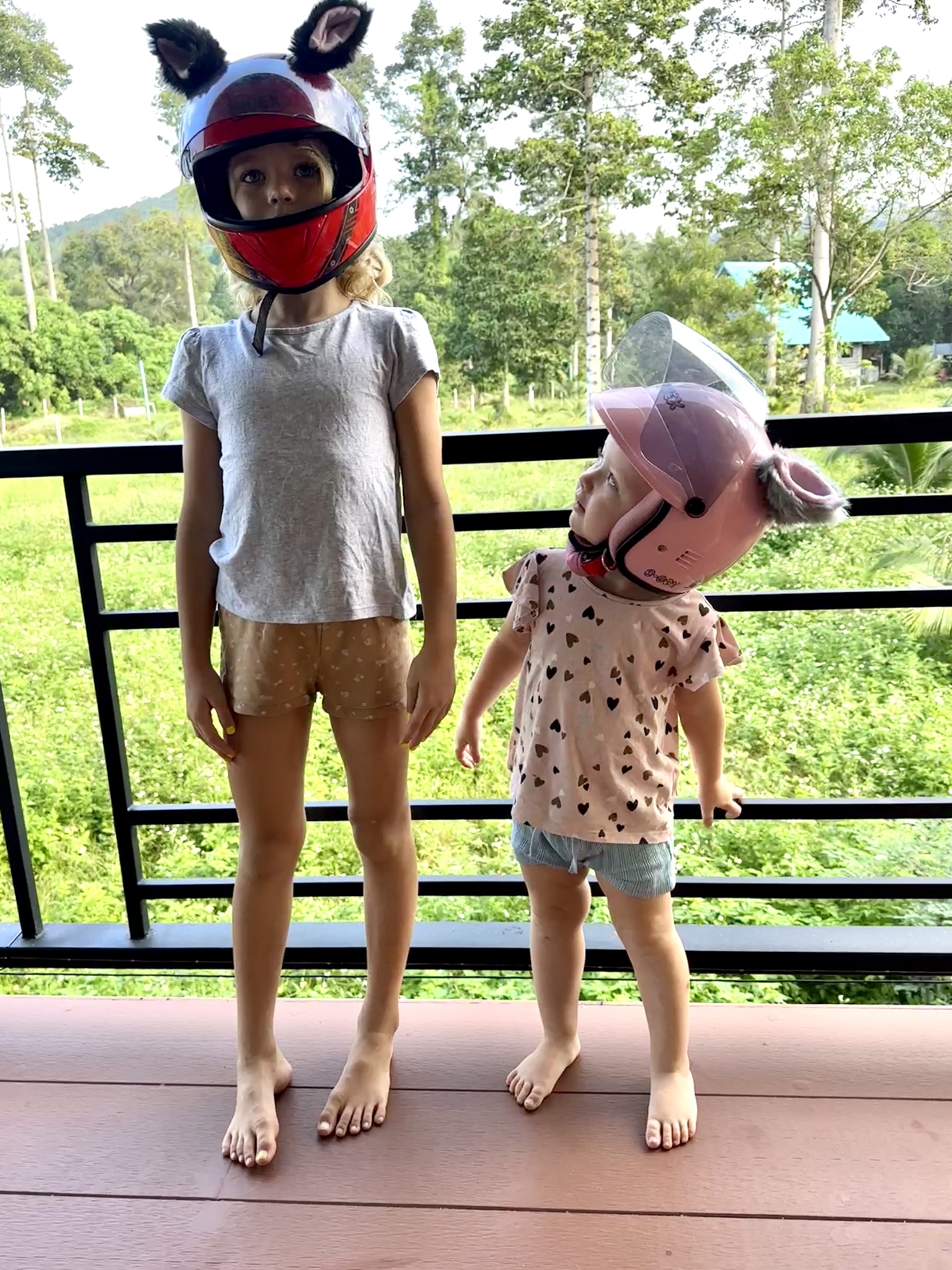
- Always wear a full-face helmet. It is much safer in an accident, and the visor keeps sand, insects, rain and sun out of your face.
- Never have more than 3 people on a scooter, and by that, I mean 2 adults and one child at most. Since we have two small children, we usually split up: one adult and one child per scooter or we take a car.
- If your children are too small to hold on by themselves, take them in a baby carrier. They can wear helmets in it too. There are also special cushions that extend the seat of the scooter, giving the child more space.
Is Thailand Safe for Families with Kids?
Honestly, it depends. Thailand can be very safe if you make smart choices, like driving a car instead of a scooter, buying car seats for the kids, and living in a well-developed area near an international hospital.
That said, safety standards here are not the same as in Western countries. You will sometimes see loose power cables buzzing above your head or families of six balancing on one scooter, and wonder how that is even possible. But in the end, you shape your lifestyle here, and you can make it as safe as you want it to be.
Safe Food Options
As vegetarians, we mostly have no problem finding suitable food in Thailand. Especially in tourist areas, restaurants are well-prepared for vegetarians and offer tofu-based alternatives.
Regarding food safety, I can’t say it’s always 100 percent safe, but we rarely have stomach problems. If we do, it usually happens after eating at street stalls. Not eating meat and fish definitely helps reduce the risk of food poisoning.
Generally, it’s safe to order ice cubes, eat salad, and rinse your mouth with tap water after brushing your teeth.
Cost of Living in Thailand for a Family of Four
The low cost of living is one of the main reasons why living in Thailand with kids is so attractive to Westerners. Your money simply goes further here, on services, on food, on accommodation.
We love taking advantage of geo-arbitrage, earning our money in high-cost countries like Germany and the U.S. but spending it in Southeast Asia.
Here’s what our current cost of living looks like on Koh Samui (as of 2025):
- 🏡 Housing: 3-bedroom villa with private pool, including electricity, water, and cleaning: 100,000 THB ($3,100 / €2,670) per month.
- 🍜 Food: Basic Thai meals cost around 80–180 THB ($2.50–$5.50 / €2.10–€4.80); Western meals are 200–350 THB ($6.10–$10.80 / €5.30–€9.30).
- 🚗 Transport: Scooter rental 5,000–8,000 THB ($150–$250 / €130–€210) per month; small car rental starts at 14,000 THB ($430 / €370).
- 💆♀️ Wellness: Massages cost about 350 THB ($10 / €9) per hour; gym day pass 300 THB ($9 / €8); blowout at the hairdresser 250 THB ($7.70 / €6.70).
- 🎒 School & Kindergarten: Around 25,000 THB ($770 / €670) per month (paid termly).
- 👶 Childcare: Nanny rates are 250–350 THB/hour ($7.70–$10.80 / €6.70–€9.40); supervised playgrounds charge around 200 THB/hour ($6 / €5.30).
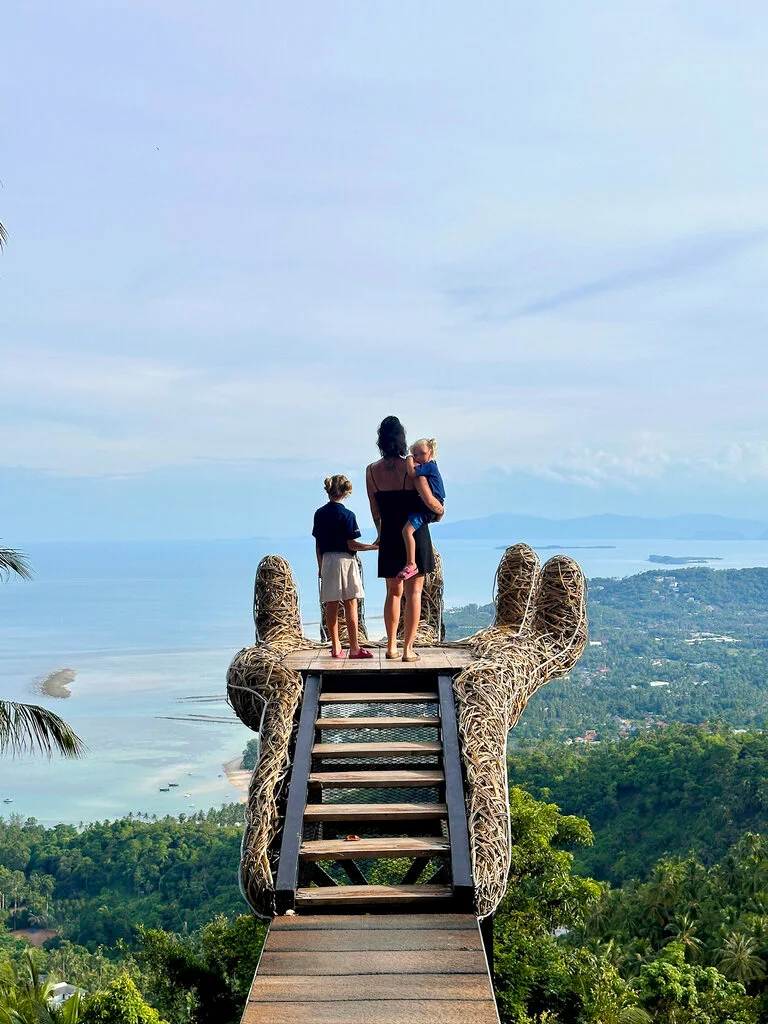
Our cost of living in Koh Samui as a family of four is roughly $8,500 (€7,300) per month.

Is $2,000 a Month Enough to Live in Thailand with a Family?
No, maybe that’s possible alone. With around $2,000 a month (about €1,740), you can live in cheaper areas of Thailand, rent a small local-style house, and eat mostly Thai food. You will not be able to afford an international school or a car. Think more Chiang Mai suburbs, smaller islands without many expats, or living outside the city centre.
Is $5,000 a Month Enough to Live in Thailand with Kids?
Yes. With $5,000 a month (about €4,340) you can live comfortably in most parts of Thailand as a family. Outside of central Bangkok and tourist hotspots, this budget usually covers a nice house, scooter or small car, good international school, and eating out several times a week.
On the islands you will still need to choose carefully, but life will feel relaxed and comfortable.
How Long Will $100,000 Last a Family in Thailand?
This depends. $5,000 will last you one year and eight months.
If your budget looks more like ours right now, around $8,500 a month (about €7,380), then $100,000 would only cover about eleven to twelve months. So the lower your fixed costs and school fees, the longer your savings will carry you.
The Real Pros and Cons of Living in Thailand with Kids
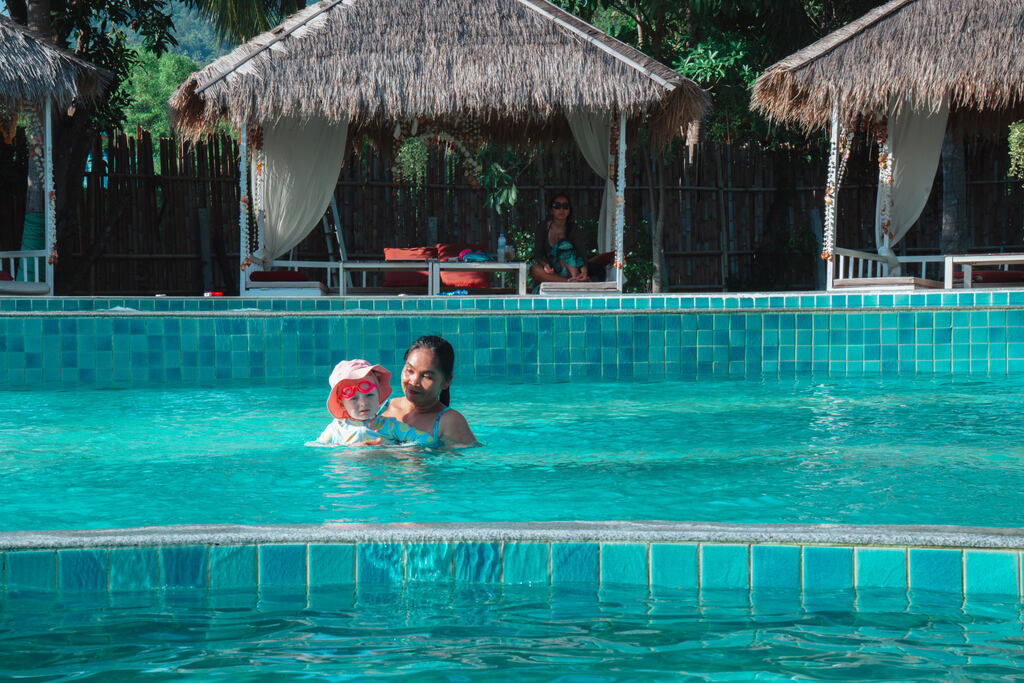
So what about the bad things about living in Thailand with kids? Honestly, there’s no perfect place, but here’s how it really feels for us after years of living here.
Pros:
- Lower cost of living compared to Western countries
- Warm, kind, and family-loving people
- Rich culture and delicious food
- Outdoor lifestyle and year-round sunshine
- More time together as a family
Cons:
- Road safety, especially for families riding scooters
- Traffic and lack of sidewalks in most areas
- Intense heat and humidity
- Air pollution in cities and during Chiang Mai’s burning season
- Complicated visa rules and paperwork
- Thailand attracts a certain type of tourist who can be loud, rude, or disrespectful, and since you’ll usually live in a tourist area, you’ll meet them often
- The lack of high-quality international food choices in supermarkets can be frustrating
My Resources for Families Considering the Move to Thailand
Here are a few guides and stories that will make planning easier:
- Packing Essentials for a Digital Nomad Family
- How to Become a Digital Nomad Family
- How to Make Money While Traveling
- Best Kids’ Activities in Koh Phangan, Bangkok, Koh Samui & Chiang Mai
- Best Areas in Koh Phangan for Families
- What to Wear in Thailand + Vaccines You Need

Key Takeaways – Living in Thailand with Kids
- Thailand is warm, kind, and family-friendly.
- We spend about $8,500 (€7,300) a month living on Koh Samui.
- Best places: Koh Samui, Chiang Mai, Phuket.
- Downsides: heat, traffic, road safety, and limited international food.
- Still, life here feels freer, happier, and more relaxed than anywhere else we’ve lived.
Final Thoughts on Living in Thailand as a Family
Living in Thailand with kids has changed our whole family for the better. From the moment we decided to escape the grind of our 9-5 jobs in Germany and embrace a new lifestyle as digital nomads, we knew we were in for an adventure.
If you and your family are considering a move to the Land of Smiles, I encourage you to take the plunge. It’s a great place to live a happy, fulfilling digital nomad family life.
Do you plan to move to Thailand? Do you have any questions left? Please let me know in the comments! I’d love to help!
Thank you for reading and for making me part of your day! Yours, Lulu
FAQ – Living in Thailand with Kids
How does living in Thailand for 3 or 6 months compare to living long term?
Your experience of living in Thailand for 3 months, 6 months, or a year can be very different, especially when it comes to visas.
If you come for three months, keep it simple with a Tourist Visa or Visa on Arrival if your nationality allows it.
For six months, you can extend a Tourist Visa, apply for a Digital Nomad Visa, or use a Student Visa through a language or Muay Thai school.
If you’re planning to stay a year or longer, you’ll need a more stable visa. Options include the Thailand Privilege Visa, an Education Visa for kids plus a Guardian Visa for parents, or the new Digital Nomad Visa.
Is Thailand good with kids?
Yes! Thai people absolutely adore children. Everywhere you go, locals will smile, wave, and often help when you least expect it. There are plenty of family-friendly restaurants, hotels, and attractions across the country. Thailand is one of the easiest places in Asia to travel or live with kids.
Is Thailand safe for families to live in?
Mostly yes, as long as you take normal precautions. The biggest safety issue here is traffic, well ahead of crime. Roads can be chaotic, so helmets, car seats, and choosing a safe vehicle matter a lot. Healthcare is excellent in major cities and islands like Koh Samui, Phuket, and Bangkok.
What are the bad things about living in Thailand with kids?
The heat can be exhausting, road safety is poor, and bureaucracy can be frustrating. Tourist areas attract some rude and disrespectful visitors, which can get annoying when you live there long-term. Plus, you might miss certain Western foods. International supermarket choices are limited.
What is the best place to live in Thailand with a family?
For us, Koh Samui is the perfect balance: Beaches, good schools, hospitals, and a family community. But Chiang Mai, Phuket, and even parts of Bangkok can also be great, depending on your budget and lifestyle.
Is Bangkok a good place to live with kids?
It depends on what you need. Bangkok offers amazing schools, hospitals, and things to do, but the traffic and lack of nature make it tough with small children. It’s great for short-term stays or families who love city life, but we personally missed greenery and space.
Is Thailand child-friendly for travel?
Absolutely! Hotels often provide cribs and highchairs, and domestic travel is easy. You’ll find plenty of fun activities for all ages: from island boat trips to night markets, waterfalls, and elephant sanctuaries (just choose ethical ones!).
How do you choose a school in Thailand for expat kids?
Start early! Email schools months ahead, especially on the islands where spaces are limited. Compare curriculums (British, American, IB, or Montessori) and location before you sign a rental contract. I always recommend finding the school first, then choosing your home nearby.


15 Responses
Hi I’d like to know what are the options for kid school or education in Thailand. I can’t afford international school. They’re extremely expensive.
I’m Thai but married an American and have 2 beautiful kids. 6 and 10. Everytime I’m back to Thailand. I always thinking about moving back there. Because I want my kids to experience culture, activities, and be more outdoor. It’s not much activities where I live in the US. It’s cold for 6-7 months. Love to hear your advice! Tia!
Hi Taai,
Thanks for sharing your story! Local public schools in Thailand are almost free of charge, as far as I know, and could be a great option. Since your kids are half-Thai, they should be able to enroll without much issue. The main language is Thai, so you should keep that in mind.
In smaller areas like Koh Tao, local schools even accept non-Thai kids. I recommend contacting the school in the area you’re considering to ask about enrollment and requirements.
Hope this helps! Let me know if you have more questions. Lulu
Your article beautifully captures the essence of raising a family in Thailand. The emphasis on the supportive community and the affordability of childcare resonates deeply with my own experiences as an expat here. It’s heartening to see how Thailand’s warm culture embraces families, making the transition smoother for those of us coming from abroad.
Thank you so much for your lovely words!I had a look at your blog as well – very interesting and inspiring! Sending warm greetings from Samui
Hello!
Myself and my family are hoping to move to Chain Rai, from America, this time next year. (If not sooner) We have an 8 year old son and are about to have a baby girl any day now.
I am, of course, a little stressed about getting my son enrolled in school. So ANY pointers in that area are helpful. I plan on homeschooling our daughter until kindergarten.
Im curious about the all around culture shock. My husband and I are so ready to slow life down and find some peace and that is the life we want for our children. Are there activities available for kids outside of school for social interaction etc?
I loved reading your story. Thank you so much for sharing and for any more tips you may have.
Be well!
Hi Kate!
Thank you so much for this beautiful message. It truly means a lot. And congrats on the soon-to-arrive baby girl, how exciting!
I’m so curious, what made you and your family choose Chiang Rai? I don’t personally know of any international schools or expat communities up there, but I do know quite a few options in Chiang Mai, just a few hours away.
And yes, there will definitely be a culture shock, but for me, it felt more exciting than overwhelming. I’m sure you and your family will love it! 🙂
Kindly
Lulu
A truly inspiring article to read
My wife and I , love Thailand
We have also had enough of the working grind here in the U.K
We have a a 4 year old boy
I can’t think of anything better than moving to Thailand to give my son a better life
My questions are :
You gave up work and just moved , did you live off savings ?
What do you and your husband do for work now settled in Thailand
I think my biggest challenge would be sourcing a job and supporting my family
Any help would be great. Thank you Lulu
Thank you so much for your kind words, Aaron! I’m really happy if our story inspired you. It sounds like you’re dreaming of something very similar.
To answer your questions: We didn’t just pack up and leave without a plan. We actually spent about a year preparing everything. I used to work as a TV journalist in Germany, but I quit my job and started working as a freelance copywriter. My husband is a web designer and also switched to freelance work.
So yes, I’d definitely recommend building up a remote income stream before you go. It takes the pressure off once you’re here.
I also wrote a little guide on how to become a digital nomad. You can download it for free by signing up to my newsletter on Nomadmum.com (just scroll to the bottom). Hope it helps! And feel free to reach out anytime if you have more questions.
Wishing you lots of courage and clarity for the next step!
Lulu
You’re so awesome! I don’t believe I have read a single thing like that before. So great to find someone with some original thoughts on this topic. Really.. thank you for starting this up. This website is something that is needed on the internet, someone with a little originality!
Very inspiring and helpful. Thank you Lulu for sharing this article. 🫶🏻
Awh, thank you so much Dominique, for your feedback!
I like the efforts you have put in this, regards for all the great content.
Pretty! This has been a really wonderful post. Many thanks for providing these details.
You’re so awesome! I don’t believe I have read a single thing like that before. So great to find someone with some original thoughts on this topic. Really.. thank you for starting this up. This website is something that is needed on the internet, someone with a little originality!
Awesome! Its genuinely remarkable post, I have got much clear idea regarding from this post