

How Do Worldschooled Kids Make Friends on the Road?
Worldschooled kids make real friends on the road through intentional community-building, not chance encounters. Slowing down travel pace, joining worldschooling Facebook groups, and building local hubs where the same families meet repeatedly are what create genuine, lasting friendships. Spontaneous playground friendships rarely stick when you’re moving every week. The families who crack it are the ones who seek community on purpose.
We are the Arshad family. There was 7 of us when we left the UK to try something we have never done before! Mum (Dionne), Dad (Nadeem), Jayden (14), Skyla (8), Kobie (8), Aniyah (6), Nakhai (5).
When let our house out, sold all of our stuff, packed up our lives and stepped off the familiar path of school runs and routines, we thought we knew what to expect. We knew we’d travel. We knew we’d learn differently.
And we thought, somewhere in our heads at least, that kids would make friends naturally. Sandy beaches and playgrounds would fill the social gaps as effortlessly as they filled our social media feeds.
What we didn’t expect was just how hard it can be for worldschooled kids to find genuine friends on the road. That type of solid friendship doesn’t happen overnight and we realised that we were travelling too fast for these connections to be found.
We also didn’t know where to look for other worldschooling families.
How Do Worldschooled Kids Make Friends on the Road?
Worldschooled kids make real friends on the road through intentional community-building, not chance encounters. Slowing down travel pace, joining worldschooling Facebook groups, and building local hubs where the same families meet repeatedly are what create genuine, lasting friendships. Spontaneous playground friendships rarely stick when you’re moving every week. The families who crack it are the ones who seek community on purpose.
We Lost Our Oldest Child!
After 5 months of travel (Bali, Lombok, Borneo, and Phuket), Dionne and I were really enjoying our journey of discovery and cultural immersion. But over time, our oldest child, Jayden was feeling isolated.
He was missing home and familiar faces. At the time, his grandparents were with us. We faced a very difficult decision. Stop the travels and go home with him, or tell him we were carrying on and he had to stay with us.
Both options were not ideal and the last thing we wanted was to impact his mental wellness. He flew back to the UK with his grandparents. We had hit an all-time low in our travel journey.
Our Wake Up Call!
At this point, our 4 younger children were complaining about meeting other kids but then having to leave soon after arriving. We watched our kids especially struggle more than we anticipated. They’d be surrounded by new faces every week yet feel alone.
The writing was on the wall, and we knew we had to act fast! Losing Jayden was our motivator to change things. We dedicated time to joining worldschooling Facebook groups and arranging to meet families ahead of us arriving in places.
Next stop was Northern Thailand (Chiang Mai and Pai). Everything changed from this point onwards. We slowed down our pace of travel, we met like-minded families, the kids were happier.
And how transformational it is when they finally do make those connections we were seeking.

How Do Friendships Help Our Children Grow?
Having friendships on the move aren’t just nice to have… they shape everything about how our children grow, belong, and flourish.
What we learned early on is that holiday-mode families aren’t looking for new connections the way long-term families do. People come with their itineraries, enjoy their week in paradise, and then leave, which is beautiful in its own way, but it doesn’t result in the kind of friendships that change a child’s world.
What Changed Everything: Community
We settled quickly into Pai life and quickly joined a travel family WhatsApp group to introduce ourselves to whoever was in there. Then something beautiful happened.
We met like-minded families. Not just one or two, but a growing network of others who were also looking for more than just “fun memories.” They wanted friendships, support, and shared experiences for their kids and themselves.
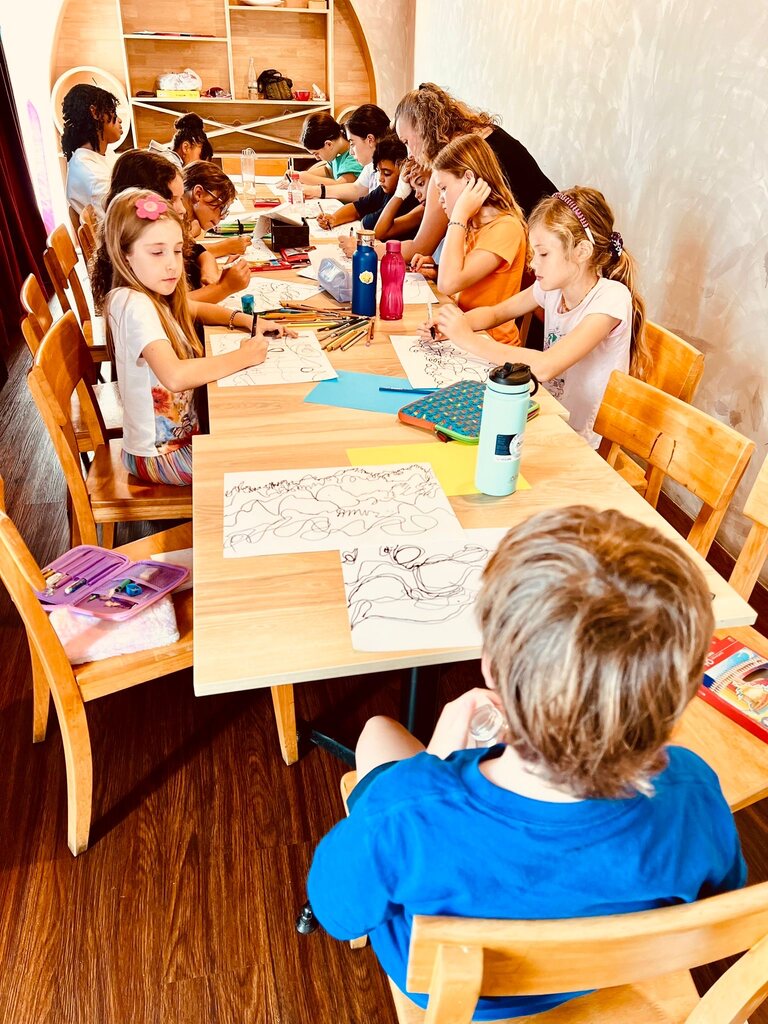
What started as casual meet-ups became something bigger. Suddenly, moments that used to feel isolated became opportunities for connection. Parent-organised activities such as sports, gaming meet-ups, trips to places of interest, and shared dinners were all regular on the calendar.
The difference wasn’t a new place on the map. It was faces that appeared again and again. Faces that knew your kids’ names. Faces that greeted them with familiarity rather than curiosity. Faces that said, “Hey! Good to see you again.”
That shift changed the whole game. It turned travel into something emotionally nourishing, not just adventurous. We realised that our efforts had created something… It was a worldschooling community!
Why Do Worldschool Hubs Matter?
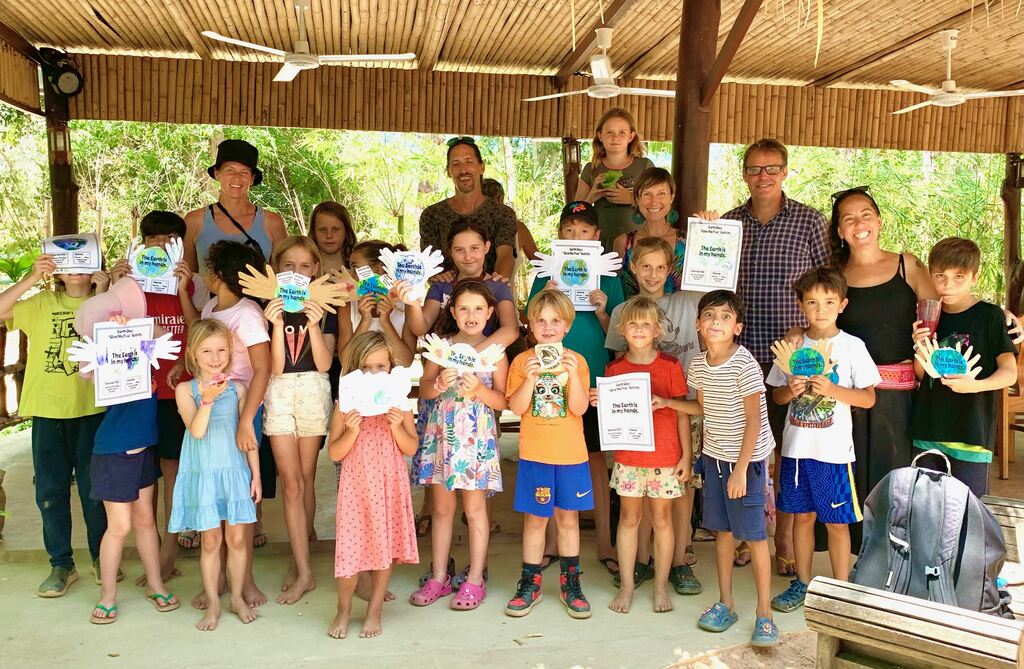
We reluctantly left Pai due to the smoky season but we knew we would be back. We did exactly the same forming worldschooling communities on the Thai island of Koh Lanta, the Indonesian island of Bali and the Malaysian capital of Kuala Lumpur.
And when we left, the community carried on doing it’s thing. What we had built was worldschooling hubs that could self-sustain and grow organically with or without us. We gave them a name. Bliss Hubs!
If worldschooling is about learning through life and experience, then community is the classroom where so much of that learning happens.
Here’s what hubs have given our kids and us as parents, that nothing else quite could:
Friendship Stability in an Unstable World
Worldschooling inherently means movement. Plans shift, horizons change, flights get delayed. But in hubs, our kids get continuity. They see the same faces more than once, build routines with new friends, plan games together and that consistency helps them feel rooted, even if they’re thousands of miles from what we once called “home.”
Play, Growth and Social Confidence
When children gather regularly, they don’t just play, they learn how to be with others.
They negotiate rules, resolve disagreements, include newcomers, adapt to different personalities and share leadership roles amongst so many other personal development contributors. These are social skills often absent in a school playground but deeply present in a worldschooling hub full of diverse youngsters.
A Sense of Belonging — Not Just Visiting
One of the things we didn’t anticipate was how much our kids wanted to belong. Not just to a place, but to people. They had found their tribe. In hubs, kids know they’re expected, welcomed, and valued. They form little cliques and deeper bonds, and they remember each other.
That’s not just fun. It’s emotionally anchoring.
Support for Parents Too
Let’s be honest. Friendships are important for parents, too.
Before hubs, social life for us sometimes felt limited to playground chats, parent-teacher evenings, or the other adults at breakfast.
The community has gifted us friendships that go beyond the “nice to meet you” stage — they are real, supportive, and sometimes life-saving on the tough days.
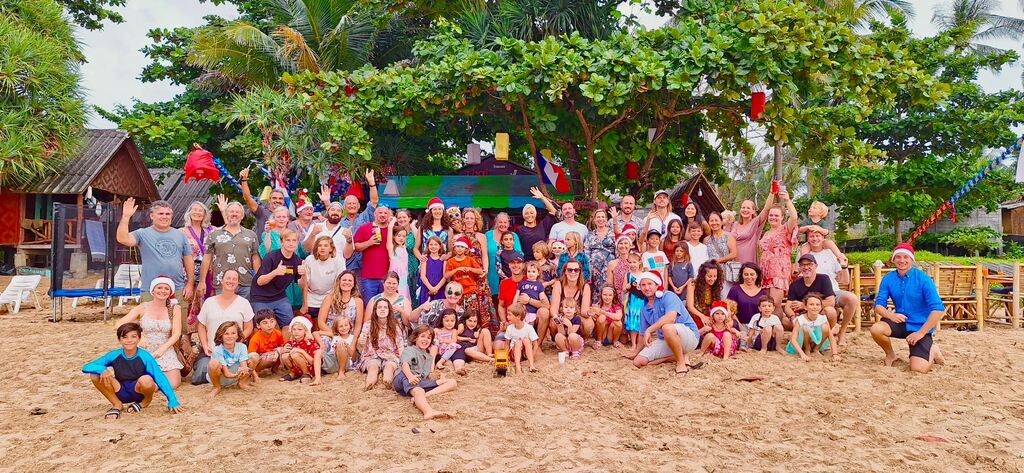
5 Lessons We’ve Learned About Making Friends on the Road
Through our experience, here’s what has helped for both our kids and us as parents, when it comes to forming meaningful connections on the road:
- Intentional Community Beats Random Encounters
Seeking out hubs and like-minded families mattered more than expecting friends to appear organically. - Shared Experiences Create Bonds
When kids learn, explore, and play together, the connection deepens beyond the superficial. - Consistency Is Key
Repeated interactions over time are what turn faces into friends. - Depth > Breadth
One deep friendship matters more than meeting dozens of people fleetingly. - Community Helps in Tough Moments
From homesickness to tantrums to teenage angst, having others around to empathize matters.
Friendship on the Road Is Not a Luxury. It’s a Necessity.
Worldschooling is beautiful. It’s freeing. It’s enriching. But like any lifestyle, it comes with emotional realities.
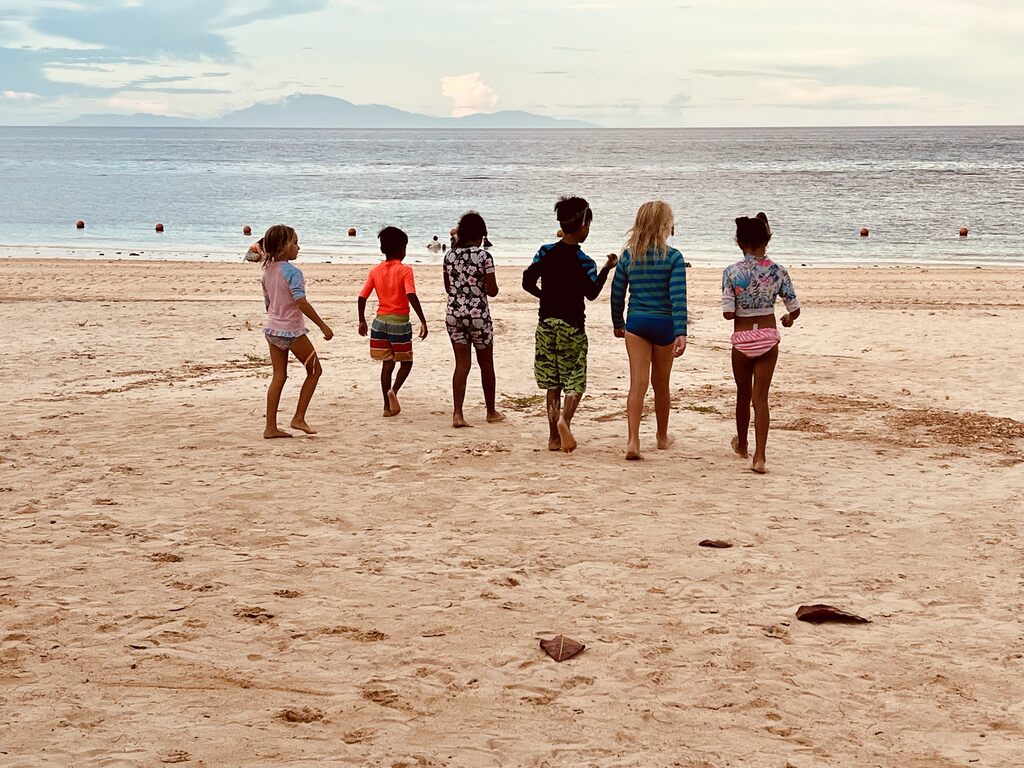
Your kids seeing a new beach every week doesn’t automatically mean they’re socially thriving. What makes them feel happy, connected, safe, and seen is community. They need relationships that stick.
That’s what hubs provide: connection, continuity, and care.
And for families travelling long-term, especially with older kids and teens, that can make all the difference between a series of beautiful moments and a truly lived, truly connected adventure.
👉 You might also like:
– What Is Worldschooling? Honest Guide for Families
– Traveling as a Single Parent – An Interview with Shay Lavelle
– Deschooling and Unschooling
We Learned the Hard Way. But You Can Benefit From These Wise Words.
If you’re worldschooling, slow-traveling, or nomading with kids, don’t underestimate the power of the village effect. Don’t expect friendships to form by coincidence. Seek community intentionally. Build environments where kids can return to the same faces, feel seen, and belong.
Because friendships aren’t just sunshine and laughter. They’re the emotional threads that weave your family’s memories into something deep, meaningful, and lasting.
That’s what truly transforms travel into home.
What Is Worldschooling, and Does It Actually Work for Kids?
Worldschooling is an approach to education where travel, real-world experience, and cultural immersion replace or supplement traditional schooling. Instead of a classroom, the world is the curriculum. Instead of textbooks, kids learn through doing, exploring, and living. It works. But it also comes with challenges nobody puts on the brochure. The social side of it is one of them.
Is Worldschooling Legal?
Yes, worldschooling is legal in most countries, but the specifics depend entirely on where you are a legal resident. In the UK, for example, parents have the legal right to educate their children outside of school, provided the education is suitable for the child’s age, ability, and aptitude. Most worldschooling families register as home educators in their home country before departing. Laws vary significantly by country, so it’s always worth checking the specific rules for your country of residence before you go. We are UK-based, so we registered under UK home education law before we left.
Worldschooling vs Homeschooling: What’s the Difference?
Homeschooling typically means educating your children at home, following a curriculum, usually while remaining based in one location. Worldschooling takes the same principle and adds movement. The world becomes the classroom. A history lesson might happen at an actual historical site. A science lesson might happen in a rainforest or on a reef. The key difference is that worldschooling is inherently experiential and location-dependent, while homeschooling can be done entirely from your kitchen table. Many worldschooling families blend both, using structured curricula on the road alongside real-world learning experiences.
Key Takeaways
- Friendship on the road requires intention, not luck.
- Slow travel builds connections. Fast travel breaks them.
- Holiday families and worldschooling families want different things.
- Worldschooling hubs create the consistency kids need.
- One deep friendship beats dozens of brief encounters.
- Parents need community just as much as kids do.
- Worldschooling is legal in most countries with home education registration.
FAQ
Is worldschooling legal?
Yes, worldschooling is legal in most countries, but the rules depend on your home country’s education laws. In the UK, parents can legally educate their children outside school under home education law, provided the education is suitable. Most worldschooling families register as home educators before leaving. Always check the specific legislation for your country of legal residence before you start.
What is the difference between worldschooling and homeschooling?
Homeschooling means educating children outside traditional school, usually from a fixed home base using a structured curriculum. Worldschooling takes the same principle on the road, using travel, culture, and real-world experiences as the primary learning tools. Many worldschooling families blend both approaches, combining structured study with location-based experiential learning.
Will my child fall behind academically if we worldschool?
Not necessarily, and many worldschooled children outperform their peers in areas like critical thinking, cultural literacy, and adaptability. Academic gaps are a real risk if learning is unstructured, which is why most long-term worldschooling families use some form of curriculum alongside experiential learning. The key is intentionality, not a specific method.
How do you find worldschooling families to connect with?
The most effective method is joining worldschooling Facebook groups before you arrive in a destination. Search for groups specific to your destination (e.g. ‘Worldschooling Families Chiang Mai’) and introduce yourself ahead of arrival. WhatsApp groups, co-working family spaces, and slow-travel hubs like the Bliss Hubs concept are also strong options for building recurring connections.
How do parents maintain their own friendships while worldschooling?
Parents can make connections by joining worldschooling groups, organizing social events, and building recurring communities. Hubs often support parents as much as kids, providing shared experiences, advice, and support.
Are online friendships meaningful for worldschooled kids?
Online friendships can provide support and connection between in-person meetups, especially in regions with fewer worldschoolers. For many kids, virtual chats and group video sessions are key to staying socially engaged.
Can teens make friends while worldschooling?
Yes. Teens often benefit from searching out specialized teen-only worldschooling groups, joining hobby-focused meetups, or participating in online chats that connect teens on the road.
What if my child is shy or introverted?
Start with small gatherings or one-on-one playdates. Let your child set the pace. Revisit familiar groups or hubs so faces become familiar over time. Consider virtual friendships as a valid and supportive option.
How do we find worldschooling hubs for families?
Search for worldschooling Facebook groups, WhatsApp chats, and websites dedicated to worldschooling hubs in your region. Join these groups before you travel and announce your plans to connect with other families upon arrival.
Optimized with| Method | Social Connection Strength | Ease of Access | Best For |
|---|---|---|---|
| Spontaneous Playground Encounters | Weak/Short-Term | Easy | Families traveling quickly |
| Worldschooling Hubs/Communities | Strong/Long-Term | Medium,requires planning | Families slow-traveling or in hubs |
| Online Groups & Virtual Friendships | Moderate/Bridging | Easy to Medium | Children in remote areas or between meetups |