

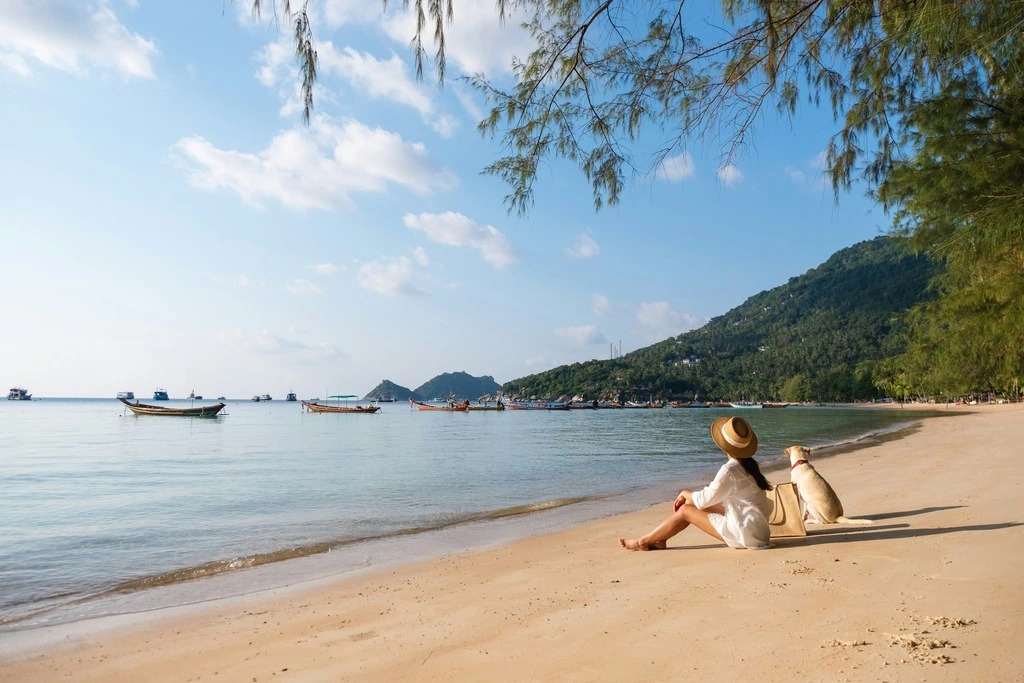
Where Should You Go in Thailand for Your First Trip?
I’d say, keep it simple: pick two to three stops. Do Bangkok (2–3 nights), then Chiang Mai for culture or one beach area (Krabi/Phuket or Koh Samui). You’ll see many different sides of Thailand.
My Easy Thailand Plan
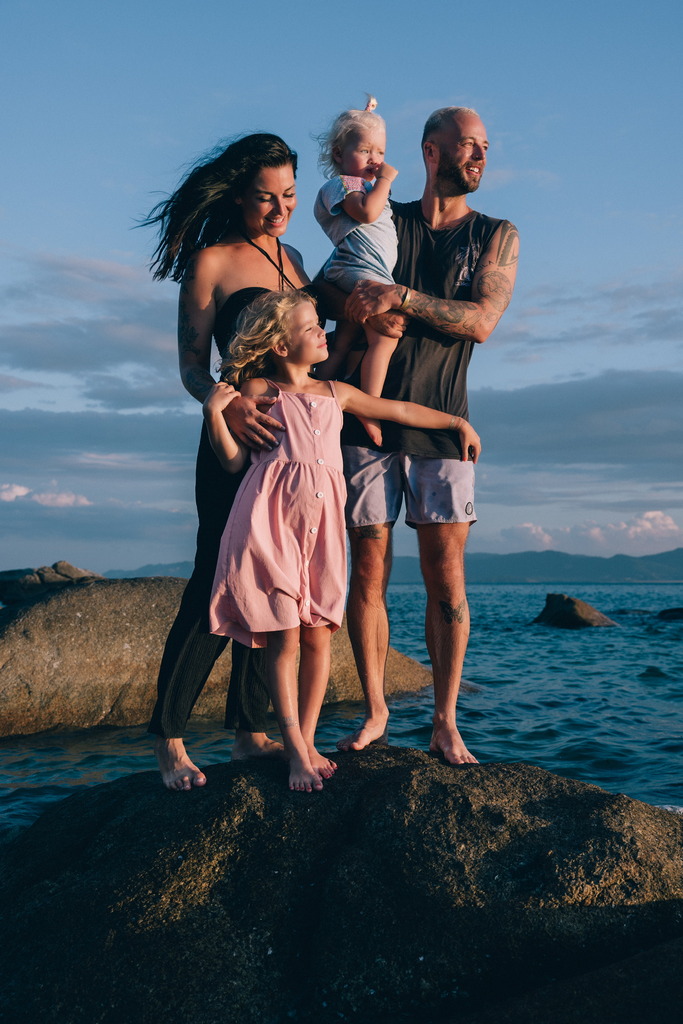
I still remember our first trip to Thailand in 2014. We had two large backpacks and zero clue what we were doing. We came for a few weeks… and fell in love. In 2019, we decided to make it our home base. Since then, we’ve lived all over the country with our two little girls.
Why? It’s warm. It’s safe. It’s full of life. And it’s way more affordable than most other family destinations (well, if you know where to go).
So: where to go, what to expect, and the little things I wish someone had told me before.
Our Quick Picks
🌴 Planning your trip? Check my Thailand Itinerary and my big Weather Guide.
👚 Be prepared and read about What to Wear in Thailand.
🏠 Book your first hotel in Bangkok here.

Things I Wish I Knew Before My First Thailand Trip
I loved Thailand from day one. But I still learned a few things the hard way.
- ATM fees add up fast. Withdraw larger amounts at once. I try to get 30k THB at once.
- Grab is easier and cheaper than taxis in most cities.
- Temple dress rules are real. Bring one cover-up.
- The heat hits harder than you expect. Drink more than you think you need.
- Scooter accidents are common. Rent only if you’re a confident driver.
- Distances look short on the map. Travel days take time.
- You don’t need to book everything in advance.
- A smile solves most situations.
Is Thailand a Good Place for First-Time Travelers?
Yes! Thailand is one of the best countries for first-time travelers. It’s safe, affordable, and easy to explore. English is widely spoken in tourist areas, transport is simple, and locals are some of the friendliest people you’ll ever meet (right up there with the Balinese, in my opinion).
Whether you want city life, jungle adventures, or island time, Thailand has it all. It’s great for solo travelers, couples, and families (like us). You don’t need much travel experience to enjoy it here.
Also, it’s the perfect place to start your Southeast Asia journey.
Before You Go – Planning Tips for Thailand
How Long Should You Stay?
If it’s your first time, go for 14 – 21 days. That gives you time to see a bit of everything: city, culture, and beach. Less than a week? You’ll be rushing and probably exhausted.
Three weeks is ideal if you want to slow down and enjoy it all without stress.
Tour Package or Plan It Yourself?
Honestly? Plan it yourself.
Thailand is super easy to travel around. Booking hotels, flights, and transport is all online. Locals are helpful, and tourist infrastructure is solid.
Pre-packaged tours are okay if you like everything arranged, but they’re often more expensive and less flexible. For most people, it’s more fun (and cheaper) to do it your way.
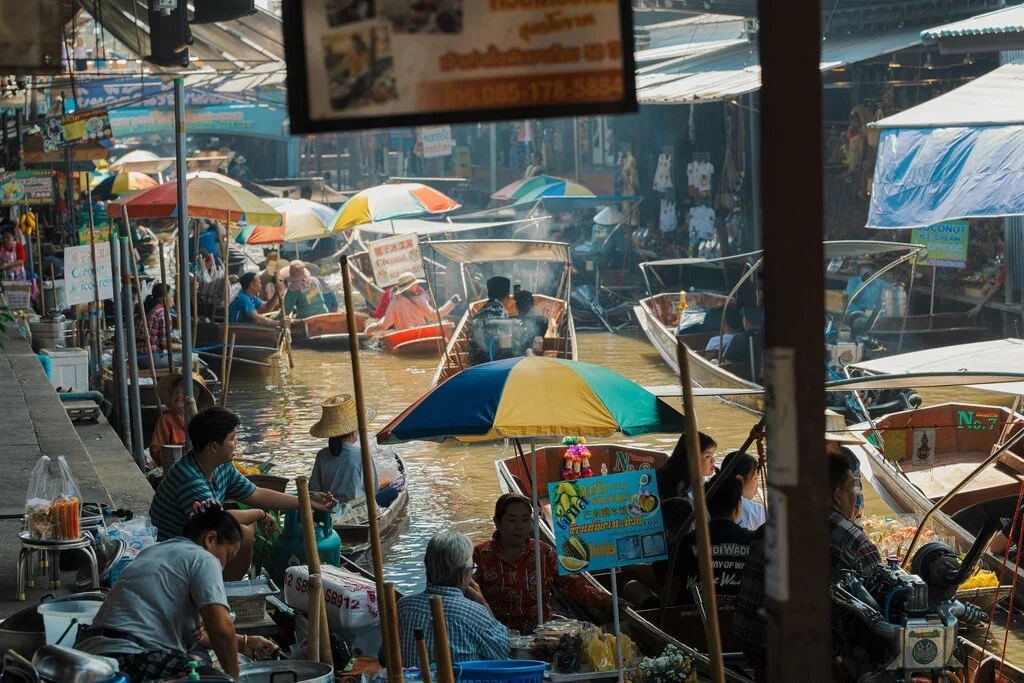
Where to Go in Thailand for First-Timers
These are my personal favorite spots for first-timers in Thailand:
1. Bangkok – The Big, Wild Start
Most travelers begin here. It’s loud, hot, and totally worth it. I recommend staying here for 2-3 nights.
Why go: Temples, river rides, street food, rooftop views.
Top things to do: Grand Palace, Wat Pho, take a boat on the Chao Phraya, shop at Chatuchak Market.
Tip: Use the BTS skytrain and skip the traffic. Watch out for “friendly” tuk-tuk drivers near temples, they often charge you triple the price.
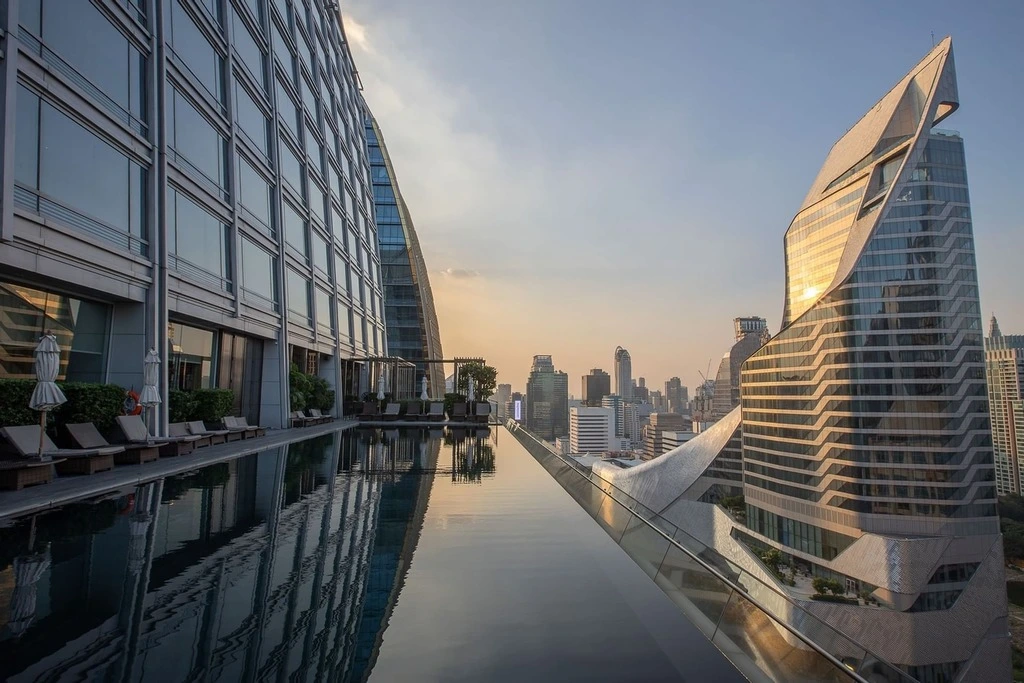
The Okura Prestige Bangkok
- From $175 (€162) per night (Deluxe Room with Club Access)
- Central location with a sky-high infinity pool and direct BTS access
2. Chiang Mai – Culture and Calm
A favorite in the north with a great mix of tradition, nature, and chill. We lived here for half a year and loved hiking in the mountains and strolling through Nimman.
Why go: Temples, cooking classes, ethical elephant experiences.
Top things to do: Doi Suthep, jungle cafés, night markets.
Tip: Stay in the old town or in Nimmanhaemin (Nimman) if it’s your first time.

InterContinental Chiang Mai
- From $121 (€111) per night (Classic Room)
- Modern rooms with city or mountain views
3. Chiang Rai – Temples With a Twist
Quieter and smaller than Chiang Mai, but with some of the most unique temples in Thailand. Also we had the most magical ethical elephant experience here (a jungle walk with elephants). Check out Elephant Steps.
Why go: White Temple, Blue Temple, peaceful countryside.
Top things to do: Day trip from Chiang Mai or stay overnight.
Tip: It’s a dream for art and photography lovers.
4. Pai – Mountains, Hot Springs, and Hippie Vibes
A tiny town in the mountains north of Chiang Mai, very relaxed and a bit quirky. Not my personal favorite place, but very popular among young travelers who like the hippie lifestyle.
Why go: Nature, hot springs, Pai Canyon, live music.
Top things to do: Rent a scooter, eat street food, visit waterfalls.
Tip: The road from Chiang Mai is super curvy. Bring motion sickness meds. We always had at least one family member getting sick on the 3-hour drive.

Pai Village Boutique Resort & Farm
- From $78 (€69)
- Right in town, with wooden family cottages, lush gardens, a saltwater pool, and an on-site farm.
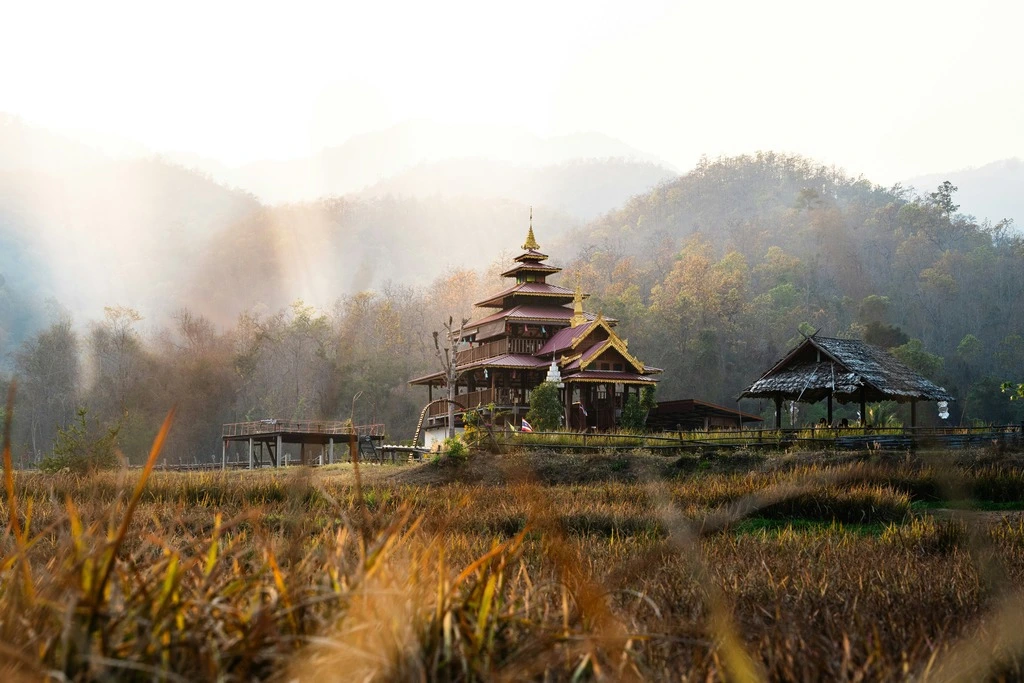
5. Phuket – Big Beaches and All the Comforts
Phuket is Thailand’s biggest and most popular island. And for good reason. There’s something for everyone.
Why go: Fancy resorts, nightlife, family fun, and lots of beaches.
Top things to do: Big Buddha, island tours, old town, waterparks.
Tip: Avoid Patong if you want peace. Kata and Kamala are more relaxed. My favorite beach is Naithon Beach in the northwest.

Pullman Phuket Arcadia Naithon Beach
- From $331 (€305) per night (Family Room)
- Overlooking Naithon Beach with direct access
- Read my honest review here!
6. Koh Phi Phi – Tiny Island, Beautiful Views
It’s famous and very busy, but beautiful. Great for a short visit.
Why go: Snorkeling, Maya Bay, limestone cliffs.
Top things to do: Hike to the viewpoint, take a boat tour, swim in turquoise water.
Tip: Stay one night or visit on a day trip from Phuket or Krabi.
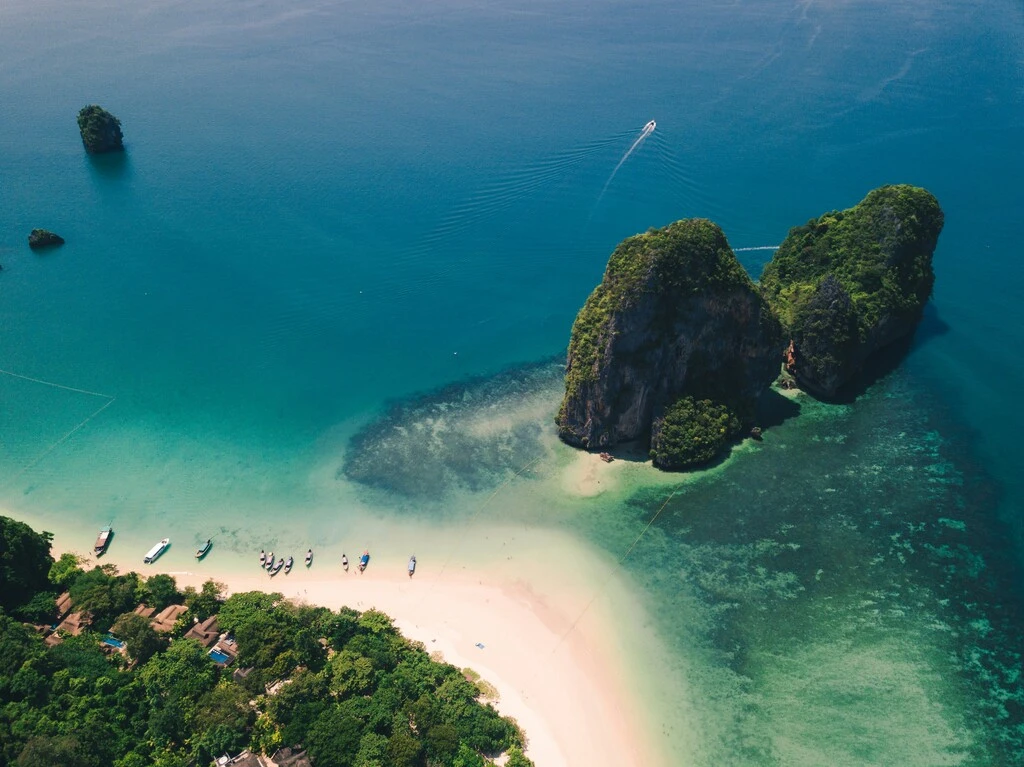
7. Krabi – Beaches and Adventure
More chill than Phuket, but still with tons to do. Ao Nang is the main base. Railay is more picturesque.
Why go: Island hopping, Railay Beach, climbing, kayaking.
Top things to do: Four Islands tour, Tiger Cave Temple, sunset on Railay, Monkey Trail (also great for kids).
Tip: Best from November to April. Rainy season gets wet.

Holiday Ao Nang Beach Resort
- From $100 (€93) per night (Family Room)
- Great for young kids. Big pools, water slides, kids’ club, and steps from the beach.
8. Koh Lanta – Quiet Beaches and Friendly Vibes
Underrated and wonderful. It is quieter than the usual spots and there is room to breathe.
Why go: Long beaches, sunsets, easygoing atmosphere.
Top things to do: Lanta Animal Welfare, scooter rides, beach cafés.
Tip: Great for families and couples who want to slow down.
9. Koh Samui – Easy Island Life
Perfect for first-timers, especially between May and September when other coasts are rainy. It’s our main base at the moment.
Why go: Waterfalls, temples, great food, lots of family-friendly resorts.
Top things to do: Na Muang waterfalls, Big Buddha, beach-hopping, fine dining on the beach.
Tip: Has an airport, super convenient.

Anantara Bophut Resort
- From $250 (€232) per night (Premier Room)
- Lush gardens, calm beach, close to the Fisherman’s Night Market, read my review here!
10. Koh Phangan – More Than a Party Island
Yes, the Full Moon Party is here. But skip that, and the rest of the island is a dream.
Why go: Hidden beaches, laid-back cafés, jungle hikes, and healing vibes.
Top things to do: Snorkel in the north (Mae Nam), explore spiritual and Yoga Workshops, dance at Eden or Bambu parties (way better than Full Moon, Half Moon or Jungle Experience).
Tip: North and west coast = peaceful paradise. Great for families too!

Summer Resort
- From $92 (€85) per night (Junior Suite)
- Direct beachfront access with calm, shallow waters in Ban Tai
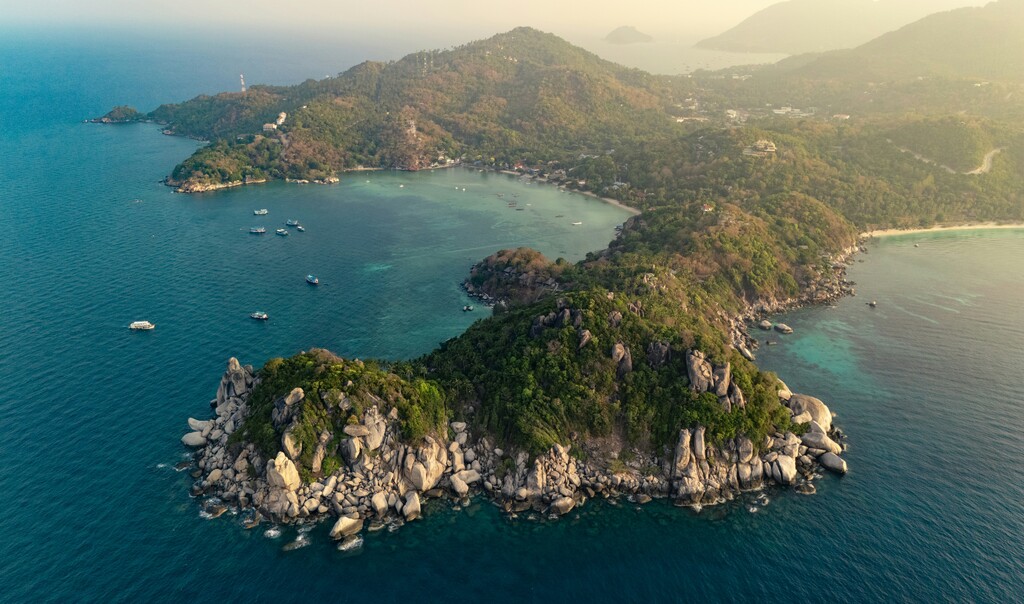
11. Koh Tao – Chill and Snorkel-Ready
A tiny island known for diving, but just as nice for doing absolutely nothing.
Why go: Coral reefs, viewpoints, clear water, no stress.
Top things to do: Snorkel tours, Ao Leuk Beach, hike to John-Suwan viewpoint.
Tip: Great combo with Samui or Phangan, but can get extremely busy with mainly very very young tourists (that’s what annoys me a bit, but hey…).

Koh Tao Montra Resort
- From $102 (€91) per night (Standard Double)
- Close to the ferry with big rooms and a pool, great for short stays.
When to Go (and When Not to Go)
Thailand is warm all year, but the rainy season and regional weather can make a big difference in your plans. Here’s what you need to know:
Central Thailand (Bangkok, Ayutthaya, Kanchanaburi)
- Best time: November to March – cooler, drier, and great for city exploring.
- Worst time: April – it’s hot hot hot (we’re talking 40°C/104°F). Also, July–October can bring heavy showers.
Northern Thailand (Chiang Mai, Chiang Rai, Pai)
- Best time: November to early March – dry and cool, perfect for hikes and temple visits.
- Worst time: Burning season (Feb to April) – poor air quality due to crop burning.
- Rainy season: June to October – expect green landscapes, but daily downpours.
Andaman Coast (Phuket, Krabi, Koh Phi Phi, Koh Lanta)
- Best time: November to April – sunny, blue skies, calm sea = perfect beach days.
- Worst time: June to October – rough seas, heavy rain, boat tours often canceled.
Gulf of Thailand (Koh Samui, Koh Phangan, Koh Tao)
- Best time: January to September – lots of sunshine, especially from March to August.
- Worst time: October to mid-December – rainy season hits this coast later than the rest.
💡 Pro tip: You can always find sunshine somewhere in Thailand. Visiting in August? Skip Phuket and head to Koh Samui. Coming in December? The whole country is pretty amazing.

Suggested Routes for First-Timers
Not sure how to connect the dots? Here are a few simple itinerary ideas that work really well:
– Bangkok, Chiang Mai, Koh Samui
– Bangkok, Phuket, Krabi
– Bangkok, Koh Samui, Koh Phangan, Koh Tao
– Phuket, Krabi, Koh Lanta
What to Expect in Thailand
Here’s what Thailand actually feels like, beyond the beaches and temples.
Culture: Friendly, Respectful, and Smiley
Thai people are warm, helpful, and polite. Smiling is a big part of the culture. Even if someone’s annoyed, they’ll still smile.
But there are a few unspoken rules:
- Don’t point with your feet.
- Always take off your shoes before entering homes and temples (and also some shops, you’ll usually see a sign on the door if you have to take off your shoes).
- Dress modestly at temples (cover shoulders and knees).
💡 Pro tip: A little respect goes a long way. Say “thank you”: “khop khun ka” (as a female) or “khop khun krap” (as a male) and people will love you for it.
Money: Cash Is Still King
Thailand is mostly cash-based, especially in markets, small shops, or street stalls.
- ATMs are everywhere but charge a fee (around 220 Baht).
- Bigger places accept cards, but don’t count on it. Also they often charge a 3% fee for card payments.
- Local currency: Thai Baht (THB). You can exchange money at airports, malls, or use Wise for better rates.
💡 Pro tip: Always carry small change. You’ll need it for taxis, snacks, and tipping.
Transport: Easy Once You Get the Hang of It
- Tuk-tuks are fun for short rides (but bargain before you hop in).
- Grab app works in most big cities (like Uber).
- Trains and buses are great for longer trips.
- Domestic flights are cheap and save time.
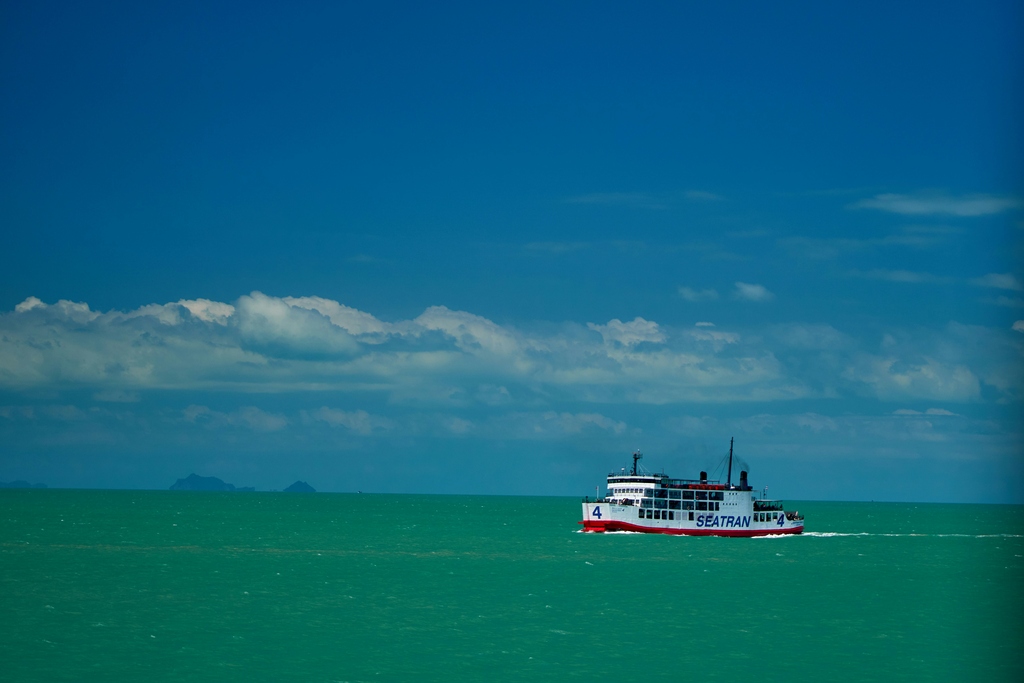
- Ferries connect all the islands. I mostly book them through 12GoAsia.
💡 Pro tip: Don’t overplan. Transport delays happen. It’s part of the experience. If they happen, don’t get angry at the staff, that won’t change anything!
Food: Delicious, Cheap, and Spicy
Thai food is one of the best things about coming here. You’ll find meals for $1 on the street, and they’re often better than restaurant food.
- Must-tries: pad thai, mango sticky rice, green curry, and papaya salad.
- Vegetarian? It’s doable! Just say “jay” (no meat, no fish sauce) or “mang-sawirat” (vegetarian).
- Not into spice? Say “mai phet” (not spicy) or “phet nid noi” (only a little bit spicy).
💡 Pro tip: Always drink bottled water. If you’re sensitive, I’d also recommend brushing your teeth with it. We use tap water, but our bodies are already used to Thai water for years.
What to Pack for Your First Trip to Thailand
Thailand is hot, humid, and mostly casual. So pack light and smart. Here’s what I always recommend for first-timers:
Clothes
- Lightweight, breathable fabrics – cotton, linen, or quick-dry materials are your best friends.
- T-shirts and tank tops – but pack one or two tops that cover your shoulders for temples. A light scarf or kimono works just as well and doesn’t take up much space.
- Loose trousers or long skirts – great for temples and general sun protection.
- Shorts and swimsuits – a must for beach days and waterfalls.
- Light jacket or sweater – for chilly buses, airports, or northern Thailand in winter (Dec–Feb). We experienced some nights with only 10°C (50°F) in Chiang Mai in December.
- Rain poncho or travel umbrella – especially if you visit during rainy season (May–Oct).
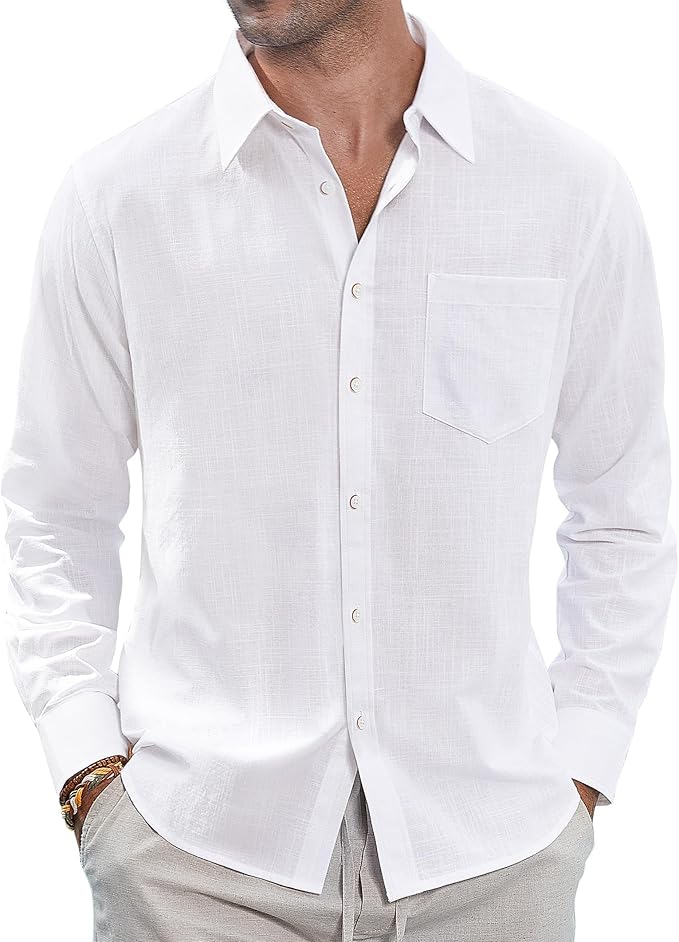
J.VER Men’s Linen Shirt – $22.99

32 Degrees Cool Men’s Active T-Shirt – $11.99
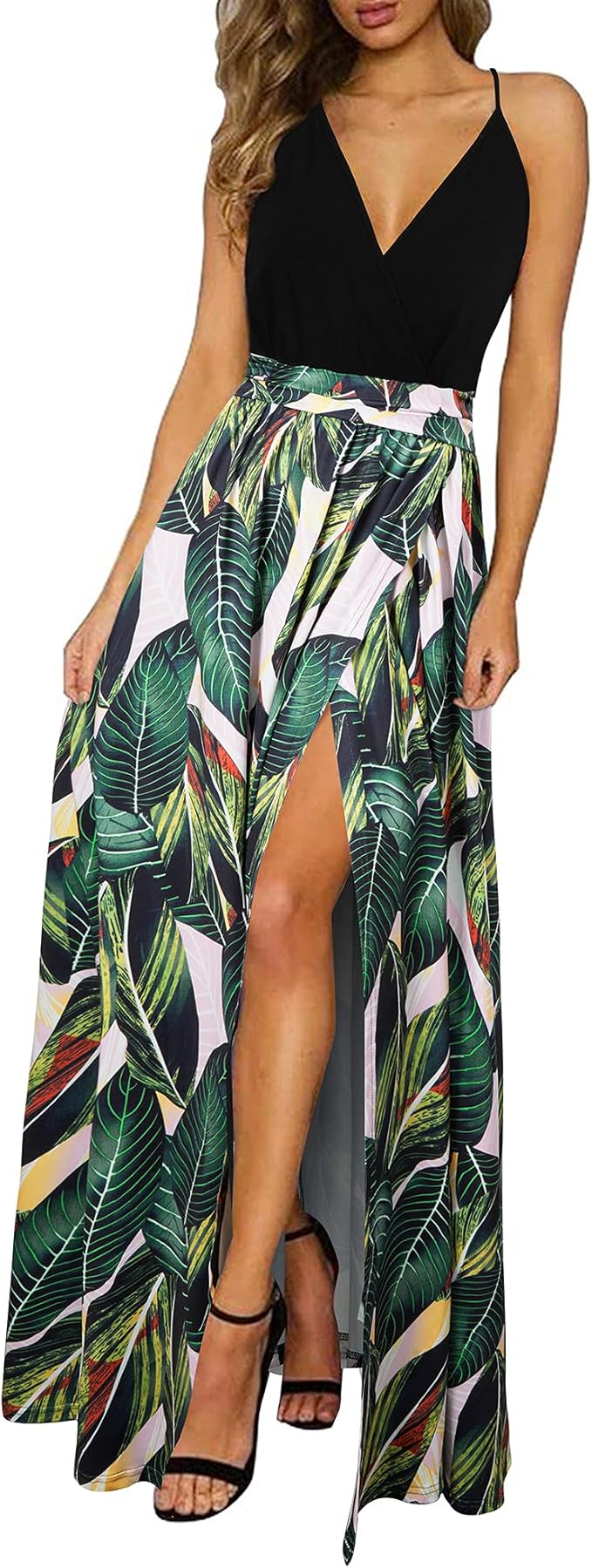
Newshows Summer Maxi Dress – $24.84

Spicy Sandia Floral Kimono – $24.99
Shoes
- Flip-flops or sandals – easy to slip off (you’ll be doing that a lot).
- Comfortable walking shoes – for exploring cities or going on hikes.
- Water shoes – if you plan on kayaking, snorkeling, or visiting rocky beaches.
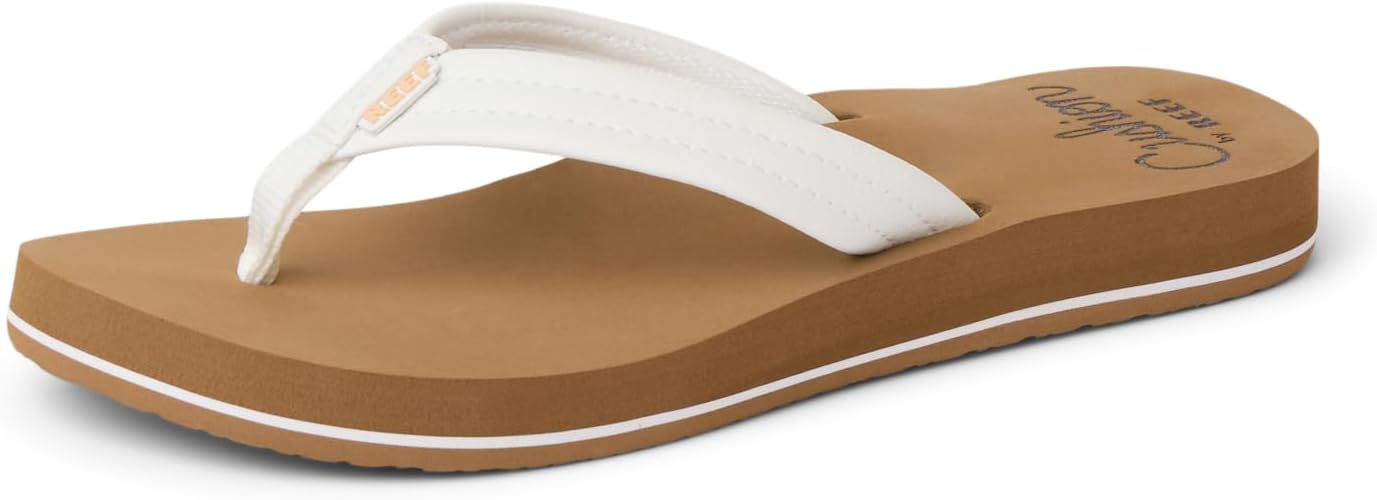
REEF Cushion Breeze Flip Flops – $40.00

Women’s Slip-On Walking Shoes – $56.99

VILOCY Men’s Mesh Oxford Sneakers – $45.99
Toiletries & Health
- Sunscreen – buy it at home; it’s expensive in Thailand and often contains bleaching agents to lighten your skin.
- Mosquito repellent – especially important in jungle or island areas.
- Basic meds – like paracetamol, antihistamines, motion sickness pills, and rehydration salts.
- Hand sanitizer or wet wipes – for transport and public toilets.
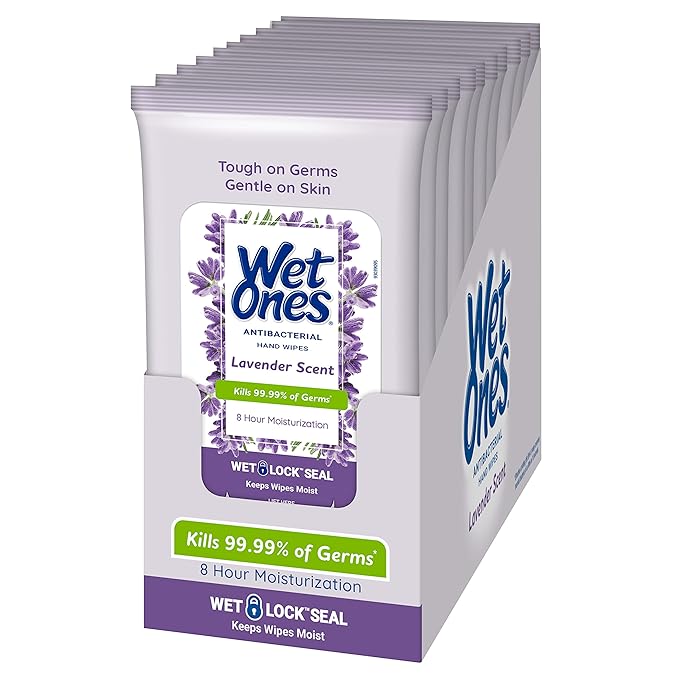
Wet Ones Lavender Antibacterial Wipes – $19.90
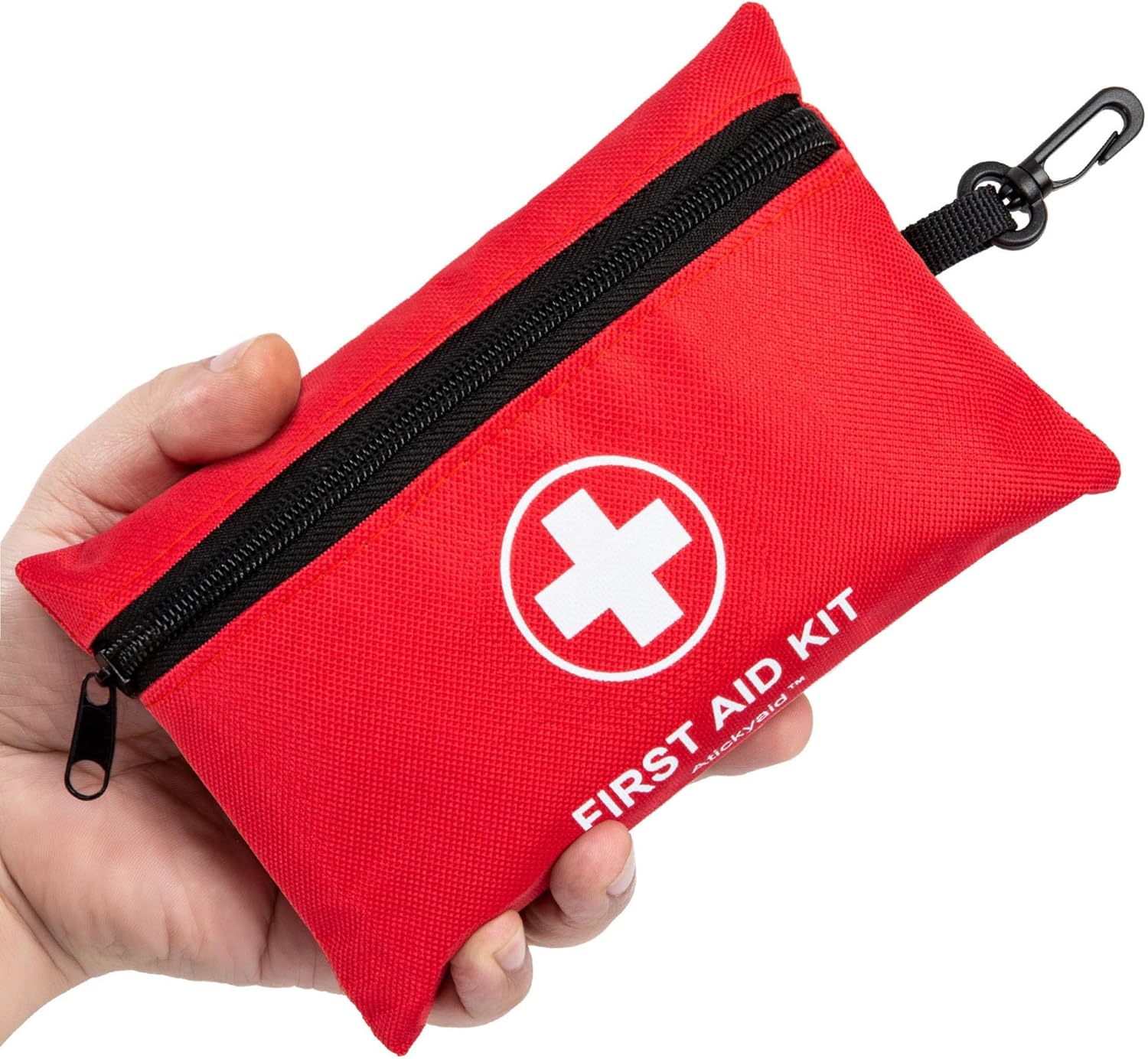
Mini First Aid Kit – $8.99
Tech & Travel Extras
- Universal travel adapter – Thailand uses types A, B, and C plugs (same as the US and Europe).
- Power bank – for long travel days or when maps drain your phone.
- SIM card or eSIM – you can buy one at the airport (a bit more expensive), 7-Eleven, AIS, or True shops. Alternatively, use Airalo for just buying a data package.
- Reusable water bottle – most cafes and hotels have refill stations.
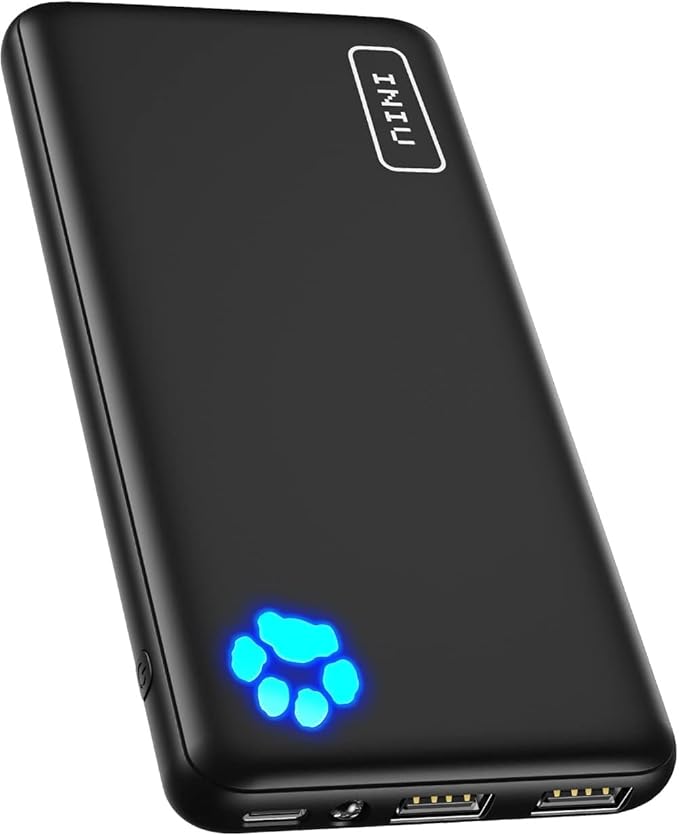
INIU Slim 10000mAh Portable Charger – $15.98
💡 Pro tip: You can buy almost everything in Thailand if you forget something, often cheaper than at home. So no need to overpack.
Also, I never pack more clothes than I need for 7 days. In Thailand you can find cheap laundries at every corner.
Final Tips for First-Time Travelers in Thailand
Tipping Etiquette
Tipping isn’t expected, but it’s appreciated. Here’s what I personally tip in Thailand:
- Leave 10–20 Baht for street food or coffee.
- 20–100 Baht for sit-down restaurants (or more if you fine dine). Some restaurants include a service charge of around 7%. They don’t expect you to tip then.
- 20–50 Baht for hotel porters, drivers.
- 50–150 Baht for massage therapists (depending on the duration, the parlor, and, of course, how much you liked it).
Haggling Tips
You can haggle in markets, taxis (without a meter), and with tour vendors. But always keep it polite. Smile. Laugh. Walk away if it feels too pushy. It’s part of the fun, not a battle.
Be Flexible
Trains run late. Ferries change times. Minibuses stop for snacks when no one’s hungry. Thailand runs on its own clock, and that’s okay. Embrace it. Breathe. You’re on island time now.
Don’t Overplan
This one’s important. Thailand has so much to offer, but trying to see everything in one go will leave you exhausted. Stick to 2–3 locations for your first trip. We found out that each location change usually takes a whole day. So give yourself time to nap, float in the sea, or follow a random street that smells like fried bananas.
Key Takeaways: Thailand for First-Timers
- Thailand is safe, affordable, and super welcoming. Perfect for your first Asia trip.
- Plan to stay 14-21 days and visit 2–3 spots max (city + culture + beach is a great combo).
- Best first-time destinations: Bangkok, Chiang Mai, Krabi, Koh Samui, Koh Phangan, and more.
- Travel is easy. Book things as you go, and don’t overthink it.
- Pack light, stay flexible, and expect a few surprises.
- Respect the culture: dress modestly at temples, take off your shoes, smile often.
- Don’t try to see it all. Slow travel works best in Thailand.
👉 You might also like:
– Celebrating Christmas in Thailand: 2025 Guide
– 12 Best Places to Stay in Thailand – Top Family Picks
– 15 Most Iconic Landmarks in Thailand You Shouldn’t Miss
Final Thoughts on Thailand for First-Timers
I’m pretty sure that you will love Thailand. Just make sure to take things easy. Trust the Thais and their unique time management. Don’t be too picky and forget your Western safety standards. Then you’ll have the best time of your life!
Do you have any questions about planning your first trip to Thailand? Please let me know in the comments. I’m happy to help!
Thank you for reading and for making me part of your day! Yours, Lulu
FAQ: First-Time Traveling to Thailand
Is Thailand good for beginner travelers?
Yes. Thailand is beginner-friendly because transport is easy, tourist infrastructure is strong, and English is common in popular areas.
What is the best time to visit Thailand?
The best time to visit is during the dry season from November to early April, especially if you want blue skies and crystal-clear waters. But if you’re planning to visit southern Thailand, islands like Koh Samui and Koh Phangan are perfect even in the rainy season. They have a mini high season between July and August.
How many places should I visit on my first trip?
If it’s your first visit, pick 2–3 places max. That way, you’ll avoid burnout and get a real feel for each location. A good combo? One major city like Bangkok, one cultural spot like Chiang Mai, and one island like Koh Samui or Phi Phi Island.
Is Thailand illegal to wear no knickers?
No, there’s no “underwear law” tourists get checked for. But public decency laws exist everywhere. If you’re dressed normally in public, you’re fine.
What is the 112 rule in Thailand?
Section 112 is Thailand’s lèse-majesté law (about insults/defamation of the monarchy). Tourists should avoid jokes, rude comments, or heated political talk about the monarchy in public or online. Keep it respectful and you won’t have an issue.
Is $100 a day enough in Thailand?
Usually yes for solo travelers and many couples, especially in cities and the north. On islands, prices jump fast (tours + taxis + nicer hotels). For families, $100/day can work with simple hotels and local food, but not with lots of private drivers and big excursions.
Do I need travel insurance for Thailand?
I recommend it. Scooter accidents and hospital visits happen fast here, even on “easy” trips. We use Safetywing.
What should I wear when visiting temples?
Respect is key. At Buddhist temples and religious sites, cover your shoulders and knees, and remove your shoes before entering. Temples like Wat Pho or the White Temple in Chiang Rai are stunning. And showing respect helps preserve Thailand’s cultural heritage.
Is the tap water safe to drink in Thailand?
Not at all! You should stick to bottled or filtered water. Ice is usually fine in restaurants, but if you’re sensitive, play it safe.
Can I get by without speaking Thai?
Yes in tourist areas. Learning “hello” and “thank you” goes a long way.


One Response
I love your post. It is so informative. I am planning on going to Thailand real soon and your post has given me great information. Thank you for sharing.