
What Are the Most Interesting Facts About Thailand?
Thailand is the only country in Southeast Asia never colonized by a European power, has over 40,000 Buddhist temples, and is home to the bumblebee bat, the world’s smallest mammal by body length. It’s also the birthplace of Red Bull and one of the world’s top three rice exporters, and Bangkok holds the world’s longest official city name. We’ve been living in Thailand since 2019, and the surprises genuinely never stop.
Thailand attracts millions of tourists every year: almost 33 million international visitors in 2025, to be exact. Most people visit for the friendly locals, amazing food, and stunning nature. But do you know about Thailand’s hidden secrets?
Trust me, these 35 interesting facts about Thailand are so cool, they’ll make you the star of your next party conversation. Here we go.
Historical and Cultural Facts About Thailand
1. The Grand Palace is the seat of the King of Thailand, but the King no longer resides there. Built in 1782, the Grand Palace in Bangkok served as the official residence of the Thai monarch for over 150 years.
Today, it is used for ceremonial events and is a major tourist attraction, showcasing stunning Thai architecture and rich history. The palace complex houses the Emerald Buddha, one of the most revered artifacts in Thailand. While the King now resides at the Dusit Palace, the Grand Palace remains a symbol of the monarchy’s legacy.
2. The Name “Thailand” Means “Land of the Free” While neighbors like Vietnam and Myanmar were under European rule, Thailand stayed free. The land of smiles is the only country in Southeast Asia never colonized by Europe. Smart kings like Rama IV and Rama V preserved its independence through diplomacy and modernization.
Known as Siam until 1939, the name “Thailand” reflects this freedom, with “Thai” meaning “free.” This name is a symbol of the country’s identity and the freedom its people value so deeply.
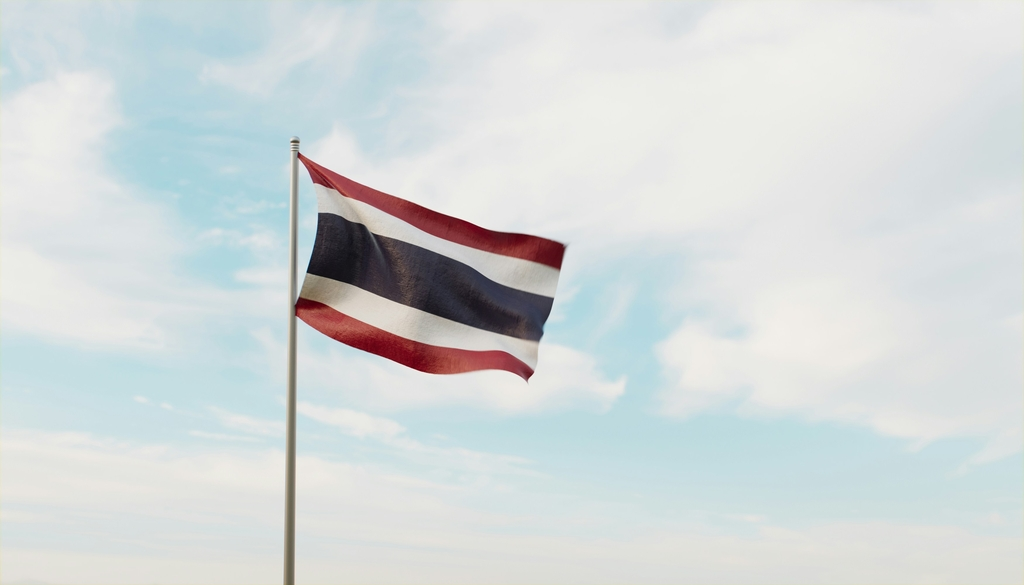
3. Thailand’s national flag tells a story. The Thai flag, known as Trirong (three colors), represents three key pillars of Thai society: red for the land and people, white for religion, and blue for the monarchy. The design was created during World War I to symbolize solidarity with Allied forces.
4. Bangkok’s full name is the longest city name in the world. In Thai, it’s called Krung Thep Maha Nakhon Amon Rattanakosin Mahinthara Ayutthaya Mahadilok Phop Noppharat Ratchathani Burirom Udomratchaniwet Mahasathan Amon Piman Awatan Sathit Sakkathattiya Witsanukam Prasit.
It means “City of Angels, Great City of Immortals, Magnificent City of the Nine Gems…” and continues with more poetic descriptions. Most Thais just call it Krung Thep, which means “City of Angels.”
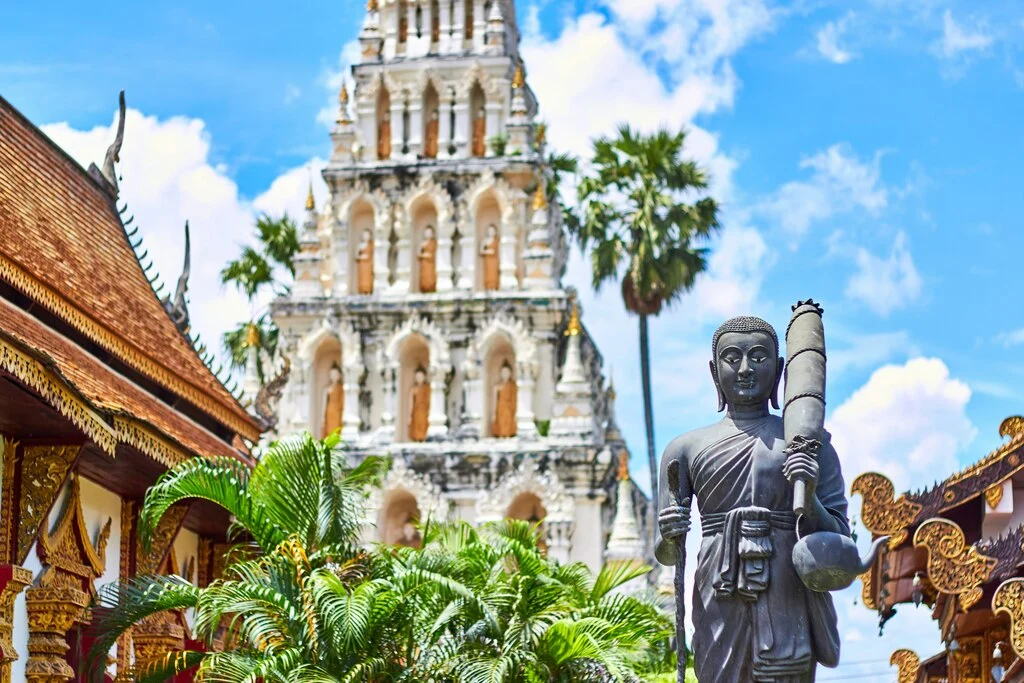
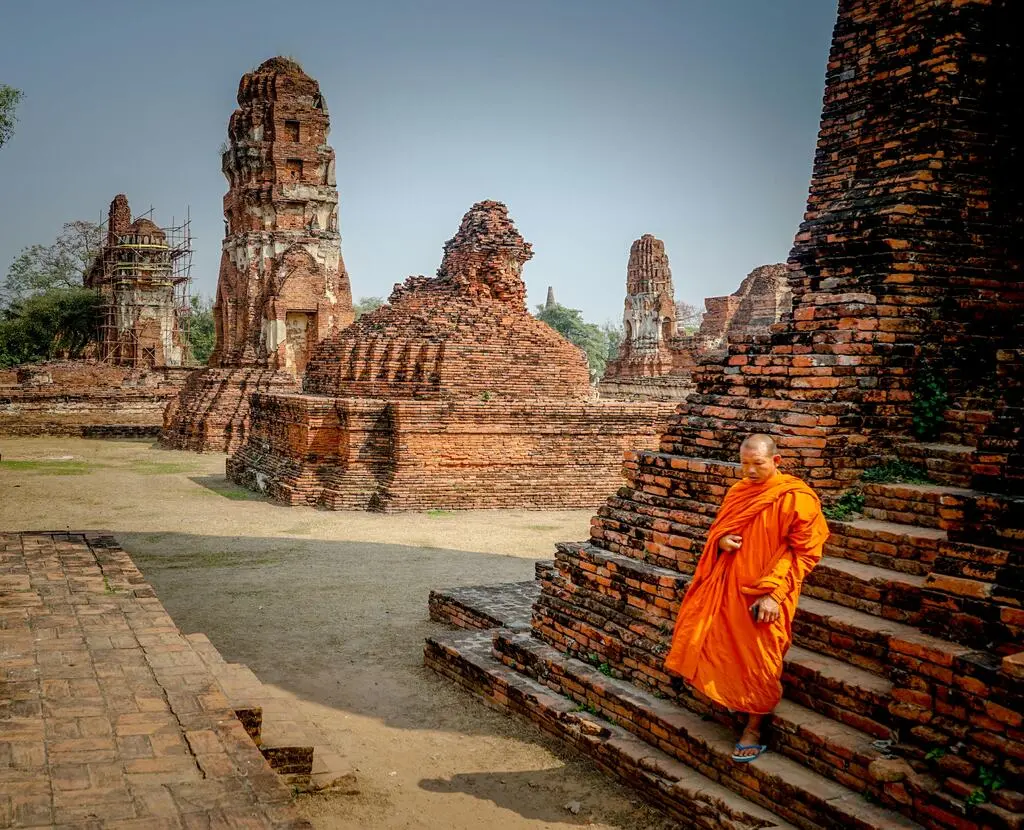
5. Thailand has over 40,000 Buddhist temples. You’ll see them everywhere, from big cities to tiny villages. Each one is special, with golden roofs and Buddha statues. Famous ones like Wat Phra Kaew and Wat Pho in Bangkok are must-visits. But temples aren’t just for tourists. Locals pray, meditate, and celebrate there. They are a big part of Thai life and culture.
6. The Thai calendar is 543 years ahead of the Gregorian calendar. In Thailand, the year 2026 in the Western calendar is 2569 in the Thai Buddhist calendar. This calendar starts from the year Buddha reached nirvana. It’s used for official documents and holidays in Thailand, but you’ll still see the Western calendar in places like airports and tourist areas. Don’t be surprised if the date looks very different on a receipt or a sign.
👉 Check out the best hotels in Bangkok, or use the map below!
Geography and Natural Wonders in Thailand
7. Thailand is home to the world’s smallest mammal by body length, the bumblebee bat. This tiny bat, also called Kitti’s hog-nosed bat, weighs just 2 grams and is about the size of a large bumblebee. It lives in limestone caves in western Thailand and only comes out at dusk to hunt insects.
These little bats are rare and are an important part of Thailand’s unique wildlife. If you’re lucky, you might spot one near Sai Yok National Park!
8. Thailand’s Similan Islands are one of the best diving spots in the world. Located in the Andaman Sea, these islands are known for crystal-clear water, colorful coral reefs, and a huge variety of marine life.
Divers can see everything from colorful fish to manta rays and even whale sharks. The Similan Islands are part of a protected national park, open only from October to May.
9. Thailand has ancient underwater temples. The village of Old Sangkhlaburi, submerged by the Vajiralongkorn Dam in Kanchanaburi province, is home to an underwater Buddhist temple.
During the dry season, parts of the temple resurface, attracting visitors eager to glimpse this unique piece of history.
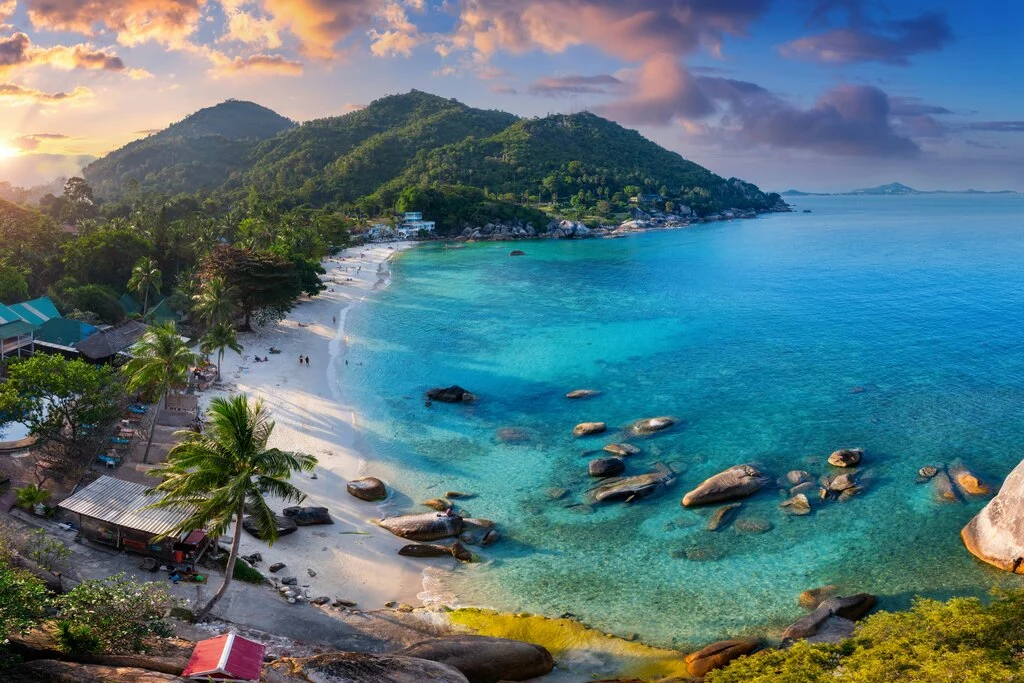
10. Thailand has over 1,400 islands. The islands are divided between the Gulf of Thailand in the east and the Andaman Sea in the west. In the east, Koh Samui, Koh Phangan, and Koh Tao are popular for resorts, parties, and diving.
In the west, Phuket, the Phi Phi Islands, and the Similan Islands attract tourists. Many islands are developed for tourism, but plenty remain untouched until today.
Thai Food and Culinary Facts About Thailand
11. Pad Thai is not an ancient Thai dish; it became popular in the 20th century. It was introduced during the 1930s and 1940s as part of a campaign to promote Thai nationalism and reduce rice consumption.
The government encouraged people to eat noodles instead, and Pad Thai was born. Made with stir-fried noodles, tamarind sauce, and optional tofu, shrimp, or chicken, it quickly became a national favorite.
12. Thailand is one of the world’s top three rice exporters. Rice is a big part of Thai life, both as food and income. The country exported about 7.9 million tons of rice in 2025, with Jasmine rice being the most famous variety.
Farming covers vast parts of the countryside, especially in the central plains, known as the “Rice Bowl of Asia.”
13. Some Thai fruits are grown for decoration only. Thailand’s golden bananas, known as kluai nam wa thong, are not meant to be eaten. These small, shiny bananas are used as offerings in Buddhist ceremonies, symbolizing wealth and prosperity.
14. Thailand has a fruit that’s illegal to export. The Makok fruit, also known as Thai Olive (Spondias pinnata), is prohibited from being exported due to its rarity and cultural significance. It’s often used in Thai cuisine and traditional remedies.
15. Durian, often called the “king of fruits,” is banned in some places because of its strong smell. This spiky fruit has a unique aroma that people either love or hate. It’s been compared to rotten onions or smelly socks.
Because of this, durian is banned in hotels, public transport, and airports across Thailand and other countries.
16. Thai chilies are among the spiciest in the world. These tiny peppers, like the bird’s eye chili, pack intense heat. They’re a key ingredient in many Thai dishes, including Som Tam and Tom Yum soup. Measured on the Scoville scale, some Thai chilies can reach up to 100,000 Scoville heat units.
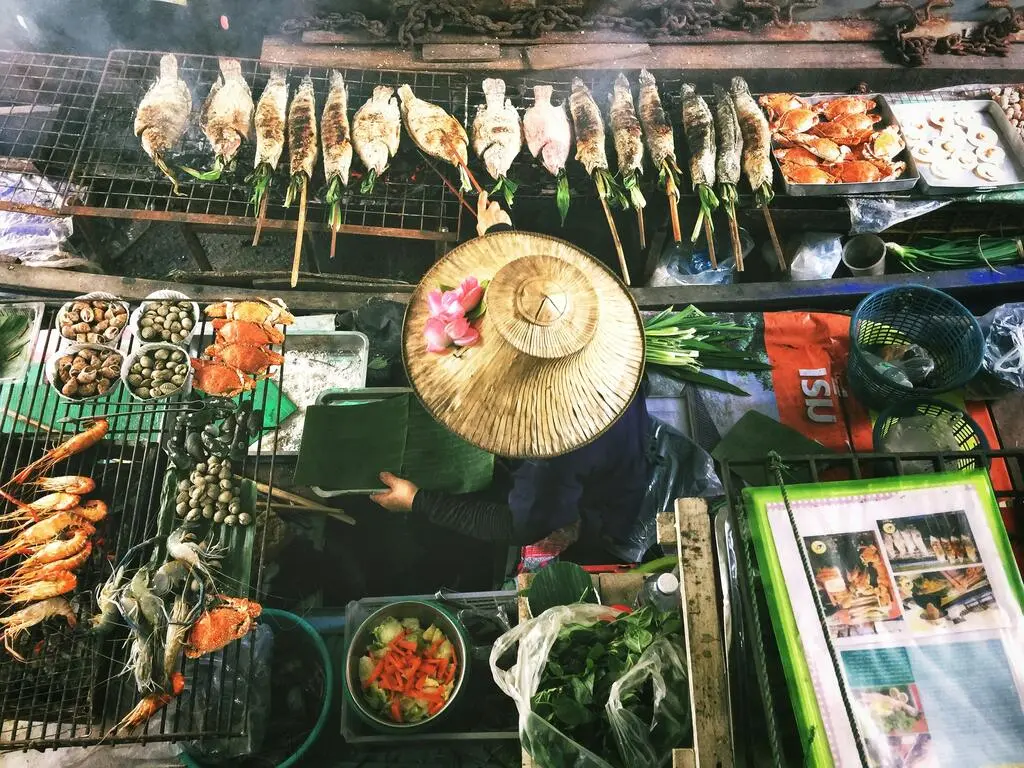
17. Chopsticks aren’t commonly used for most Thai dishes. In Thailand, people usually eat with a fork and spoon. The fork is used to push food onto the spoon, which is then used to eat. Chopsticks are mainly used for noodle dishes, influenced by Chinese cuisine.
Unique Thai Traditions and Beliefs
18. Muay Thai Boxing is called the “Art of Eight Limbs” because of its unique striking techniques. This traditional martial art uses fists, elbows, knees, and shins, making it one of the most versatile and effective fighting styles in the world. Muay Thai is a sport and a deep part of Thai culture, with origins going back hundreds of years.
Fun fact: In many Muay Thai stadiums, a live band plays traditional music during matches, setting an energetic and unique atmosphere for fighters and spectators alike.
19. The Thai royal family is deeply respected, and it’s against the law to disrespect them. Thailand has strict lèse majesté laws, which make it illegal to insult or criticize the monarchy. These laws apply to speech, writing, and even online comments. The royal family holds a special place in Thai culture, symbolizing unity and tradition.
Visitors are advised to be mindful of their words and actions regarding the monarchy. The deep respect for the monarchy is one of the most interesting facts about Thailand’s traditions and values.
20. Thai people often use nicknames more than their real names. These nicknames, or chue len (play names), are usually short, easy to say, and given by family at birth. They can be based on personality traits, objects, or even English words like “Happy” or “Joy.”
While official names are long and formal, nicknames make daily life easier and are a fun part of Thai culture. You’ll hear them used everywhere, from school to the workplace. We have friends that are called “Meow” (cat), “Fah” (sky) or “Naam” (water).

21. Songkran, the traditional Thai New Year, is celebrated with massive water fights. Held every April, it’s one of the country’s most exciting festivals. Originally, water was poured gently to wash away bad luck. Today, it’s turned into wild water battles across Thailand. People use buckets, water guns, and hoses to soak each other. Major cities like Bangkok and Chiang Mai are hotspots, but we saw the wildest parties in Phuket and Koh Phangan.
However, Songkran is also the day with the most scooter accidents. People pour water on you while driving, making it easy to get distracted. It’s safer to avoid scooters and take a Grab taxi instead.
22. A Thai monk meditated for decades in a glass coffin. At Wat Khunaram on Koh Samui, the preserved body of Luang Pho Daeng, a monk who died in meditation in 1973, is displayed in a glass case.
His calm and composed appearance is seen as a sign of enlightenment.
23. Spirit houses are a common sight in Thai homes and businesses. These small, beautifully decorated shrines are placed outside to honor spirits and protect the property. Thais believe that offering food, drinks, and incense to these spirits brings good luck and keeps bad luck away.
At many spirit houses, you’ll notice bottles of red Fanta alongside flowers and incense. This bright red soda is thought to please the spirits, with its color symbolizing energy and vitality. Some say it’s a modern replacement for traditional offerings like animal blood.
👉 You might also find these Thailand articles interesting:
– The 8 Best Airlines to Fly to Thailand
– What to Wear in Thailand?
– Koh Phangan Elephant Sanctuary – Is it Worth it?
– Thailand Family Itinerary
Wildlife and Environmental Facts About Thailand
24. The original Siamese cats come from Thailand. The famous Siamese cat breed originated in Thailand, where they are called Wichienmaat, meaning “Moon Diamond.” In ancient times, these cats were believed to bring good fortune and were often kept by royalty and Buddhist monks.
25. Thailand has the world’s largest freshwater fish. The giant freshwater stingray, found in Thailand’s rivers like the Mekong River and Chao Phraya, can grow up to 5 meters in length and weigh over 600 kg.
26. Thailand is home to rare pink dolphins. You can spot them in the waters around Khanom and the Gulf of Thailand. These Indo-Pacific humpback dolphins get their pink color from blood vessels close to their skin. Seeing one is considered good luck!
People are working hard to protect their habitat so future generations can enjoy these amazing creatures too.
27. The longest snake ever recorded was found in Thailand. A reticulated python discovered in Thailand holds the record for the longest snake in captivity, measuring over 10 meters (33 feet). The country’s tropical environment makes it home to many giant reptiles.
28. Thailand is one of the world’s top producers of orchids and tropical flowers. The country’s warm climate and rich soil make it perfect for growing these vibrant blooms. Orchids, in particular, are a big part of Thai culture and exports, with thousands of varieties grown across the country.
You’ll find them everywhere: decorating homes, temples, and even floating markets.
Quirky and Fun Facts About Thailand
Now the quirky ones, the facts about Thailand that tend to surprise people.
29. There’s a Buddhist temple made of beer bottles. Wat Pa Maha Chedi Kaew, also called the Temple of a Million Bottles, is located in Sisaket Province and is built almost entirely from recycled glass beer bottles. The monks started this project to promote environmental awareness.
30. Thai silk is made from silkworm spit. Traditional Thai silk is produced from the natural protein secretions of silkworms. The painstaking process of harvesting, weaving, and dyeing the silk has made it one of the most sought-after textiles in the world.
31. A bat cave inspired a popular Batman scene. The Tham Lod Cave in Mae Hong Son is famous for its bat-filled chambers and lantern-lit tours. The sight of thousands of bats flying out at sunset is said to have inspired a dramatic scene in The Dark Knight Rises.
32. Thailand is home to the largest golden Buddha in the world, weighing 5.5 tons. This stunning statue, known as Phra Phuttha Maha Suwana Patimakon, is located in Wat Traimit Temple in Bangkok. It stands over three meters tall and is made entirely of solid gold. Originally covered in plaster to hide its value, the gold was discovered by accident in the 1950s.
33. The traditional Thai greeting, the “wai,” varies in formality. A wai involves pressing your palms together and slightly bowing your head. The height of your hands and depth of the bow depend on whom you’re greeting. For elders or respected figures, the wai is more formal, with hands raised higher and a deeper bow. Among friends, it’s more casual.
34. Red Bull, the world-famous energy drink, originated in Thailand. The drink was first created in 1976 by Thai entrepreneur Chaleo Yoovidhya under the name “Krating Daeng,” which translates to “Red Bull” in Thai. It became popular among Thai laborers and truck drivers before Austrian businessman Dietrich Mateschitz partnered with Chaleo to market it globally.
Today, Red Bull is one of the best-selling and most popular energy drinks in the world, but its roots remain deeply tied to Thailand.
35. The Thai alphabet is known for its artistic, curvy design and has 44 consonants. Each letter has a flowing, decorative look that makes the script unique and beautiful. In addition to the consonants, there are 32 vowels and 4 tone marks, which help create the five tones of the Thai language.
Learning the alphabet can be tricky for newcomers, but it’s a fascinating part of Thailand’s culture and identity.
Facts About Thailand Culture: Customs Worth Knowing
A few Thailand culture facts go beyond trivia and are genuinely useful to know before you visit.
At 8am and 6pm every day, the national anthem plays in public spaces. Train stations, parks, and public squares all pause while the anthem is broadcast. Locals stop and stand still as a mark of respect. If you’re there, stop too. It lasts about a minute.
On temple dress codes: yes, women can wear shorts in Thailand generally, but not inside temples. Both men and women need to cover knees and shoulders at temple sites. Many temples lend sarongs at the entrance, so don’t panic if you forgot.
These customs are part of why Thailand feels so distinct the moment you arrive. Respectful visitors almost always find locals warm and welcoming in return.
Fun Facts About Thailand for Kids
Planning to share these Thailand facts with younger readers? Here are the ones that tend to get the biggest reaction from kids.
- The world’s tiniest bat lives in Thailand and weighs less than a 10-baht coin.
- Bangkok’s full ceremonial name is 168 letters long when written in English letters. Try saying it!
- There is a temple built almost entirely from recycled beer bottles.
- Pink dolphins live in the Gulf of Thailand, especially around Khanom.
- Thai New Year (Songkran) is basically a country-wide water fight in April.
- The Thai alphabet has 44 consonants and 32 vowels, way more than English.
- Red Bull traces back to a Thai drink called Krating Daeng.
Thailand has a way of making facts feel like magic, which is probably why kids (and adults) can’t stop talking about it.
Key Takeaways
- Thailand: only SE Asian country never colonized.
- Bangkok has the world’s longest city name.
- Over 40,000 Buddhist temples across the country.
- Red Bull traces back to Krating Daeng, created in Thailand in 1976.
- Rice exports: about 7.9 million tons in 2025, third in the world behind India and Vietnam.
- Bumblebee bat (about 2g) is the world’s smallest mammal by body length.
- Thai Buddhist calendar runs 543 years ahead of Gregorian.
Final Thoughts on the 35 Most Interesting Facts About Thailand
Thailand is full of surprises, isn’t it?! I had no idea about the pink dolphins before, and now I’m determined to see them for myself. We’ve been living in Thailand since 2019, and I still feel like I’m far from fully understanding the Thais. Every day, I come across another funny quirk.
Which one of the facts about Thailand surprised you the most? Please let me know in the comments!
Thank you for reading and for making me part of your day! Yours, Lulu
Frequently Asked Questions
Can females wear shorts in Thailand?
Yes, women can wear shorts in Thailand in most public places, on beaches, and in towns. The exception is Buddhist temples, where both men and women must cover their knees and shoulders. Many temples provide sarongs at the entrance for visitors who aren’t dressed appropriately, so you won’t be turned away.
How old is Thailand as a country?
Thailand traces its history as a unified kingdom to the Sukhothai Kingdom, founded around 1238, making it roughly 800 years old as an organized state. The country was known as Siam until 1939, briefly again from 1945, and has been Thailand since 1949. Crucially, it was never colonized by a European power, making it unique in Southeast Asia.
What are some interesting food facts about Thailand?
Pad Thai was popularized in the late 1930s and 1940s, when the government promoted rice noodles to save rice. Thailand exported about 7.9 million tons of rice in 2025, making it one of the world’s top three rice exporters, behind India and Vietnam. Durian is banned in many hotels and on public transport because of its powerful smell. And chopsticks are not the standard utensil: most Thai meals are eaten with a fork and spoon.
Is the Thai Buddhist calendar really different from the Western one?
Yes, the Thai Buddhist calendar runs 543 years ahead of the Gregorian calendar, because it starts from the year the Buddha reached nirvana. The year 2026 in the Western calendar is 2569 in the Thai Buddhist calendar. You’ll see both on official documents, receipts, and signs, so don’t be thrown off when dates look unfamiliar.