
Is Koh Phangan Elephant Sanctuary Ethical?
Yes. Of the places I have seen in Southern Thailand, this is one of the more ethical ones. There is no riding, no shows, and no forced bathing. Visitors only touch them briefly while feeding, and the elephants can always walk away. It’s still captivity, of course, but if you want to meet elephants in Thailand without supporting cruelty, I feel good recommending this place.
Why We Keep Going Back With Our Kids
Around 7,000 elephants live in Thailand, with half of them in captivity. Isn’t this sad?! Exploitation for tourism is still common. Elephant rides are offered, the animals have to perform tricks, and they are chained with iron chains for their entire lives.
While looking for an ethical elephant place, we found the Koh Phangan Elephant Sanctuary. So far, we have visited it three times as a family. Here’s my personal and honest review!
Our Quick Picks
🌴 Planning your trip? Check my Koh Phangan Itinerary, the Best Things to Do on the Island.
🏡 Find deals at the best-rated Koh Phangan Hotels.
💻 Check out our Travel Health Insurance Plan. It’s the one we actually use in Thailand.
History of Koh Phangan Elephant Sanctuary in Thailand
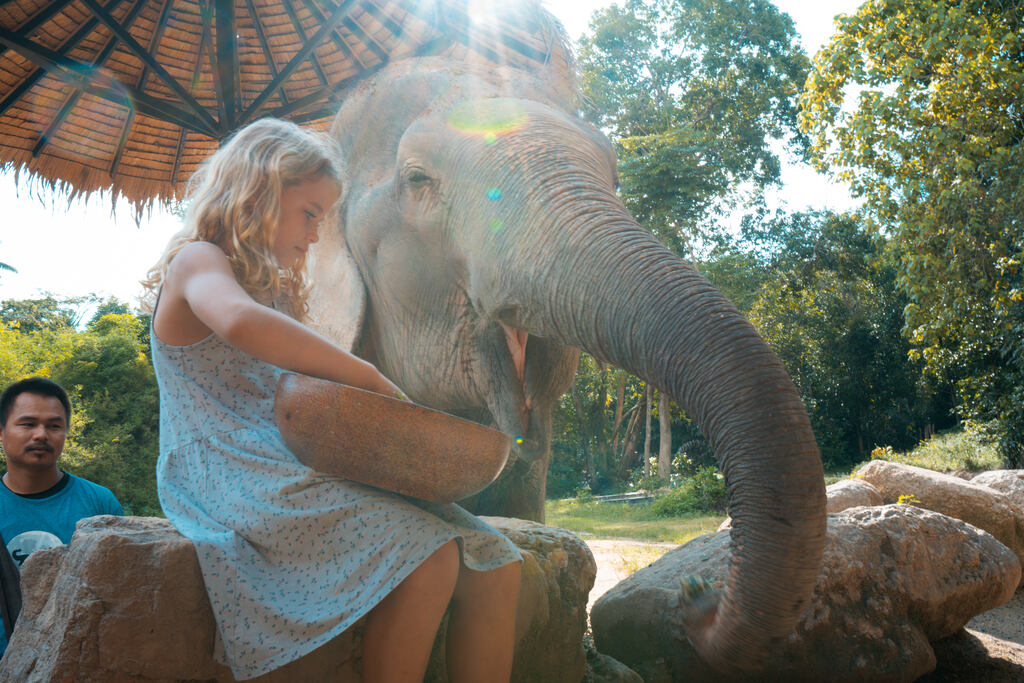
Phangan Elephant Sanctuary is home to three lovely old ladies (ranging from 43 to 67 years), all rescued from elephant riding camps in Pattaya. These wise, gentle females spent years carrying heavy loads and giving rides to tourists. Now, they finally get to enjoy a well-deserved retirement!
The sanctuary started as a dream of a Thai man in 2019, with the goal of giving elephants freedom and protection. After a rough start, including a break during COVID, it has finally opened its doors. It’s tucked away in the lush hills of Baan Madue Wan.
Programs at Koh Phangan Elephant Sanctuary – What to Expect
Phangan Elephant Sanctuary offers visitors two types of experiences: the Tour Program and the Feeding Program.
Tour Program
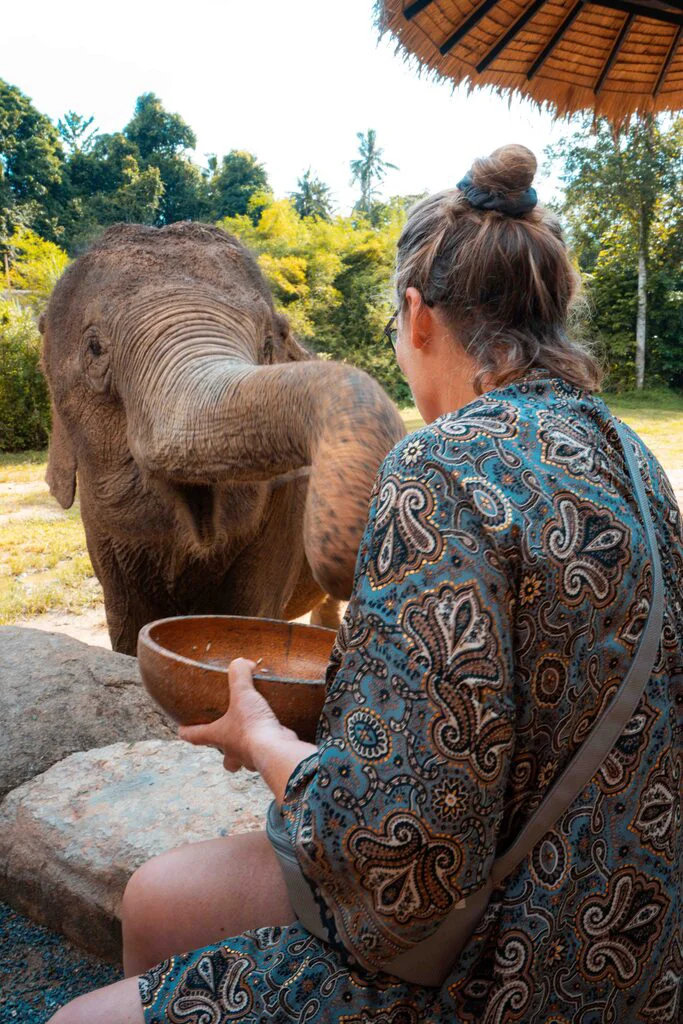
The Tour Program lasts about two hours and includes several activities. It starts with a registration, followed by a short and pretty funny video that explains the sanctuary’s mission. After that, you get to prepare rice balls and feed the elephants a mix of fruits. This hands-on feeding experience lets you get close to the elephants and see their personalities up close.
After feeding, there’s a walk through the sanctuary. You’ll watch the elephants in a more natural environment, learn about their behavior, and hear stories from the guides. You’ll also get an introduction to the herbal medicines used to support the elephants’ health. The program ends with a snack and a soft drink for the guests.
Feeding Program
The Feeding Program is shorter, lasting about an hour, and focuses mainly on feeding the elephants. We did this program with our girls (ages 2 and 6), and it was just right for them. It was long enough to enjoy time with the elephants but not so long that they got bored.
You’ll help prepare rice balls and feed a mix of fruits to the elephants. Then, you’ll take a walk to the other side of the sanctuary, where you’ll learn about the anatomy of elephants and the cruel reality of riding practices. There’s a real 60 kg elephant riding saddle and a device used by non-ethical elephant camps to control them.
The guides speak good English and share insights about the sanctuary’s work and the stories of the elephants (which are mostly really sad!).
Is Koh Phangan Elephant Sanctuary Really Ethical?
If you’ve been following my blog for a while, you know I don’t recommend activities or places where animals are exploited. For the past 20 years, we haven’t visited zoos, circuses with animals, or similar places. So, I’m very cautious when it comes to visiting places with animals.
Many elephant camps in Thailand don’t allow riding, but the elephants are still washed by tourists several times a day. I don’t consider that ethical either. In my view, animals shouldn’t be touched (excessively) or forced to stand still for photos or other unnecessary activities.
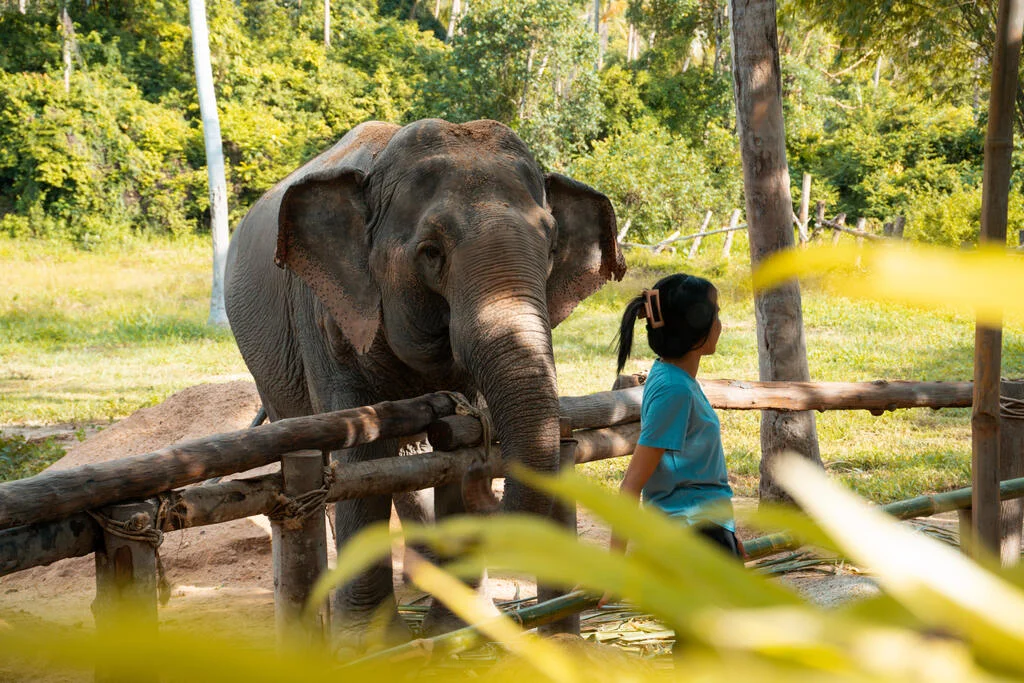
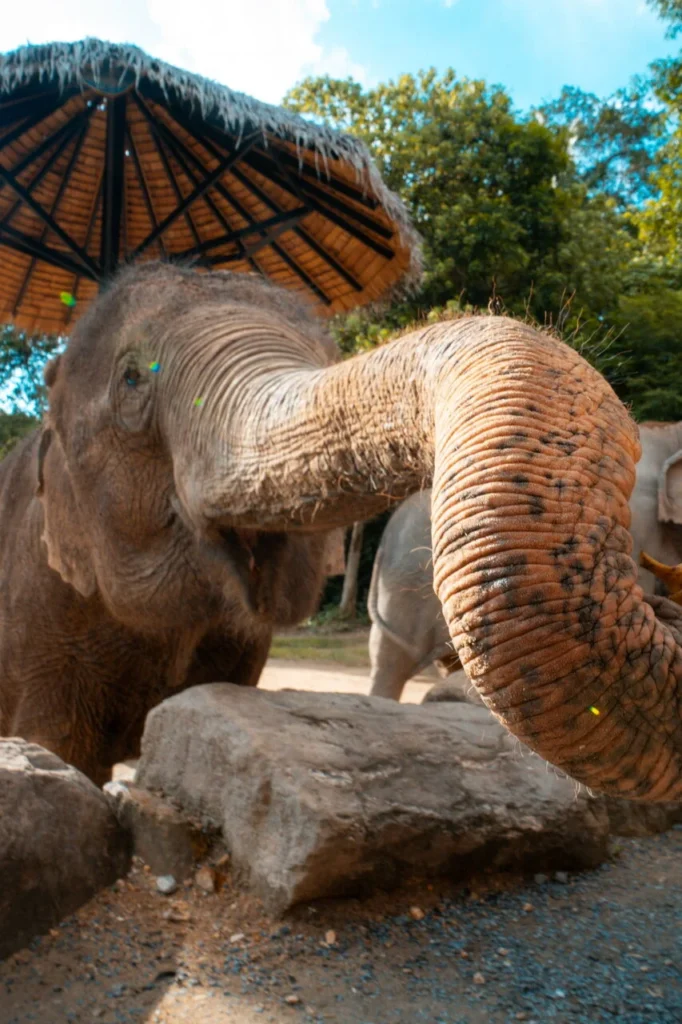
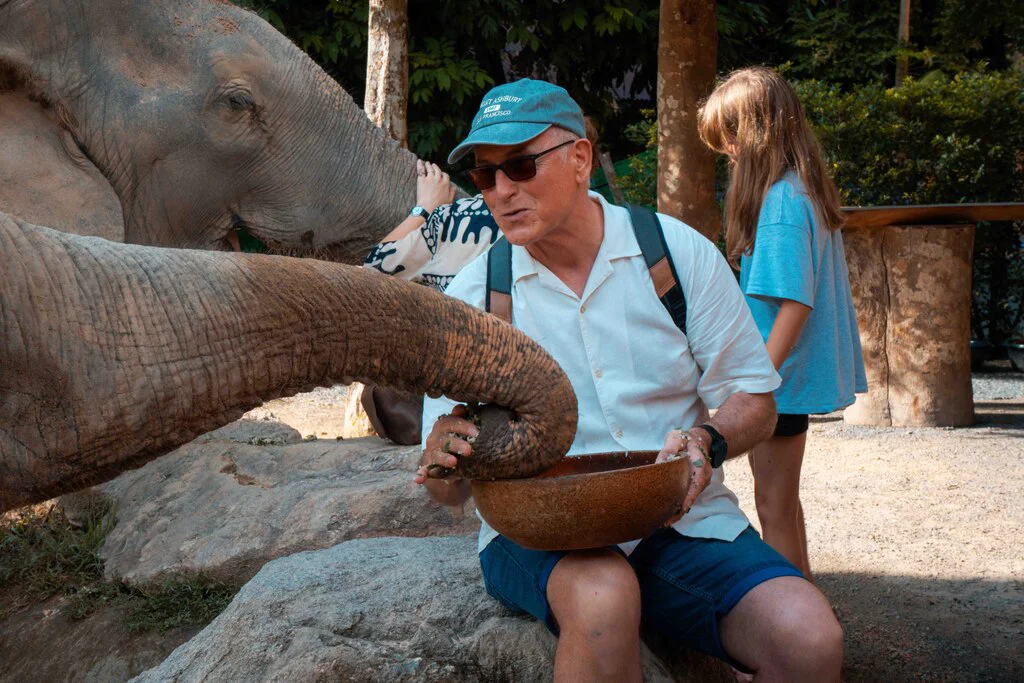
That’s why I really appreciate the approach at the Koh Phangan Elephant Sanctuary. The elephants are only touched during feeding, and they aren’t forced to stay still or pose for photos.
In fact, the only time tourists can stand next to them for a photo is when the elephants are busy eating a big basket of fruit. Once the elephant is done or simply not interested anymore, it just walks away.
I love this approach. It’s exactly the kind of respect that elephants and all animals deserve.
Here’s why the Koh Phangan Elephant Sanctuary is considered ethical:
- No Riding: The sanctuary strictly prohibits riding, which can damage the elephants’ spines and cause long-term health problems.
- Free-Roaming Environment: The elephants can roam freely around the sanctuary without chains.
- Focus on Rehabilitation: The sanctuary only shelters rescued elephants from the tourism and logging industries. It offers them a safe, stress-free place where they can heal from past traumas.
- Education and Awareness: Visitors learn about the elephants’ history, behavior, and health needs.
Even though this is one of the more ethical options in Southern Thailand, it’s not perfect:
- I’d personally prefer no touching at all. In an ideal world, sanctuaries would run without any direct contact.
- The area is quite small. I’d love for the elephants to have even more space to roam. Given their past trauma, more room would only be a positive thing.
How to Check if an Elephant Sanctuary is Ethical
Not every place that calls itself a “sanctuary” is truly ethical. Over the years I’ve created a simple checklist I use before supporting any elephant experience in Thailand.
Here’s what I look for:
- No riding or shows. If you see painting, football, or tricks, it’s not ethical.
- Limited touching. Short feeding moments are okay if the elephant can move away.
- No sharp tools. Mahouts should not use hooks, nails, or sticks.
- Space to move. Elephants should walk freely, dust bathe, and explore.
- Real rescue stories. Ethical sanctuaries are transparent about each elephant’s past.
- Education over entertainment. The focus should be on learning, not selfies.
Koh Phangan Elephant Sanctuary follows each of these points, which is why I feel comfortable recommending it.
Why You Should Avoid Elephant Riding and Unethical Camps on Koh Phangan
Elephant riding still shows up in Google searches for Koh Phangan (there’s one riding camp in Ban Tai on the way to Thong Nai Pan), but it’s something everyone should absolutely avoid. Riding can harm an elephant’s spine and usually comes with horrible training methods.
I stay away from places that:
- Promote elephant rides or close-contact photo sessions
- Offer repeated tourist bathing sessions
- Use chains or keep elephants in small concrete areas
- Advertise tricks, painting, or “shows”

Costs and Booking Information for Koh Phangan Elephant Sanctuary
You must book your visit online in advance. Visit the official page of Koh Phangan Elephant Sanctuary to book your appointment.
The sanctuary doesn’t accept online payments, so be sure to bring cash for entry.
Tour Program
Adults: 2,500 THB ($69 / €63) Children (4–11 years): 1,500 THB ($41 / €38) Children under 4: Free Schedule: Morning (9:30–11:30) and afternoon (14:00–16:00)
Feeding Program
Adults: 1,000 THB ($28 / €25) Children (4–11 years): 500 THB ($14 / €13) Children under 4: Free Schedule: 11:00, 13:00, 15:30, and 16:00
What to Wear to an Elephant Sanctuary in Thailand
- Light, breathable clothes that can get dusty or a bit muddy.
- Knee-length shorts or long, loose trousers so your legs are protected from sun and mosquitoes.
- Flip-flops or plastic sandals you can rinse off easily after walking through mud and elephant poo.
- A hat or cap – the feeding area and paths can be hot in the sun.
- Sunscreen and mosquito spray before you arrive, especially for kids.
Tips for Visiting Koh Phangan Elephant Sanctuary
👉 You might also like:
– 31 Best Things to Do in Koh Phangan
– Wang Sai Waterfall Koh Phangan
- Make sure to apply enough mosquito spray before you go. I’ve noticed that mosquitoes tend to be more aggressive in areas with animals.
- Arrive 10 minutes before the tour starts. This gives you time to pay and grab some water.
- Water and other drinks are available on-site, so you don’t need to pack much.
- We found the smallest groups during weekday afternoons. Weekends are usually quite busy, and weekday mornings sometimes have school groups.
Is Koh Phangan Elephant Sanctuary Family-Friendly for Kids?
Our youngest was 2 years old when we first visited. She comfortably lasted through the one-hour Feeding Program and had a lot of fun. Older children can, of course, get even more out of the visit, as they can understand and learn more.
It’s important that kids don’t run around wildly or shout. They should stay in front of or beside the elephant (never behind it) and remain with the group.
The sanctuary’s facilities are modern and safe. Since you’re not allowed to move around the elephants alone or unsupervised, I find the whole experience very safe.
There is one elephant who was sadly abused at a riding camp in Pattaya. He is so traumatized that you’re not allowed to interact with him. However, you can watch him being fed by a team member. I think this is a fair and safe approach, both for the elephant and the visitors.
Is Koh Phangan Elephant Sanctuary the Best in Thailand?
That depends on what you value most. For a small-island setting with a genuinely calm atmosphere and no crowds, the Phangan Elephant Sanctuary is hard to beat in Southern Thailand. The herd is tiny (three older rescued females), the groups are small, and the pace is slow. If you’re based on Koh Phangan or Koh Samui, it’s the most convenient ethical option nearby. If you want a bigger herd or more rainforest land, there are well-regarded sanctuaries further north.
Key Takeaways
- No riding, no shows, no forced bathing at this sanctuary.
- Three rescued females, all retired from tourism camps.
- Feeding Program (1 hour) works well for toddlers and young kids.
- Tour Program (2 hours) suits older kids and adults.
- Book online in advance. Bring cash on the day.
- Use the ethics checklist before booking any elephant experience in Thailand.
What Else to Do in Koh Phangan
- On a hot day, check out Wang Sai Waterfall. It’s an easy jungle walk with shallow pools and a refreshing vibe.
- If you’re curious about local culture, watching a Muay Thai fight is SO MUCH FUN!
- For a slower day, the Navana Water Healing experience is lovely.
- If you’re deciding between islands, here’s my honest guide comparing Koh Tao and Koh Phangan.
Final Thoughts on Visiting Koh Phangan Elephant Sanctuary
So yes, the Koh Phangan Elephant Sanctuary is a real chance to see elephants living freely, without forced interactions. It’s not perfect, but close.
If you’re looking for an ethical way to interact with elephants in Thailand, this sanctuary is totally worth it! Just remember to book ahead, bring cash, and dress for the weather to make the most of your visit!
Have you been to the Koh Phangan Elephant Sanctuary? How was your experience? I’d love to hear your thoughts in the comments!
Thanks for reading and for making me part of your day! Yours, Lulu
Frequently Asked Questions
Is Koh Phangan Elephant Sanctuary really ethical?
Overall, yes. The elephants here are rescued, there is no riding or shows, and visitors only touch them briefly while feeding. It is still a captive setting, but compared to many camps in Thailand this feels like a much kinder option.
Is it ethical to touch elephants at a sanctuary?
Yes and no. For me, the best option would be just to watch them from a distance. But sometimes, that’s not completely possible in order for a sanctuary to survive financially. I’d say short, calm feeding moments are acceptable as long as elephants can move away and are not forced into selfies or baths. What I don’t support are places where guests hug elephants, climb on them, or wash them.
How do I check if an elephant sanctuary is ethical?
I always look for clear “no riding” rules, no hooks or chains, plenty of space, and elephants that are allowed to walk away. Honest information about where the elephants came from is another big sign. If something feels like a zoo or a circus, I stay away.
How does Koh Phangan Elephant Sanctuary compare to Samui or Phuket Elephant Sanctuary?
They all focus on rescued elephants and don’t offer riding. I chose the Koh Phangan one because we were living on the island and loved the small, familiar feeling. If you go somewhere else, use the same checklist: no riding, no hooks, no shows, no bathing.
What should I wear to an elephant sanctuary in Thailand?
I usually wear light clothes that can get a bit dusty, plus sandals or flip-flops that are easy to rinse. Add a hat, sunscreen, and mosquito spray. After rain, paths get muddy, so avoid your favourite white sneakers.
When should I avoid elephant activities on Koh Phangan?
I avoid any place that still offers elephant riding, tricks, or constant bathing sessions for tourists. I also prefer not to visit in the heaviest rain, when paths are slippery and it’s less fun for the elephants and for kids.
Can children visit Koh Phangan Elephant Sanctuary?
Yes. My girls were 2 and 6 on our first visit and loved it. The Feeding Program is perfect for younger kids because it is only one hour, and the staff are very patient. Children just need to stay calm and always stand next to, never behind, the elephants.
What is the most ethical elephant sanctuary in Thailand?
No single sanctuary holds that title, but the most ethical ones share clear traits: no riding, no chains, no tourist bathing, and full transparency about each elephant’s rescue story. Phangan Elephant Sanctuary on Koh Phangan meets all of those criteria. So do several well-known sanctuaries in Chiang Mai and Phuket. The key is always using the same checklist, not just trusting the word “sanctuary” in a name.
Do you need to book Koh Phangan Elephant Sanctuary tickets in advance?
Yes, you must book online before you visit. The sanctuary does not accept walk-ins. Also note that it does not take online payments, so bring cash on the day. Check the official Phangan Elephant Sanctuary website for current availability and prices before you go.
Where is the best place to interact with elephants in Thailand?
Choose a sanctuary that focuses on rescue and rehabilitation and follows strict no-riding rules. There is no single “best” place, but ethical sanctuaries share the same traits: no riding, no hooks, no shows, and elephants that can walk away freely. Here’s my guide on ethical elephant places in Thailand.