


Is Bali a Good Place to Live With Kids?
Bali can be a fantastic place to raise kids if you love sun, friendly locals, and lots of outdoor time. The schools are excellent (but costly), nannies are easy to find, and the food scene is top-notch for families. Huge downsides: traffic is chaos, houses can suffer mold, and the Western lifestyle is pricey. If those things don’t faze you, Bali has a lot to offer families, just go in with your eyes open.
Why We Tried Living in Bali with Kids
We’re a German digital nomad family of four, traveling the world since 2019. We’ve spent most of our time so far in Southeast Asia, Australia, South Africa, and New Zealand.
So many friends raved about Bali, with kids and without, that we had to try it ourselves.
We spent three months in Bali with our two little girls, who were 1.5 and 5.5 years old at the time. We lived in Ubud and Canggu for six weeks each. That time taught us a lot, like how much we needed a break from Bali after!
So here is the real truth about living in Bali with kids as a digital nomad family, the cost of living, our personal experiences, and some handy tips I wish I’d known before we went.
Our Quick Tips
🏡 Book a family villa in Canggu or Ubud.
💸 Plan about 6–8K USD (5.5–7.3K EUR) a month.
🧸 We found lovely nannies via Bali Angel Holiday.
🏥 This is the Family Health Insurance Plan we actually use.

Visa Tips and the “6-Month Rule” in Bali
Since we decided to stay in Bali for three months, we had to dig deep into our pockets for the visa. We contacted the agency “Bali Visas” beforehand and started the visa process. The best option for us was to apply for the E-Visa “Single Entry Tourist Visa B211.” This visa was valid for up to 60 days, so we had to extend it once for another 60 days while in Bali to match our planned three-month stay.
I won’t get into all the details, but this was by far the most expensive visa we’ve ever applied for as a digital nomad family, for just a short stay! We paid 20,800,000 IDR (about 1,350 USD). And that’s not even counting photos, agency visits, or trips to Immigration in Denpasar.
It’s also good to know about Indonesia’s six-month rule. You can usually stay in the country for up to six months per year on tourist visas, but after that, you’re expected to leave and spend some time abroad before coming back. Plan ahead, this catches a lot of families off guard.
Finding Accommodation in Bali
Once we sorted out the visa situation, I started looking for a great place to live. I was so excited about the Balinese architecture and the open, bright lifestyle. But because Bali is flooded with tourists, the real estate prices have skyrocketed. We’re not just talking expensive; we’re talking insanely overpriced!
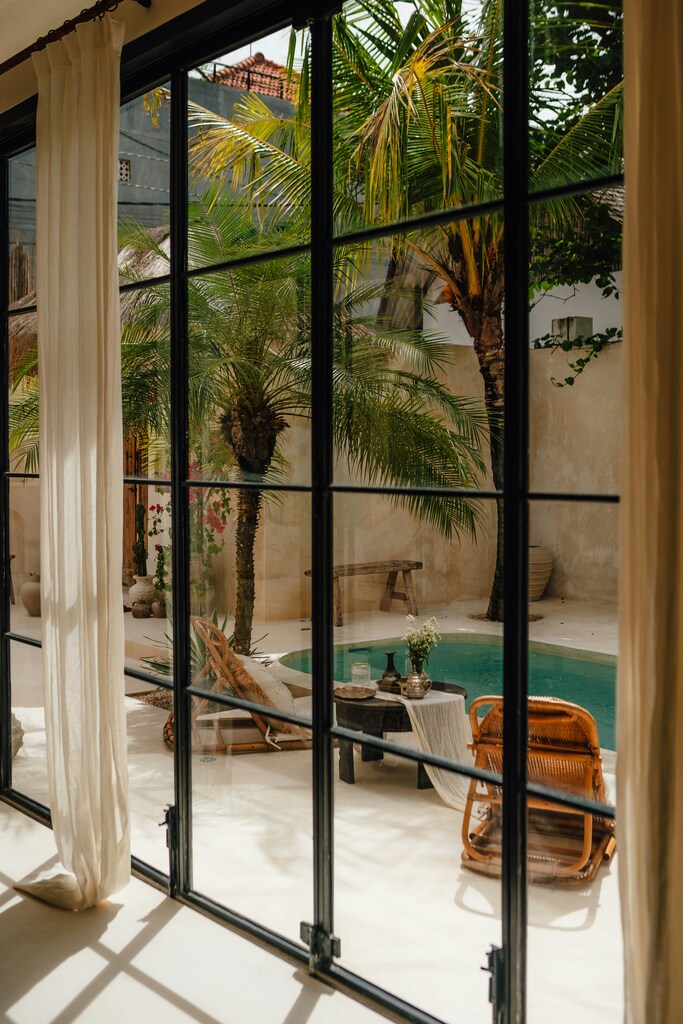
I first checked Facebook Marketplace and then got in touch with a few agents. For us, a perfect place included at least two bedrooms, in a quiet spot away from the main road, and a pool. We found a villa that cost a hefty $3,000 a month, and that didn’t even include cleaning, electricity, or water.
The worst part? Within days, we realized the place was completely covered in mold. You could smell it, and you could see it. Unfortunately, mold is a common problem when living in Bali, especially in Ubud. Bali’s humidity often ranges from 70% to 90%, particularly during the rainy season. Mold thrives in these damp conditions, and without proper ventilation or dehumidifiers, the moisture just builds up in homes.
That’s one of the main reasons we fled Ubud after just six weeks and moved to Canggu. There, we were lucky enough to rent our friends’ new villa for the same price, but without mold and a lot nicer!
Schools and Daycare in Bali: What to Expect
One of my biggest worries before moving to Bali was finding good schools and daycare. But honestly, that turned out to be so much easier than I thought. Bali has some of the best international schools in the world, and that’s exactly why so many families decide to settle here permanently.
When I started looking, every school I contacted replied quickly and clearly. Our girls were just one and a half and five and a half years old back then, so I focused on finding a kindergarten where English was spoken and both ages were welcome.
We ended up choosing Tirta Alam Bali School, a lovely place with bamboo huts and a lush garden. Balinese and foreign kids learn together there, and it immediately felt right for us. We were super happy and can truly recommend it.
Later, when we moved to Canggu, our youngest stayed home with a nanny, and the older one joined Umalas Kids Club. It’s a bigger school, run (I think) by a French woman. The only downside? They didn’t offer vegetarian meals for my daughter, a small thing, but a bit of a dealbreaker for us.
👉 You might like:
– Bali Family Guide – Top 8 Things to do in Ubud with Kids
– The 26 Best Family Resorts in Bali (With Prices)
Popular Schools in Bali
Here’s a list of the most popular and highly rated schools in Bali among foreigners and expat families. Annual tuition fees start from around US $5,000 (€4,600) and go up to US $20,000+ (€18,300+).
Green School Bali
Curriculum: International Baccalaureate (IB), with a strong focus on sustainability and environmental education.
Location: Abiansemal, Badung
Website
Canggu Community School (CCS)
Curriculum: British-based curriculum, offering Cambridge IGCSE and IB Diploma Programme. Location: Canggu
Website
Bali Island School (BIS)
Curriculum: International Baccalaureate (IB) from primary years to the IB Diploma Programme. Location: Sanur
Website
Australian Independent School Bali (AIS)
Curriculum: Australian curriculum, leading to the New South Wales Higher School Certificate (HSC).
Location: Denpasar
Website
ProEducation School
Curriculum: British curriculum, specializing in small class sizes and personalized learning plans. Location: Umalas
Website
Montessori School Bali
Curriculum: Montessori philosophy, with mixed-age classrooms and a hands-on learning approach.
Location: Canggu
Website
French School Bali (École Internationale Française de Bali)
Curriculum: French national curriculum.
Location: Kerobokan
Website
Dyatmika School
Curriculum: Bilingual curriculum (Indonesian and English), offering Cambridge IGCSEs and the Indonesian National Curriculum.
Location: Sanur
Website
Harmony School
Curriculum: International and Montessori-based curriculum with an emphasis on emotional intelligence and holistic development.
Location: Ubud
Website
Empathy School
Curriculum: International curriculum with a focus on social-emotional learning and conflict resolution.
Location: Canggu
Website
Wood School
Curriculum: Nature-based and project-based learning with a focus on sustainability and outdoor education.
Location: Canggu
Website
Finding a Nanny in Bali (and What It Costs)
Finding great nannies when living in Bali was surprisingly easy, and affordable too. Normally, this is one of my least favorite tasks whenever we move to a new place. But in Bali, it was a total breeze.

Here’s how I usually do it: First, I post in the local Facebook parents’ group that I’m looking for a nanny. I include all the details, such as specific requirements, hours, and salary expectations. Then, I wait to see who responds.
Often, people recommend nanny agencies, which I personally prefer. It gives me more confidence that the nanny will be well-trained and that payments will be handled professionally.
In both Ubud and Canggu, we worked with Bali Angel Holiday. The owner, Vera, found us amazing nannies who were simply fantastic. We paid 65,000 IDR per hour (around $4.20 USD) plus a travel fee of 50,000 IDR per day (about $3.20 USD).
Nanny Kadek (pictured above) was part of the house we rented in Canggu. She was both the housekeeper and the nanny.

How Much Does It Really Cost to Live in Bali with Kids?
| Expense | Ubud | Canggu |
|---|---|---|
| Housing (villa w/pool) | 3,410 USD / 3,170 EUR | 3,410 USD / 3,170 EUR |
| Groceries (markets) | 190 USD / 177 EUR | 225 USD / 209 EUR |
| Restaurants | 1,420 USD / 1,322 EUR | 1,779 USD / 1,654 EUR |
| Transport (scooters) | 354 USD / 329 EUR | 348 USD / 324 EUR |
| Childcare (school+nanny) | 1,411 USD / 1,312 EUR | 1,298 USD / 1,207 EUR |
| Sport/Gym | 354 USD / 329 EUR | 219 USD / 204 EUR |
| Co-working | 95 USD / 88 EUR | 131 USD / 122 EUR |
| Personal Care | 202 USD / 188 EUR | 167 USD / 155 EUR |
| Fun & Activities | 152 USD / 141 EUR | 229 USD / 213 EUR |
| Total monthly | 7,595 USD / 7,060 EUR | 7,809 USD / 7,263 EUR |
We often get asked, “Can you live in Bali for 2,000 USD (1,830 EUR) a month?”
No, you can’t. Maybe if you live alone and keep things very simple. For a family, comfort really starts at around 5,000 USD (≈ 4,600 EUR) a month. Anything less means cutting corners on housing, schools, food, and transport.
Compared to places like Thailand and Vietnam, Bali was really expensive for us. But it’s important to remember you’re paying for a standard of luxury you’d rarely find elsewhere in Indonesia.
To give you a clear picture, I’ve put together cost breakdowns for our time in Ubud and Canggu. All costs are monthly and don’t include expenses for memberships, subscriptions, health insurance, and retirement plans.
Monthly Cost of Living in Ubud
- 🏠 Housing: 50.000.000 IDR (3,410 USD / 3,170 EUR), 3 bdr Villa with Pool in the east of Ubud
- 🛒 Groceries: 2.790.000 IDR (190 USD / 177 EUR), supermarkets and local markets
- 🥗 Restaurants: 20.839.000 IDR (1,420 USD / 1,322 EUR), mostly Western food
- 🛵 Transportation: 5.200.000 IDR (354 USD / 329 EUR), we rented 1 Scoopy and 1 PCX from Bikago
- 👶 Childcare: 20.705.000 IDR (1,411 USD / 1,312 EUR), every day at a local school + nannies
- 🏋️ Sport: 5.200.000 IDR (354 USD / 329 EUR), memberships at Parq
- 💻 Co-Working: 1.400.000 IDR (95 USD / 88 EUR), day passes at different co-working spaces
- 💆♀️ Personal Care: 2.970.000 IDR (202 USD / 188 EUR), massages, nails, hairdresser/barber
- 🥳 Fun & Activities: 2.235.000 IDR (152 USD / 141 EUR), e.g., parties, water park, water sports
- 💸 Total: 111.339.000 IDR = 7,595 USD (7,060 EUR)
Monthly Cost of Living in Canggu
- 🏠 Housing: 50.000.000 IDR (3,410 USD / 3,170 EUR), 4bdr Villa with Pool in Umalas
- 🛒 Groceries: 3.305.000 IDR (225 USD / 209 EUR), Pepito and local markets
- 🥗 Restaurants: 26.082.000 IDR (1,779 USD / 1,654 EUR), mostly western food
- 🛵 Transportation: 5.105.000 IDR (348 USD / 324 EUR), we rented 1 Scoopy and 1 PCX from Bikago
- 👶 Childcare: 19.040.000 IDR (1,298 USD / 1,207 EUR), every day at international schools + nannies
- 🏋️ Sport: 3.219.000 IDR (219 USD / 204 EUR), day passes at multiple gyms
- 💻 Co-Working: 1.935.000 IDR (131 USD / 122 EUR), memberships at Tropical Nomad and other co-working spaces
- 💆♀️ Personal Care: 2.450.000 IDR (167 USD / 155 EUR), massages, nails, hairdresser/barber
- 🥳 Fun & Activities: 3.365.000 IDR (229 USD / 213 EUR), e.g. parties, watersports
- 💸 Total: 114.501.000 IDR = 7,809 USD (7,263 EUR)

👉 Compare these costs with our cost of living in Thailand
👉 Read all about our cost of living in Ubud and Canggu

Is Bali Safe for Families and Kids?
Now we come to the worst part: traffic! This can be a real challenge when living in Bali, especially with young kids. You’ve probably seen videos of the famous Canggu Shortcut. Yep, it’s not just a snapshot. It really is that bad in the tourist areas, almost every day and at almost any time.
Sure, you could argue, “Well, just don’t move to the most touristy spots on the island!” Fair point. But those areas have the best infrastructure for family life.
Since we’re experienced scooter riders, we rented scooters right away. Honestly, I think we saved a lot of time because you can get through traffic much faster on a scooter. I definitely wouldn’t recommend renting a car. We used a car taxi only for long trips, like going to Denpasar for the immigration office or to the airport.
But even with a scooter, sometimes it’s just unbearable. For short trips of about 3 kilometers, you can easily plan for a half-hour ride. And that’s in the blazing heat, with average temps around 86°F (30°C). That was the main downside of living in Bali for us.

Tips for Staying Safe in Bali Traffic
1. Avoid Main Roads During Peak Hours
Bali’s main roads, especially in areas like Kuta, Seminyak, Ubud, Canggu, and Denpasar, can become extremely congested during peak hours (7-9 AM and 4-7 PM). Opt for smaller side streets or jalan tikus (rat paths) to bypass traffic and get to your destination faster.
2. Plan Your Routes in Advance
Use apps like Google Maps to plan your route ahead. This helps avoid traffic hotspots and ensures you’re taking the quickest path. Local apps or groups sometimes share real-time traffic updates too.
3. Be Mindful of Potholes and Road Conditions
Many roads in Bali, especially less-traveled ones, can be uneven, with potholes or debris. Scan the road ahead constantly and ride cautiously when entering unknown streets.
4. Go with the Flow
This is my favorite tip for riding a scooter in Asia in general! Don’t weave in and out of traffic too aggressively, even if you want to go fast. Staying with the flow helps you avoid accidents and sudden stops, especially in busy areas. Sometimes when I’m in a hurry, I have to remind myself to stay in the flow just to stay safe.

Best Areas to Live in Bali with Family
The best places for living in Bali with kids depend entirely on your family’s priorities. My personal opinion: even though some of the best schools are there, I wouldn’t move to Ubud with my family again. The traffic felt even worse, and the weather was more oppressive. Maybe we didn’t give the area enough of a chance, I’m not sure.
Canggu, on the other hand, I’d do again in a heartbeat. The fresh ocean breeze and slightly better traffic made a huge difference in our quality of life.
Anyways, here are some top recommendations for family-friendly areas:
1. Sanur – Best for a Calm Family Life
Around 30% of expat families choose Sanur as their home base, and it’s easy to see why. The beaches are calm and safe for little ones, and the long promenade is perfect for bike rides or evening walks. There are also great international schools nearby, like Bali Island School, which makes Sanur a great choice for long-term family life.
Check out these long-term rentals in Sanur, or take a look at the hotels below!
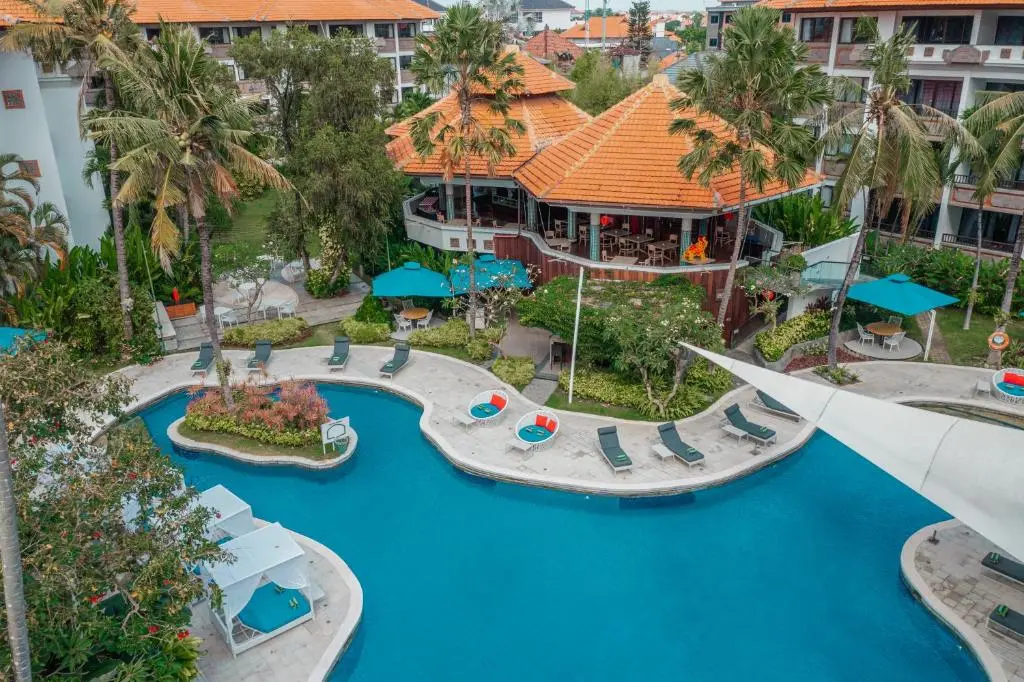
Prime Plaza Suites Sanur
- From $140 (€129) per night (2-Bedroom Suite)
- Spacious apartment-style suites with kitchen – ideal for families
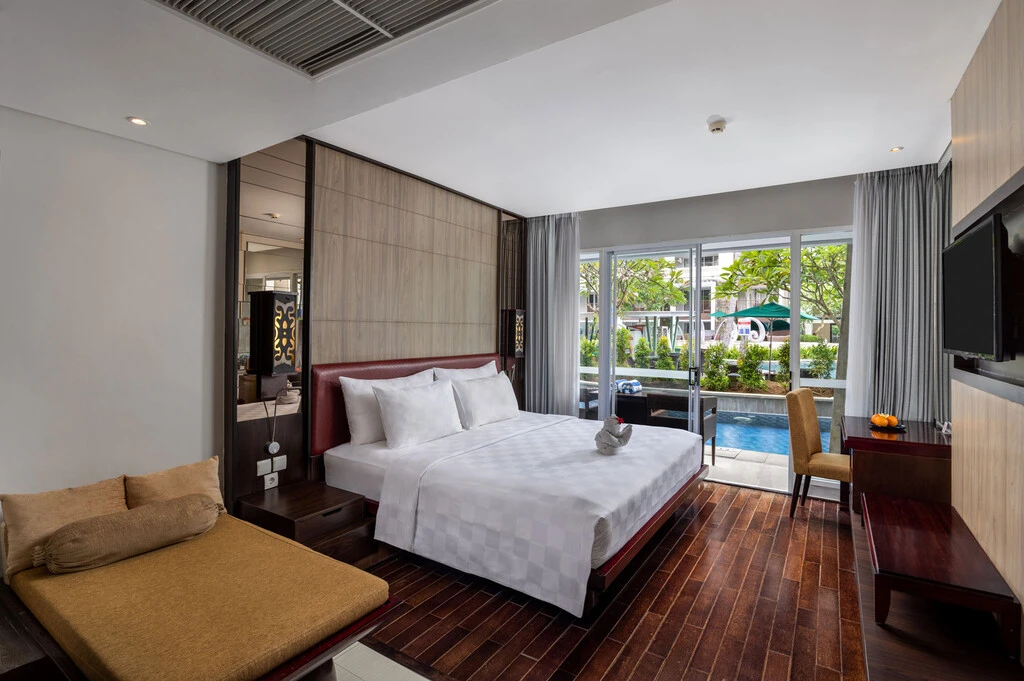
Sanur Resort Watujimbar
- From $90 (€83) per night (Twin Room)
- Large family-friendly rooms near Sanur Beach
2. Canggu – Trendy and Fun for Active Families
Canggu is full of life and great for families who like to stay active. You’ll find cafés with playgrounds, surf lessons for kids, yoga for moms, and plenty of beach time for everyone.
The community is strong and friendly. Schools like Montessori Bali and Green School Bali are close by, and Canggu actually has the most international schools in Bali, super practical when you live here with kids.
Here are some recommendations for long-term rentals in Canggu.

COMO Uma Canggu
- From $260 (€240) per night (1-Bedroom Residence)
- Family residences with kitchenettes and multiple bedrooms

Theanna Villa and Spa
- From $190 (€175) per night (1-Bedroom Pool Villa with Extra Bed)
- Private pool villas in a quiet yet central location
3. Ubud – Best for Nature-Loving Families
If you love nature, Ubud is the place. The rice terraces, jungle views, and slower pace make it perfect for families who want to disconnect a little. There’s lots to do with kids, visit rice paddies, try an art class, or join a craft workshop. You’ll also find organic markets, yoga studios, and wellness centers (Titi Batu!) that welcome parents and kids. If you’re into healthy living and don’t mind the traffic, Ubud is a great fit.
Discover the top non-touristy things to do in Ubud right here.
Check out these long-term rentals in Ubud or have a look at the hotels below!
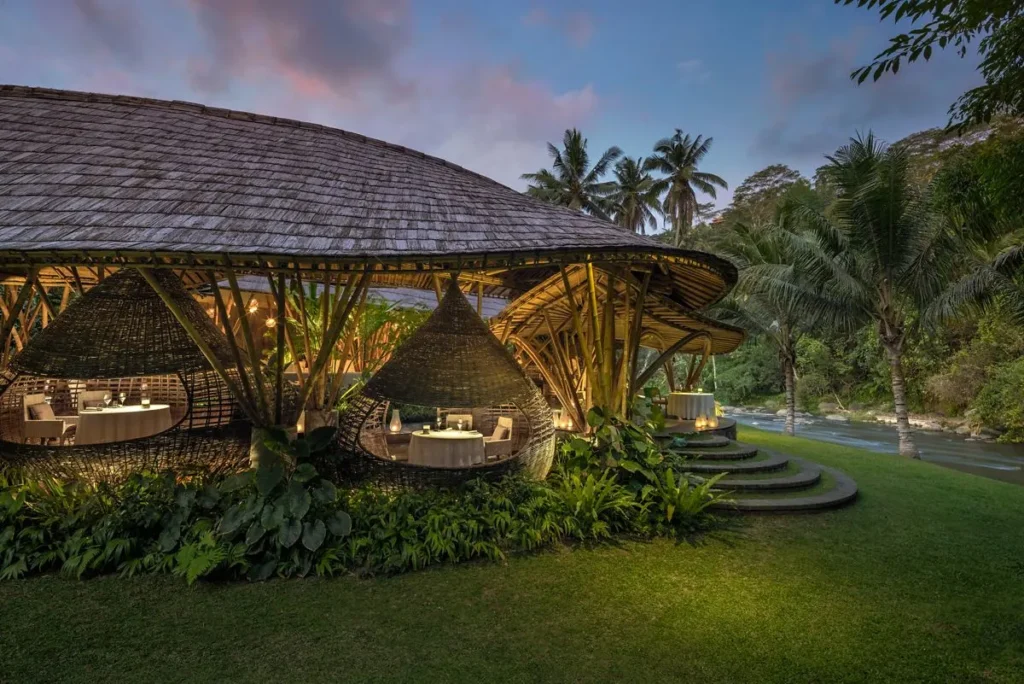
Mandapa, a Ritz-Carlton Reserve
- From $1,100 (€1,015) per night (1-Bedroom Suite)
- Luxury jungle retreat by the Ayung River with private pool villas

Dwaraka The Royal Villas
- From $122 (€112) per night (Royal Suite)
- Balinese palace-style villas with private pools and rice field views
4. Seminyak – Stylish Living with Kid-Friendly Perks
Seminyak is stylish but also surprisingly family-friendly. It’s close to international schools, good medical clinics, and big shopping centers. You’ll find plenty of restaurants with kids’ menus and fun places nearby like Waterbom Bali and Finns Recreation Club. It’s a bit more urban, but families love Seminyak for how convenient and central it is.
These long-term rentals in Seminyak could be a nice fit.

Courtyard by Marriott Bali Seminyak Resort
- From $160 (€148) per night (Deluxe Room with Extra Bed)
- Central Seminyak location, just a 5-minute walk to the beach

Montigo Resorts Seminyak
- From $150 (€139) per night (Family Suite)
- Spacious suites and villas just steps from Seminyak’s main street
5. Jimbaran – Great for a Quiet, Beachy Lifestyle
Jimbaran has a calm, local vibe and beautiful sunsets along its long beaches. The area offers both luxury villas and more affordable homes. Life moves more slowly here, but Uluwatu is close by for easy weekend trips.
Check out these long-term rentals in Jimbaran!

Four Seasons Resort Bali at Jimbaran Bay
- From $662 (€610) per night (Garden Villa)
- Private villas with pools and stunning ocean or garden views

Ayana Resort & Spa
- From $350 (€323) per night (Ocean View Room)
- Iconic clifftop resort with 12 pools, including a kids’ pool
Family Fun in Bali: Best Activities with Kids
Bali has so much to offer for families! I was really impressed by all the kid-friendly beach clubs, the restaurants and cafes with playgrounds, and the many workshops and activities for kids, especially the outdoor ones.
When it comes to that, Bali is super modern and has the best infrastructure I’ve seen in Southeast Asia (maybe aside from Singapore).
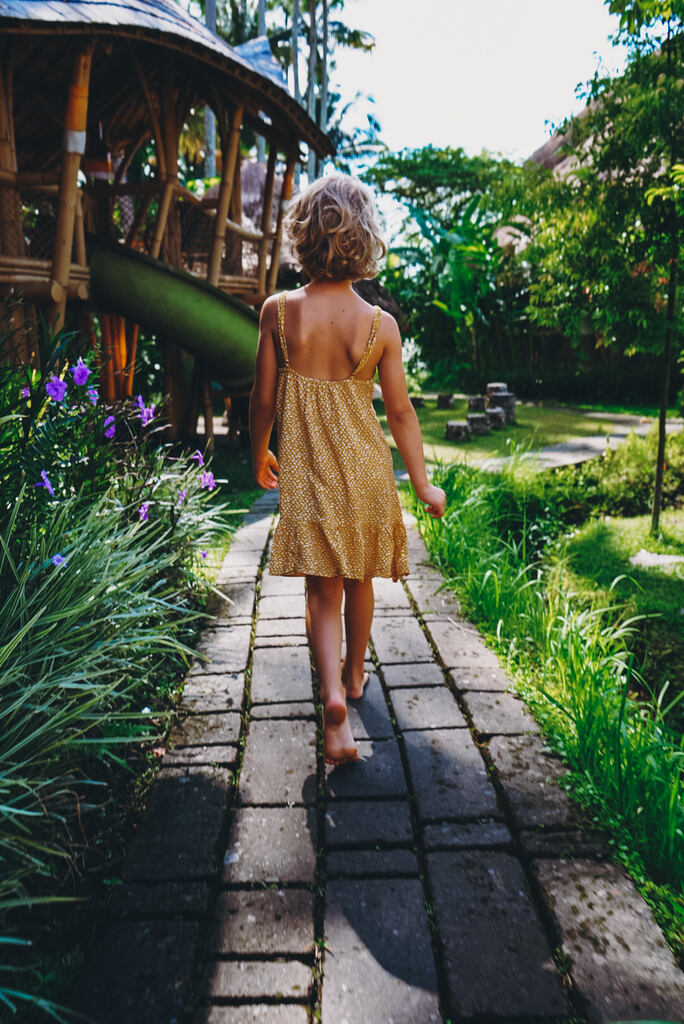
Here are my favorite activities and places in Bali with kids:
1. Waterbom Bali
Bali’s most famous waterpark, Waterbom, is undoubtedly the best thing for kids in Bali. At least, that’s what our girls say. It’s full of slides, pools, and lazy rivers that will keep kids (and adults!) happy all day. There are also great food options and shaded spots for a little rest.
2. Bali Wake Park
For older kids who love adventure, Bali Wake Park offers wakeboarding, kneeboarding, and a giant inflatable playground on water! It’s safe, supervised, and tons of fun for active kids.
3. Monkey Forest in Ubud
For a unique experience, head to Monkey Forest in Ubud. It’s a magical place where kids can see monkeys in their natural habitat. Just watch out, these monkeys can be cheeky, so keep your snacks hidden!
4. Cafes with Playgrounds
Bali is full of family-friendly cafes with playgrounds where parents can relax while the kids play. My favorite is Milk and Madu in Canggu, which has a wooden playground and plenty of space for kids to run around. Mana Kitchen in Ubud is another great option, with a big outdoor play area and delicious food.
5. Titi Batu Ubud
Titi Batu is a fantastic family-friendly spot in Bali, especially if you’re looking for a mix of fun and relaxation. It’s a sports and wellness club with a great kids’ area, including a pool, playground, and even a skate park for those who like to be active. But the highlight for kids? The weekly foam parties! Once a week, Titi Batu turns into a foam-filled wonderland where kids can jump around, splash, and have the best time in the bubbles.
Healthcare: Yes, the Bali Belly is Real!
Yes, unfortunately, it is. We’ve been traveling around full-time in Southeast Asia since 2019, so our bodies are pretty used to the local hygiene, water, and food quality. But still, we all got the Bali Belly. My husband had it the worst. He was down for three days with bad stomach cramps, fever, and diarrhea. The kids and I just had mild symptoms, a bloated belly and occasional stomach aches.
I don’t think Bali Belly can be avoided entirely. If it gets too bad, I’d suggest seeing a doctor quickly. With a stool sample (yep, I know, yummy), they can figure out what germ it is and prescribe the proper medication.
Having good health insurance really helps in those moments. After a few hospital visits with kids, we switched to SafetyWing Nomad Insurance Complete. It even covers check-ups and cancer treatment. Worth every cent!
💡 If you’re still wondering about general safety in Bali (like crime, health risks, and natural disasters) this post dives deeper: Is Bali Safe?
Balinese Life and Community for Families
We absolutely loved the Balinese people when living in Bali. They were incredibly friendly (and attractive, by the way!). In almost every restaurant, our kids were picked up or playfully engaged with by the locals, which made us feel very welcome. And don’t worry about the language barrier, Balinese people speak very good English, so communication was never an issue.
In Bali, the Hindu religion is visible everywhere. You’ll notice small woven baskets filled with flowers, rice, and incense placed outside homes, shops, and temples as daily offerings to the gods (try not to step on them!). Temples, large and small, are scattered across the island, and it’s common to see locals stopping by to pray.
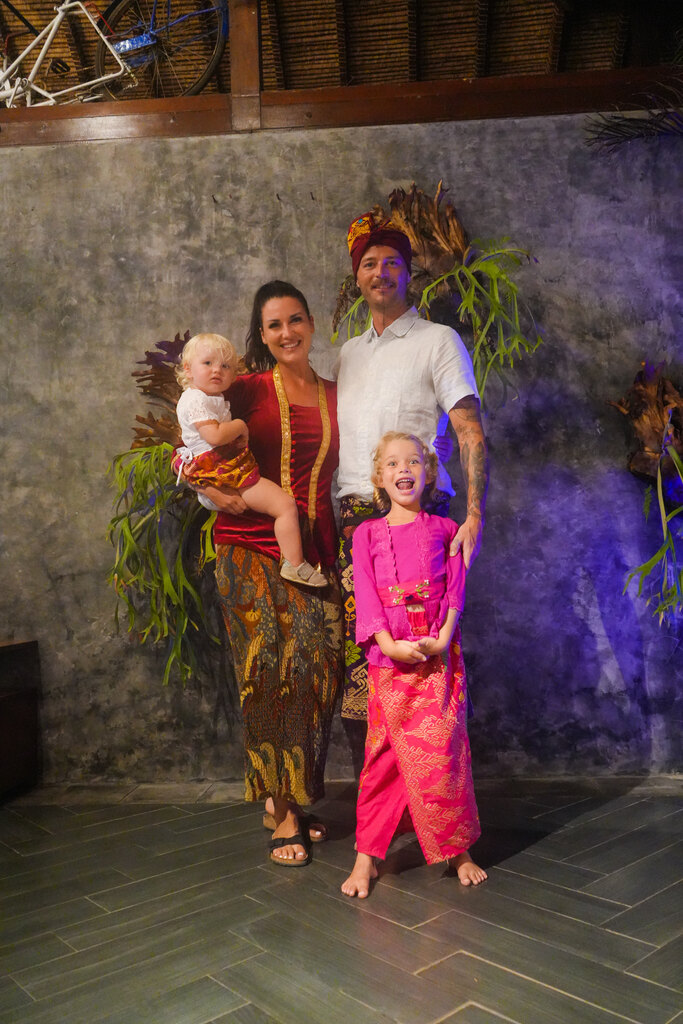
Balinese people often dress in traditional attire for temple visits or religious ceremonies, which happen regularly. Our Nanny in Canggu gave us some sets of traditional clothes so we could wear them at the Ogoh-ogoh Parade, the day after Nyepi (silent day in March).

Bali Weather: What to Expect
The tropical climate is something to get used to. It means warm weather all year round, with temperatures usually ranging between 77°F and 90°F. There are two main seasons to keep in mind, the dry season and the rainy season.
The dry season, from April to October, is perfect for outdoor fun like beach days and exploring rice terraces. It’s sunny and not too humid. The rainy season, from November to March, brings daily showers, but don’t worry, it usually rains for just a couple of hours (mostly in the afternoon), and you can still enjoy the rest of the day.

Quick Pros and Cons of Living in Bali With Kids
Not sure if Bali is the right fit for your family? Here’s the short version.
Pros:
- Warm climate year-round
- Friendly locals who genuinely love kids
- Variety of excellent international schools
- Outdoor lifestyle and loads of fun activities
- Easy to find great nannies at reasonable rates
Cons:
- Expensive for a Western-style lifestyle (think 6-8K USD/month)
- Insanely bad traffic in tourist areas
- Mold and humidity in many houses
- International school fees can be overwhelming
- Visas and bureaucracy can be a real hassle
Basically: Bali rewards families who go in prepared. Know what you’re signing up for, and it can be genuinely wonderful.
Key Takeaways
- A Western-style lifestyle in Bali costs 6-8K USD (5.5-7.3K EUR) per month for a family.
- Nannies are easy to find and affordable, agencies like the one run by Vera made the whole process stress-free for us.
- International schools are excellent but pricey, with annual fees ranging from US $5,000 to US $20,000+.
- Traffic is a daily challenge, especially in Canggu, Ubud, and Seminyak, factor this into every plan you make.
- Year-round outdoor activities make Bali genuinely brilliant for active families with kids.
- Bureaucracy and visas take real effort, and real money. Budget for it from the start.
- Locals love and welcome kids everywhere you go, which makes family life feel warm and easy.
- Expect mold and humidity in many homes, especially in Ubud. A dehumidifier is not a luxury, it’s a necessity.
👉 You might like:
– Bali: 8 Things I wish I knew Before Visiting the Indonesian Island
– Life as a Digital Nomad Couple: How We Make It Work
Final Thoughts on Living in Bali with Kids: Is Bali Right for Your Family?
You can tell my opinion about living in Bali with kids is pretty mixed. The island has so many amazing sides and advantages for families. But just as many downsides too. Honestly, after living there for three months, we were ready to move on. We were craving less traffic and a more convenient lifestyle.
But now, I’m already itching to go back. I miss the luxury, the food, the people, and the great schools.
Are you thinking about living in Bali with kids for a longer period of time? What are your concerns? Let me know in the comments!
Thanks so much for reading and for making me a part of your day!
Yours, Lulu
Frequently Asked Questions
Is Bali kid-friendly?
Absolutely. Locals love children and will happily pick yours up mid-meal just to say hello. Cafés with playgrounds are everywhere, most hotels welcome families with open arms, and the general pace of Balinese life suits little ones well.
Can you live in Bali for 2,000 USD a month?
You can, but only alone and with very basic expectations. Forget the villa with a pool, the international school, and the nanny. For a family, 2,000 USD a month means cutting corners on almost everything, housing, food, childcare, and transport. It’s tight and stressful at that level with kids in tow.
Where do most expat families live in Bali?
Canggu, Sanur, and Ubud are the three family favourites. Each offers international schools, family-friendly cafés, and active parent community groups. Canggu suits active, social families; Sanur is calmer and great for young children; Ubud appeals to nature-lovers who don’t mind the humidity and traffic.
How expensive are international schools in Bali?
Annual tuition typically starts at around US $5,000 (€4,600) and climbs to US $20,000+ (€18,300+) for top-tier schools like Green School Bali. Most families budget this as one of their largest monthly expenses, on par with or exceeding housing costs.
What’s daily life like for families in Bali?
Think sunshine, healthy food, kind people, and a lot of outdoor time. But also stressful traffic jams that turn a 3 km trip into a 30-minute ordeal, annoying tourists in the popular areas, and the occasional dirty beach. It’s a beautiful mess, honestly.
What should new families know before moving to Bali with kids?
Expect to spend more than you planned, almost every family does. Traffic, mold, and visa bureaucracy are real issues that catch people off guard. That said, childcare options are excellent, locals make kids feel genuinely at home, and the quality of life for families who go in prepared is genuinely high. Do your homework on visas early, inspect any rental for mold before you sign, and connect with local Facebook parent groups before you even arrive.


8 Responses
Hello to every one, the contents existing at this web page are
truly awesome for people knowledge, well, keep up the nice work fellows.
Hey there! I’m at work surfing around your
blog from my new iphone! Just wanted to say I love reading through your blog and look forward to all your posts!
Carry on the great work!
hi Lulu! Really enjoyed this post and definitely can relate to some of your points. I’ve spent a lot of time in Bali and have lived there in the past on my own. Now with a baby, we decided to move there full time. It’s true, the costs in Bali really spiral upwards with a family especially with the visas, villa costs, and others. As a single person, I lived comfortably on about $2k a month but now as a family of 3, I quickly notice our budget will be more than triple that.
I think a lot of that comes down to lifestyle creep. bali has every price category you can imagine and your mind quickly drifts to nice villas with your own pool ovelrookin gthe rice fields, especially with kids as you want ot provide a nice setting. Bali has more cafes than anywhere in the world so you quickly get sucked into spending money on flat whites and avo toast on the regular. There’s also every type of cuisine you can think of, and in a trendy setting as well. You dont’ have these options in other places in Asia so eating local food becomes much more normal thereby saving lots of money.
In Bali, I find myself wanting to live a life that I would never live back home because it’s possible at a cost which is still high, but much lower than what you would pay for a similar lifestyle back home.
I will say in your budget the scooter costs seem a bit crazy. I’ve rented 2 NMAX for a month and paid 3.5m (with some negotiation). A scoopy + PCX for 5m+ seems a bit insane.
Also for the visas, it’s crazy expensive for sure but i think you overpaid a bit? The c1 visa on bali visas is 1.7m + 1.8m for one extension = 3.5m per person.
Anyway, I agree that the price to live in Bali with a upscale western quality is quite high for a family. I sitll love it though and wouldn’t trade it for anything else! Hope you come back to Bali for a second go!
Hi Johnny, thank you so much! I totally agree. Bali is such a unique place, and it’s easy to get swept up in the lifestyle. I can’t remember every single detail anymore, but I do remember we chose to go with Bikago for the scooters, even though it was expensive, because their service was amazing. For example, when we moved from Ubud to Canggu, they delivered both scooters for free, which made life so much easier with little ones.
And yes, the visa costs were ouch! We had to go through an agency, and we stayed a bit over three months, so that added up fast. Definitely one of the big costs we hadn’t fully planned for.
I’d love to come back for a second round sometime. It’s such a special place, especially for families!
Very good write-up. I definitely love this site. Keep it up!
This is such an honest and heartwarming look at family life in Bali — thank you for sharing your real, everyday moments with kids!
Thank you so much! That means a lot! 🙂
Thank you for the honest insight! Your mix of Bali’s beauty and real-life challenges feels so refreshing. The visa costs, mold issue, and school tips are exactly what families need to know before jumping in. Super helpful read!