
Planning a trip to Thailand? Do yourself a favor and check the festival calendar first. This country knows how to celebrate, loud, colorful, beautiful, and sometimes completely bonkers.
Whether you’re tossing water at strangers, launching homemade rockets, or watching thousands of lanterns float into the sky… Thailand’s festivals are pure magic. And if you time your trip right, you’ll get to join the fun.
Here are 7 magical Thai festivals to plan your trip around, with exact dates for 2026.
7 Thailand Festivals Worth Traveling For

1. Songkran – Thai New Year and Water Festival
2026 date: April 13–15

Songkran is Thailand’s traditional New Year. It’s about cleansing away the old year and starting fresh. That’s where the water comes in, originally a gentle pour to bless elders and Buddha statues. But these days? It’s a full-blown nationwide water fight.
Temples host blessings. Families gather. Roads turn into rivers of fun. It’s joyful, chaotic, and heartwarming all at once.

Where to go: Bangkok is the most famous, but Chiang Mai and Phuket also go big. We had the most beautiful Songkran Festival in Samui, check out my blog about it.
Cultural note: Mornings often begin with quiet rituals, offering food to monks, cleaning Buddha images, before the water madness begins.
What to wear: Light, quick-drying clothes, I love to simply wear a swimsuit underneath. And respect local customs. Avoid water throwing near temples and monks.
2. Loy Krathong & Yi Peng – Lights on Water and in the Sky
2026 dates: Yi Peng – Nov 24–25, Loy Krathong – Nov 25
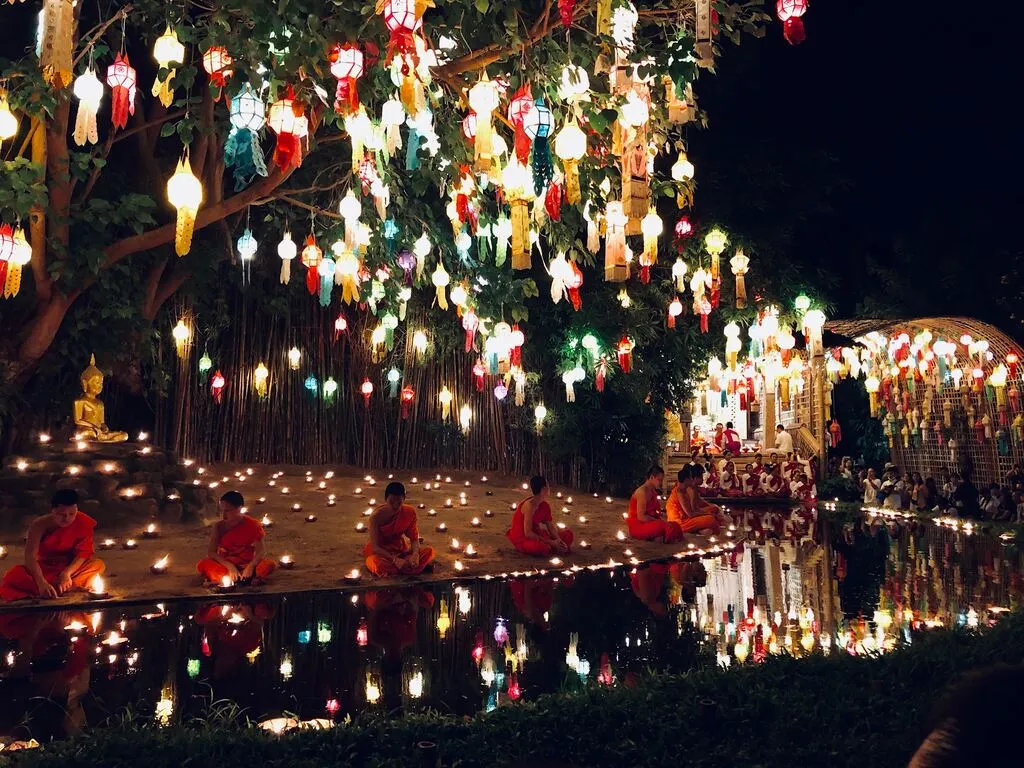
These two festivals fall on the same full moon night in November and are often celebrated together in northern Thailand.
Loy Krathong involves floating a little raft (krathong) on water, decorated with candles, flowers, and incense. It’s a way of letting go of anger, bad luck, mistakes, and saying thanks to the water spirits.
Yi Peng is specific to the north. People release paper lanterns into the sky, symbolizing wishes, hope, and new beginnings.
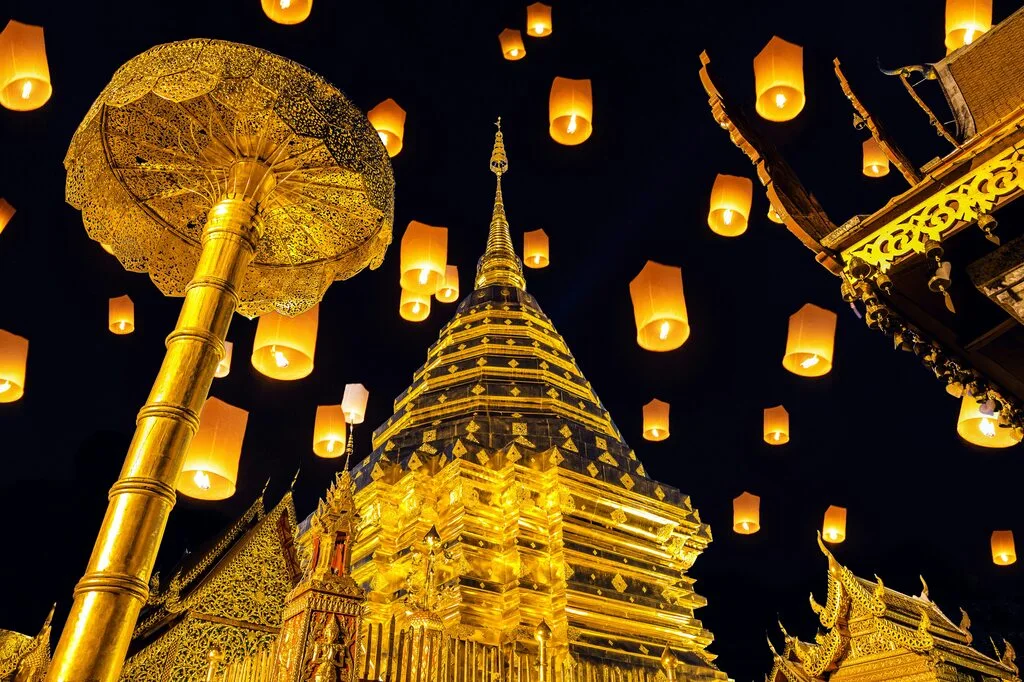
Best place to go: Chiang Mai for both. Lakes, moats, and temples glow with candles. The sky lights up with thousands of lanterns. We once visited a temple in Chiang Mai during Loy Krathong 2019, and it was one of the most fascinating Thailand experiences for me to date.
Cultural note: This is a spiritual time. People visit temples, dress in traditional clothes, and reflect on the past year.
Where to Stay in Chiang Mai?
Check out these amazing hotels in Chiang Mai, or use the map below. 👇

InterContinental Chiang Mai
- From $121 (€111) per night (Classic Room)
- Modern rooms with city or mountain views

Anantara Chiang Mai Resort
- From $291 (€255) per night (Deluxe Room)
- Riverside resort with minimalist design
- Infinity pool overlooking the Mae Ping River
3. Vegetarian Festival – Nine Days of Purity
2026 date: October 11–19
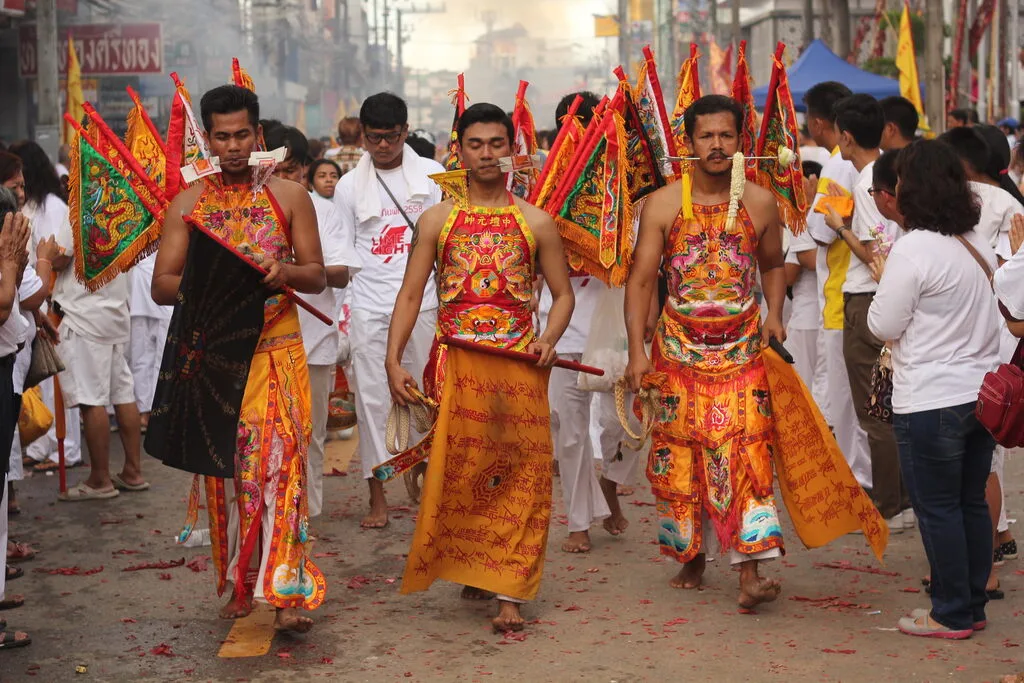
Celebrated mostly in Thai-Chinese communities, the Vegetarian Festival is all about purification of the body and the soul.
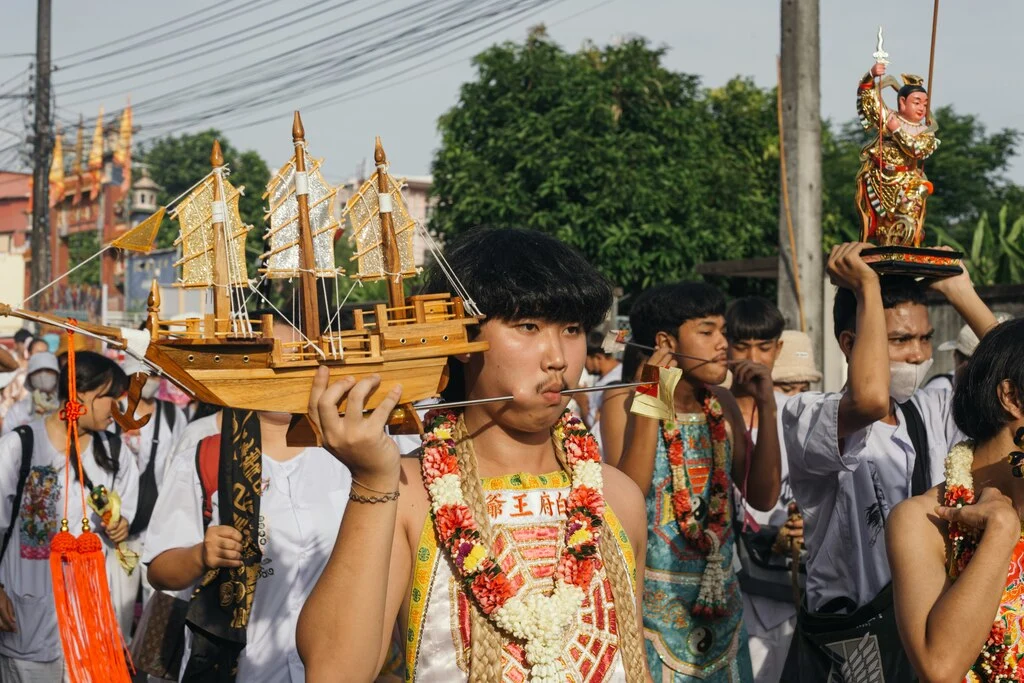
Participants wear white and eat only vegan food, often without garlic or onion. In Phuket and a few other places, it’s also known for extreme rituals: walking on hot coals, piercing cheeks with sharp objects, or climbing ladders of knives. It’s intense, but deeply rooted in ancient beliefs.

Why they do it: These acts are believed to protect the community and remove bad karma.
Where to go: Phuket’s version is the most famous, but you’ll also find it in Bangkok’s Chinatown, Trang, and Hat Yai.
Good to know: The yellow flags in food stalls mean “jay” (pure vegetarian).
4. Boon Bang Fai – Rocket Festival
2026 date: May 8

This is one of Thailand’s oldest farming traditions. Before planting rice, villagers launch huge homemade rockets into the sky to wake up the rain gods.
The whole thing is a mix of fun, faith, and folk wisdom. There’s music, dancing, local pageants, and lots of rice wine. Some rockets reach over 100 meters high. If yours doesn’t take off? You get thrown in the mud.
Where to go: Yasothon is the biggest, but local versions pop up across Isaan.
Cultural roots: This festival blends Buddhist beliefs with animism. It’s about honoring nature and calling in rain for a good harvest.
💡 Pro tip: Stay a few days to experience both the parades and rocket competitions.

5. Phi Ta Khon – Ghost Festival of Dan Sai
2026 date: June 20–22

Phi Ta Khon is unlike anything else. Locals wear colorful ghost masks made of rice husks and coconut leaves, with long noses and painted faces. They dance, joke, and parade through the streets for days.
The roots are in Buddhist legend: when the Buddha returned after a long journey, the celebration was so joyful that even the spirits came.

Where to go: Dan Sai in Loei Province (north-central Thailand).
Cultural note: The festival is part of a larger event called Bun Luang, which includes rituals, sermons, and merit-making. It’s deeply spiritual. Behind the masks and music is a strong Buddhist meaning.
6. Ubon Ratchathani Candle Festival
2026 date: July 28–30

Asalha Puja and the start of Buddhist Lent are celebrated nationwide, but in Ubon Ratchathani, they do it with giant carved candles and ornate parades.
Monks begin their annual three-month retreat during this time, staying in temples through the rainy season to meditate and study. Locals donate large candles to help light temple halls. And over time, these candles turned into elaborate sculptures.
Where to go: Ubon Ratchathani. Expect floats, dancers, and traditional music.
What it’s about: Merit-making and reflection. For locals this is about supporting monks and engaging with their faith.
7. Chinese New Year – Welcoming Wealth and Good Luck
2026 date: February 17

Chinese New Year is big across Thailand, especially in cities with strong Thai-Chinese communities. Bangkok’s Chinatown becomes a sea of red lanterns, lion dancers, and firecrackers.
Families clean their homes, make offerings to ancestors, and eat symbolic dishes like dumplings (for wealth) and oranges (for good fortune). Kids get red envelopes filled with money, and temples are packed with people praying for a lucky year.

Best place to go: Yaowarat Road in Bangkok. Arrive early and stay for the parade.
Cultural tip: This festival is based on the lunar calendar and full of traditions around luck, respect, and family. Dress in red for good luck, and don’t sweep the house on the day itself, or you might sweep away your fortune.
Key Takeaways
- Songkran (Apr) is Thailand’s New Year and the world’s biggest water fight.
- Loy Krathong & Yi Peng (Nov) are all about letting go, saying thanks, and lighting up the sky.
- Vegetarian Festival (Sept/Oct) mixes food, devotion, and intense spiritual rituals.
- Boon Bang Fai (May) is a wild rocket festival to call in the rain.
- Phi Ta Khon (June/July) brings ghosts, masks, and Buddhist legends to life.
- Candle Festival (July) is Ubon’s beautiful wax parade for the start of Buddhist Lent.
- Chinese New Year (Jan/Feb) turns cities red with luck, lion dancers, and fireworks.
👉 You might also like:
– 15 Most Iconic Landmarks in Thailand You Shouldn’t Miss
– The Best Months to Visit Thailand – Tips From a Local
– Where to See Elephants in Thailand? 10 Ethical Places
– 25 Fun & Interesting Thailand Facts Kids Will Love
Final Thoughts on the Most Magical Thailand Festivals
My personal favorites? Definitely Songkran and Loy Krathong. One’s wild and joyful, the other peaceful and magical. And I have a soft spot for Chinese New Year too: the lanterns, the energy, and how excited the Thais get.
If you’re planning a trip to Thailand, try to time it with one of these festivals. It adds so much heart to your experience.
Have you already experienced one of these festivals in Thailand? How was it? Please let me know in the comments!
Thank you for reading and for making me part of your day. Yours, Lulu
FAQ – Thailand Festivals Travel Guide
What is the most famous festival in Thailand?
Songkran, the Thai New Year celebrated every April, is the most famous. It turns the entire country into a joyful water fight and is celebrated with blessings, family gatherings, and wild street parties.
When is the best time to visit Thailand for festivals?
The best months for festivals in Thailand are:
- February (Chinese New Year)
- April (Songkran)
- November (Loy Krathong & Yi Peng)
These times offer both cultural beauty and fun, but also draw big crowds. Book ahead.
What do people do during Songkran?
People splash water on each other to wash away bad luck and welcome the new year. There are also temple visits, offerings to monks, and quiet blessings before the water fights begin.
Where is the best place to experience Loy Krathong and Yi Peng?
Chiang Mai is the top spot to celebrate both. You can float a krathong on the river and release lanterns into the sky during the full moon in November. It’s absolutely magical.
Is the Vegetarian Festival in Thailand only for vegans?
Not at all! While it’s centered on a strict vegan diet, everyone is welcome to try the food and join the rituals. Look for yellow flags at food stalls for “jay” (pure) options.
Are Thai festivals family-friendly?
Most festivals, especially Loy Krathong, Songkran, and the Candle Festival, are great for families. Just keep an eye on younger kids during busy parades or water fights, and avoid intense rituals like fire-walking during the Vegetarian Festival in Phuket.
What should I wear to Thai festivals?
- Songkran: Quick-drying clothes or a swimsuit under loose clothes.
- Loy Krathong & Yi Peng: Light, respectful clothing. Traditional Thai outfits are welcome.
- Vegetarian Festival: Many wear white to symbolize purity.
- Comfortable shoes and sun protection are always a good idea.
Can tourists join in the festivals?
Yes! Most festivals in Thailand are open to everyone. Tourists are often welcomed warmly: just be respectful, follow local customs, and check if any areas are reserved for rituals or locals only.