


What Is the Best Family Travel Insurance for Long-Term Families?
For digital nomad and long-term traveling families, SafetyWing's Nomad Insurance Complete is currently the strongest all-round option: it covers outpatient visits, cancer treatment, emergency evacuation, and vaccinations, with a fast app-based claims process. That said, the best plan depends entirely on your family's situation, home base, and travel style. After six years and four providers, we've learned that country-of-residence coverage, outpatient care, and claims simplicity matter far more than headline price.
Is Family Travel Insurance Worth it for Long-Term Travel?
Yes, especially for digital nomad families. We have tried several plans over the years and learned that you only feel the value when something goes wrong. Doctor visits, vaccinations, X-rays, or a sick child on holiday can get expensive very fast. A good family travel insurance plan protects you in emergencies and also makes everyday health issues easier.
What We Learned About Family Travel Insurance After 6 Years on the Road
I often get asked what health insurance we use as a digital nomad family with two young kids. So I finally sat down and wrote this article to walk you through our journey.
This guide is independent and non-sponsored . I go through how we compared different family travel insurance plans, why we ended up choosing Luma and then switched to SafetyWing.
Our Quick Picks
💡 Make a simple list of what you really need before you compare plans.
👨👩👧 We switched from Luma to SafetyWing and explain why below.
📌 You might also like my guides Digital Nomad With a Baby and Thailand With a Toddler.

What is Family Travel Insurance?
Family travel insurance is a medical plan that protects you and your children while you travel. It usually covers emergencies, hospital visits, outpatient care, prescriptions, and evacuation if needed. Some plans also include trip delays, lost luggage, or adventure sports.
For long-term families like us, it’s less about one short holiday and more about having reliable health support wherever we end up. A good family plan makes sure the big emergencies are covered, but it also helps with the small things: The flu on a beach holiday, an X-ray after a playground fall, or a quick doctor visit abroad.
Is Family Travel Insurance Cheaper than Buying Individual Plans?
Most of the time, yes. A family plan is usually more affordable than purchasing separate policies for each person. It also makes things easier because you manage only one policy, one renewal date, and one claims portal.
Family Travel Insurance vs Nomad Insurance: What's the Difference?
Traditional family travel insurance is made for short holidays. It usually works well for one-off trips and fixed return dates.
Nomad insurance is built for another lifestyle. It offers continuous coverage across multiple countries, flexible enrollment, and claims that are easier to submit while on the move.
From Hanse Merkur to Luma to SafetyWing: Our Health Insurance Coverage Journey
When we became digital nomads and left Germany in 2019, we took out a basic travel health insurance plan with Hanse Merkur. This plan covered almost everything except vaccinations and childbirth, with a €25 (about $27) deductible per claim. As a family of four, we paid €196 (about $211) per month. The coverage was valid for five years.
Aside from the fact that Hanse Merkur felt outdated, we were quite satisfied overall. Unfortunately, when the five years were up, Hanse Merkur didn’t extend our policy, so we had to look for a new insurance plan.
That’s when our initial search for the right provider began.
What Did We Actually Need as a Digital Nomad Family?
Before I started to compare providers, I made a simple list of what mattered most to us.
Our Situation:
- 2 adults
- 2 kids (ages 4 and 8)
- German nationals
- Based in Thailand, spending about 180 days a year here
- Nomadic lifestyle (we typically stay 3–6 months in one country)
- Planned travel destinations over the next three years: mainly Asia, Europe, and Africa
- No plans for more kids
- No chronic illnesses, disabilities, allergies, or other health issues
Key Points on Our Wish List
- Coverage in several regions, not only one continent
- Outpatient doctor visits
- Medication and bandages if prescribed
- Hospital stays for serious issues
- Emergency transport to the nearest hospital
- Medically necessary repatriation to Germany if needed
- Cancer treatment
- A modern way to send claims, ideally with an app
- A fair price for a family of four
Comparing Family Travel Insurance Plans
Once we knew what we wanted, I started contacting insurance providers one by one and requesting quotes. Honestly, it wasn’t easy because there’s a huge lack of transparency in many plans. For someone without expertise, it’s tough to figure out what’s excluded, what’s included, and how different types of deductibles work (like an annual amount you pay yourself or a small share per claim).
In some cases, I ended up getting bombarded with calls from Canada, or agents insisted on setting up Zoom calls with me. It was all pretty exhausting and far from user-friendly.
Why Some Providers Didn't Fit Our Needs
Below is a short overview of some of the providers we looked at and why we did not choose them at that time.
SafetyWing (Nomad Insurance and Nomad Insurance Complete)
- Global Coverage: Coverage in over 180 countries, with optional USA coverage.
- Flexible Enrollment: You can sign up before departure or while already abroad.
- Medical Benefits: Covers hospital stays, diagnostics, prescriptions, and emergency dental up to $1,000, with a medical limit of $250,000.
- Evacuation Coverage: Medical evacuation up to $100,000.
- Travel Assistance: Lost luggage up to $3,000, plus trip interruption and delays over 12 hours.
- Home Country Visits: Up to 30 days at home for every 90 days abroad. For US residents, 15 days.
- Pricing for the Classic Plan: Starts at $56.28 every 4 weeks for ages 18 to 39.
- Simple Claims Process: Fast online claims and 24/7 chat support.
- ✘ Why we did not choose it in 2026: At that time, the SafetyWing medical plan did not include cancer treatment. This was a deal-breaker for us.
What Changed in 2026 and Why We Switched to SafetyWing
In 2026, SafetyWing launched a new product called Nomad Insurance Complete. This plan finally included cancer treatment. Woop woop!
We switched to Nomad Insurance Complete for our family of 4. The plan costs around $550 per month.
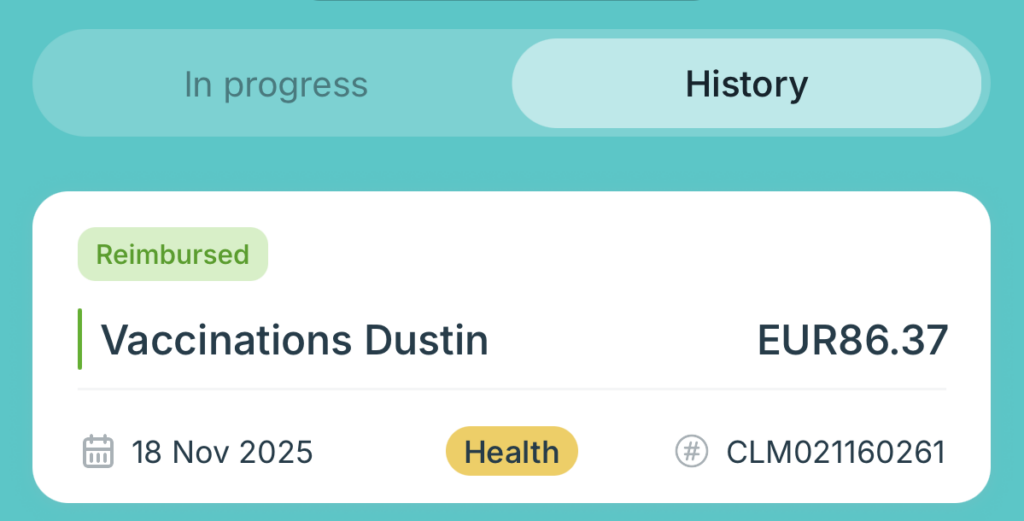
In the first 2 months, SafetyWing reimbursed 100% of my husband’s vaccinations and a radiology appointment I needed. Everything happened through a simple app and the reimbursements came fast. After our experience with Luma, this felt like a completely different level of service (I’ll get into LUMA further below).
Genki (Explorer)
- Flexible Coverage: Monthly subscription model, offering coverage from 1 month up to 2 years.
- Comprehensive Medical Benefits: Covers treatments for new conditions, including hospitalizations, accidents, and emergencies.
- Global Reach: Worldwide coverage with some limitations in the home country.
- Emergency Support: Includes medical transport and repatriation services.
- Affordable Pricing: Starts at approximately $52 per month for ages 0–29, with options to adjust the deductible and coverage regions.
- ✘ Reason for Elimination: During my research, I struggled to get a clear online quote and felt pushed toward sharing personal details and setting up a call. Later, I realised that I mixed up Genki Explorer with their Genki Native plan, which does require a consultation. Genki Explorer itself can be purchased online.
Worldnomads (Explorer Plan)
- Emergency Medical Coverage: Covers hospitalizations, day surgeries, outpatient treatments, visits to registered medical practitioners, prescribed medications, and ambulance services for sudden illness or injury while traveling.
- Medical Evacuation and Repatriation: Covers costs for transportation to the nearest appropriate medical facility or repatriation to your home country if necessary.
- 24/7 Multilingual Assistance: Access to a support team to help locate hospitals, arrange medical transport, set up direct payments, and assist your family during emergencies.
- Coverage for Over 150 Activities: Covers you during a long list of adventure activities.
- ✘ Reasons for Elimination: The Explorer Plan doesn’t cover medical emergencies in the country of residence. Lacked transparency in the plan details. Quite expensive: The Explorer Plan would have cost our family $4,946.48 USD per year.

Heymondo (Long Stay Travel Insurance)
- Emergency Medical and Dental Expenses: Covers up to $2,500,000 for sudden illness or accidental injury, including hospitalization, prescription drugs, and inpatient physical therapy.
- Medical Transportation and Repatriation: Includes transport or medical repatriation for injured or ill travelers, companions, and the deceased.
- Baggage Protection: Up to $1,200 for loss or damage caused by theft, carrier loss, or journey damage.
- Travel Disruption: Up to $350 for delays, missed connections, or other disruptions.
- Flexible Renewal: Policies start at 90 days and can be renewed up to 275 days.
- 24/7 Worldwide Assistance: Around-the-clock medical support, including coverage for COVID-19 and medically prescribed PCR tests.
- Travel Assistance App: Offers 24-hour medical chat, free emergency calls, and claims management through the Heymondo app.
- Affordable Pricing: I received a quote of $646 for 3 months for our family, with the option to renew.
- ✘ Reasons for Elimination: Heymondo doesn’t cover medical emergencies in the country of residence. They didn’t answer my question about coverage for cancer treatment.
IMG Global (Patriot Multi Trip International)
- Annual Coverage: Provides medical insurance for multiple trips within a 12-month period, with trip lengths of 30, 45, or 60 days depending on the plan.
- Comprehensive Medical Benefits: Covers hospitalizations, physician visits, and emergency medical care, with a maximum limit of $1,000,000.
- Emergency Services: Includes emergency medical evacuation, return of mortal remains, and emergency reunion benefits.
- Additional Benefits: Covers accidental death and dismemberment, terrorism incidents, and natural disasters.
- Flexible Renewability: Can be renewed for up to 36 months.
- ✘ Reasons for Elimination: IMG Global is not flexible enough for our travel style (some of our trips last longer than 60 days). Doesn’t cover medical emergencies in the country of residence. Very expensive: They quoted me $844 USD per month for our family.
HCI Group (Protector Plan Standard)
- Comprehensive Cancer Coverage: Includes inpatient and outpatient cancer treatments with no financial limits.
- Pre-existing Conditions: Offers plans that include or exclude pre-existing conditions, depending on your needs.
- Visa Compliance: Meets medical insurance requirements commonly needed for international visas.
- Extensive Hospital Network: Gives you access to a lot of private hospitals in their network.
- 24/7 Medical Assistance: Provides round-the-clock support for emergencies and medical questions.
- ✘ Reasons for Elimination: HCI Group was on the pricier side: They quoted me an annual fee of $6,778 USD.
Cigna Global (International Health Insurance for Global Professionals)
- Flexible Coverage Options: Silver, Gold, and Platinum plans with different levels of inpatient and daypatient care.
- Comprehensive Medical Benefits: Covers hospital stays, daypatient treatment, full cancer care, imaging, rehab, emergency room visits, and mental health support in the higher tiers.
- Maternity and Newborn Care: Included in the Gold and Platinum plans, with higher limits in Platinum.
- Global Coverage with Local Expertise: Access to a large worldwide hospital network, with the option to include the USA.
- No Upper Age Limit: Available from age 18 with no maximum age cap.
- Dedicated Customer Support: Offers help from advisors, nurses, and doctors when needed.
- ✘ Reasons for Elimination: The Cigna Global setup felt too complex for our lifestyle. With many add-ons and plan combinations, it reminded me more of a full relocation policy than something made for a nomadic family.
Insured Nomads (World Explorer Multi Trip)
- Comprehensive Medical Coverage: Covers emergency medical care, including hospital stays, outpatient visits, and emergency dental treatment.
- Emergency Assistance and Evacuation: Includes medical evacuation, repatriation, and 24/7 emergency support.
- Trip Protection: Covers cancellations, interruptions, and delays.
- Baggage and Personal Belongings: Protects your luggage and valuables against loss, theft, or damage.
- Adventure and Sports Coverage: Optional add-on covering a long list of adventure activities.
- Global Reach: Worldwide coverage for travelers moving between countries.
- Flexible Plans: Offers single-trip and multi-trip options for different travel styles.
- ✘ Reasons for Elimination: The Insured Nomads plan felt more tailored to short business trips and frequent flyers than families living abroad long-term. It didn’t match the flexibility we needed as full-time nomads.

Why Did We Choose Luma for Long-Term Family Travel?
Here are the main advantages of the insurance we ultimately decided on:
Luma (Hi5)
- Inpatient Coverage: Covers hospital stays, surgeries, diagnostic exams, and intensive care.
- Outpatient Care: Includes limited follow-up visits, minor procedures, and emergency treatment after accidents.
- Rehab Services: Covers rehabilitation after inpatient stays.
- Cancer and Chronic Illness: Covers chemotherapy, radiotherapy, and dialysis.
- Emergency Assistance: Includes evacuation, repatriation, ambulance services, and one companion.
- Global Zones: Different coverage regions available, including worldwide options.
- Dental and Vision Add-ons: Optional coverage for dental care, orthodontics, glasses, and contacts.
- Customizable Plan: Flexible choices for coverage area and deductibles.
We paid $3,457 USD annually (no deductible) to Luma for our entire family.
What Convinced Me to Choose Luma Health Insurance
In the beginning, Luma impressed me with fast, personal communication. I got a reply within minutes, a clear quote, and friendly support that felt modern and easy. The plan looked solid and the digital setup was convenient, so it felt like the right choice at the time.
Why We Eventually Moved On From Luma
After a year with Luma, we realized the plan didn’t match our everyday needs. Outpatient care was very limited, so simple things like Ruby’s doctor visit in Khao Lak, routine vaccinations, and other small appointments were never reimbursed.
Luma may be strong for big emergencies, but we needed insurance that also supports the small, regular things families deal with. That’s why we switched to SafetyWing’s Nomad Insurance Complete in 2026. The claims process was quick, the app was easy, and they covered our outpatient costs right away.

Tips for Choosing the Best Family Travel Insurance
My biggest takeaway is this: Every full-time traveler is different, and there’s no single “best” insurance for everyone.
Our situation is quite unique. We spend half the year living in Thailand and want coverage here as well. The other half, we’re traveling, but the length of each trip is unpredictable.
My advice? Create a short list of your essential questions and send it to every provider you’re considering. This way, you can quickly get the information you need without having to sift through hundreds of pages filled with complicated jargon.
This approach will help you get a clear and effective overview, making it easier to compare insurance options and find what works best for your family.
Does Family Travel Insurance Cover Pre-Existing Conditions?
This is one of the most common questions families ask, and one of the trickiest to answer. Most standard family travel insurance plans do not cover pre-existing conditions by default. Some providers, like HCI Group, offer plans that can include pre-existing conditions depending on the situation and your health history. Others, like SafetyWing's Nomad Insurance Complete, cover new conditions that arise after your policy starts but do not cover pre-existing ones.
If someone in your family has a condition like pancreatitis, diabetes, or another ongoing health issue, you need to flag this upfront with every provider and ask explicitly: 'Is this condition covered, and under what terms?' Don't rely on the general policy wording. Get it in writing.
My advice: put your condition front and centre in every quote request. It saves you from a nightmare claims situation down the line.
How to Compare Family Travel Insurance Plans Without Losing Your Mind
Before you start sending emails to ten different providers, get clear on your own situation first. Here's the process that worked for us.
Step 1: List your non-negotiables. For us, that was cancer coverage, outpatient visits, and country-of-residence coverage in Thailand. Without those three things, a plan was out immediately.
Step 2: Write down your family profile. Ages, nationalities, home base, typical trip length, planned destinations. Providers calculate risk and pricing based on all of this.
Step 3: Send the same short list of questions to every provider. This is the single most effective thing I did. It makes comparison fast and keeps the conversation on your terms.
Step 4: Ask specifically about exclusions. Not just what's covered, but what's not. Ask about your country of residence, trip length limits, and any condition or activity that's relevant to your family.
Step 5: Test the claims process before you buy. Ask how you submit a claim. Is there an app? How long does reimbursement take? A plan that's hard to claim on is worth very little when you actually need it.
Key Takeaways
- Family travel insurance is essential for long-term nomadic families.
- Outpatient coverage matters more than you think, especially with kids.
- Luma worked for hospital coverage, but not for everyday needs.
- SafetyWing Nomad Insurance Complete fits full-time travel better.
- Always compare plans based on your real lifestyle, not marketing promises.
👉 You might also find these articles interesting:
– How to keep up with a Healthy Lifestyle as a Digital Nomad
– Lonely abroad? 5 Powerful Strategies to Overcome Loneliness
Final Thoughts: How Do You Find the Right Family Travel Insurance?
Finding the right health insurance as a nomadic family is about choosing a partner you can trust. The process can feel overwhelming, but it’s also a chance to reflect on what truly matters for your unique situation.
No insurance plan will ever be perfect, but the key is to focus on what works best for your family and lifestyle.
Do you have any questions? Please let me know in the comments. I’d love to hear from you!
Thank you for reading and for making me part of your day! Yours, Lulu
FAQ: Family Travel Insurance for Digital Nomad Families
Is family travel insurance cheaper than buying individual plans?
Yes, in most cases. A family plan is usually more affordable than purchasing separate policies for each person, and it’s far easier to manage: one policy, one renewal date, one claims portal. For a family of four, the savings can be significant.
Does travel insurance cover all family members on one plan?
Yes. Most family travel insurance plans cover two adults and their dependent children under one policy, sometimes at a lower per-person rate than individual policies. Always confirm the maximum age for child dependants before you buy.
Which company is best for family travel insurance?
There’s no single best option, but after testing several providers over six years, we currently use SafetyWing’s Nomad Insurance Complete. It covers outpatient visits, cancer treatment, and vaccinations, with a fast app-based claims process. For short holidays, Allianz and Travelex are strong alternatives worth comparing.
Is SafetyWing good for families?
For our family of four, yes. SafetyWing’s Nomad Insurance Complete reimbursed vaccinations and a radiology appointment within days of submission. The app is simple, and claims have been the easiest we’ve used across all providers. The plan costs around $550 per month for a family of four.
Do I need travel insurance if I live abroad for months?
Absolutely. Long-term travel comes with unpredictable health needs. Even small issues can get expensive quickly, especially with kids.
What should a family travel insurance plan include?
At minimum: outpatient doctor visits, emergency hospital care, diagnostics and prescriptions, medical evacuation, and repatriation. For long-term travelers, also look for country-of-residence coverage, cancer treatment, and a simple digital claims process. Outpatient coverage matters more than most families expect, especially with young children.
Does family travel insurance cover pre-existing conditions like pancreatitis?
Most standard family travel insurance plans do not cover pre-existing conditions by default. Some providers like HCI Group offer optional pre-existing condition coverage. If a family member has a condition such as pancreatitis, Crohn’s disease, or diabetes, ask each provider in writing before purchasing. Never assume coverage based on general policy wording.
What is the difference between travel insurance and nomad insurance?
Traditional travel insurance is designed for short, fixed-date holidays. It typically covers one trip with a set return date. Nomad insurance is built for continuous travel across multiple countries, with flexible monthly enrollment, no fixed end date, and claims processes designed for people who are already abroad when they need help.



3 Responses
I loved your systematic approach your deciding criteria. I think as I transition to a digital nomad lifestyle myself, I will use your initial research when I get to that point.
I will say I recently bought some LUMA insurance (6 months) for a multi country trip throughout Southeast Asia: including Laos, Vietnam, the Philippines, etc. This was an extension of my trip to Thailand so I felt I needed additional coverage beyond what I got through Delta and American Express for these countries as well as Thailand because I would be going in and out of it as a hub. This was a bit of a special case because I was not starting in the United States. I examined the Terms and Conditions and made sure my situation applied and despite my diligence, this would come back to bite me.
I took a small fall and fractured my foot and got good medical care in Bangkok. The nightmare began when trying to get reimbursed with LUMA. It was not expensive, but trying to submit the claim was awful. They didn’t even start working on my claim even after I sent them the forms all filled out until a month later. They eventually denied my claim (This is now March for an incident in November) and honestly being scummy about it. They say that because I did not buy it before I left the United States (in September) they won’t honor it even though I called them and made sure that my situation was covered.
Them not honoring the policy I purchased for the specific situation I bought it for has made me a little spiteful so I hope I lose them some business. I hope you don’t stay with LUMA and find a better solution for your family. I will be sharing my experience as much as possible.
Thanks for your detailed blog posting. Again, I will find it helpful when I use it as a starting point in my own research.
Hi Philip,
Thank you for sharing your experience, and I’m so sorry to hear about the trouble you had with LUMA. That sounds incredibly frustrating, especially after you did your due diligence to confirm your coverage. A long and difficult claims process is the last thing anyone wants to deal with when recovering from an injury.
I really appreciate you taking the time to detail your situation here. It’s important for people to hear both good and bad experiences when choosing travel health insurance. I haven’t had to file a claim with LUMA yet, so your experience is definitely something I’ll keep in mind. I’ll make sure to update my review if I ever run into issues with the claims process.
Safe travels, and thanks again for your thoughtful comment!
Lulu
Thank you, Lulu, for sharing such a detailed and honest review! As someone considering a digital nomad lifestyle with my family, your systematic approach and comparison of different travel insurance providers is incredibly helpful. I appreciate how you highlighted both the pros and cons, especially regarding coverage in multiple regions and modern digital tools. Your tips for evaluating plans will definitely make my search for suitable family insurance much easier.