

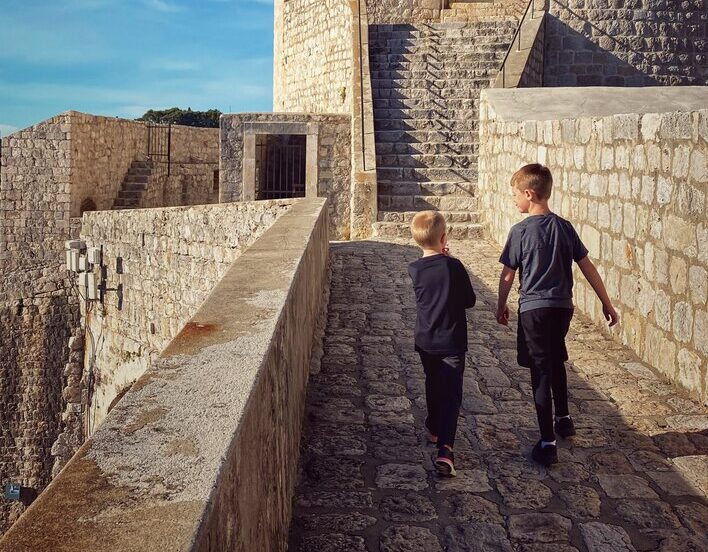
What Does Worldschooling Tweens Actually Look Like?
Worldschooling tweens means combining core skill-building in literacy and numeracy with self-directed learning, real-world experiences, and structured cohort programs designed for nomadic families. At the tween stage specifically, the approach shifts: foundations need deliberate attention, social dynamics get more complex, and kids start driving their own interests in much deeper ways. Digital nomad mom Erin Riska, who has been worldschooling her sons (now 8 and 11) since 2020, describes it as 'a lot of trial and error and experimentation', and says the most important thing is staying willing to adapt as your kids grow.
I’m thrilled to introduce you to Erin Michele Riska, a remarkable digital nomad mom who’s been worldschooling her tweens. Erin and her husband, originally from Colorado, started their nomadic journey in the fall of 2020 amidst the pandemic. Now, at 46 and 51 years old, respectively, with children aged 8 and 11, they continue to explore the world.
Erin is a long-time human resources professional specializing in talent acquisition. She runs her own business, Search and Rescue, which has allowed her to support their adventures while working as a self-employed recruiter.
Join me as I dive into an inspiring conversation with Erin about the ins and outs of worldschooling her tweens.
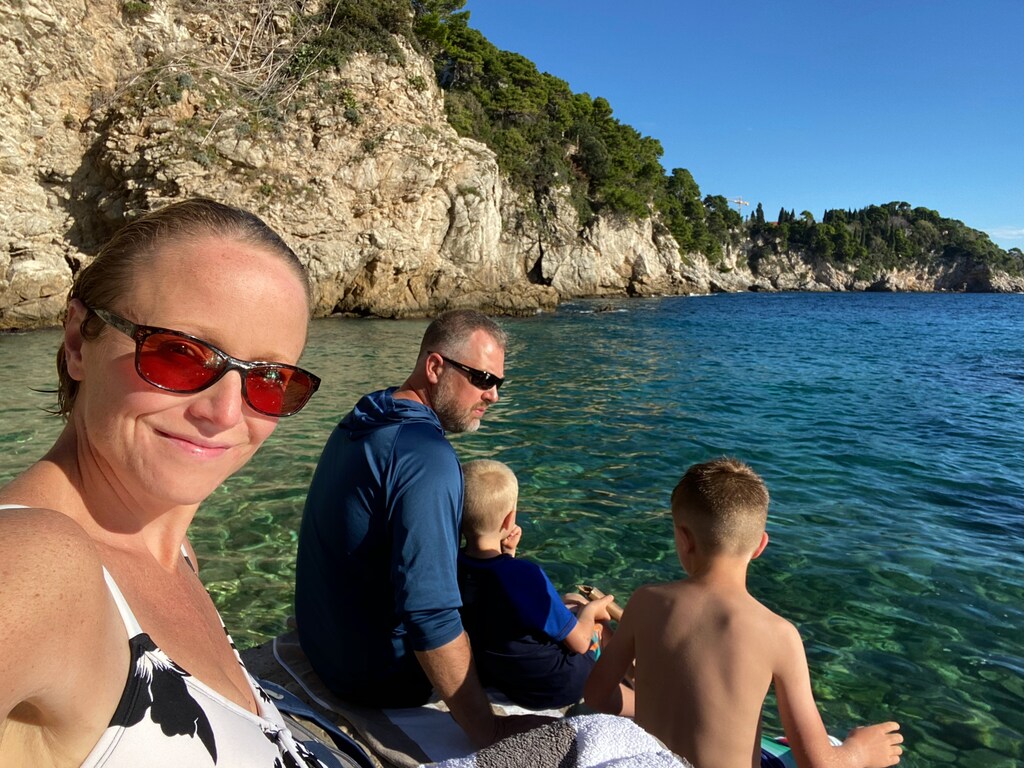
A Journey to Digital Nomadism: How It All Started
Hi Erin, Thank you for taking part in this interview! Can you tell us a bit about how you got started as a digital nomad family?
Sure! What inspired us to embrace this lifestyle was the opportunity to reflect deeply on life during the pandemic, questioning how it was going and aligning it with how we wanted it to be. Both my husband and I had our careers impacted by the pandemic—I was furloughed, and he was laid off. My furlough later turned into a layoff.
This created a lot of time and space to not be tethered by formal employment. School was unpredictable at that point; our children, aged 7 and 4, had gone fully remote.
There was also a lot of ambiguity about what school would look like for the subsequent school year. During that summer of 2020, we made the big decision to sell our home, sell most of our belongings, and enjoy what we called at that time, a family gap year. We thought we would travel for just one year as things continued to improve in the wake of the pandemic. But as you know, here we are nearly four years later, and we are still going.
Navigating Education on the Road
I feel like the pandemic was the big ‘awakening time’ for digital nomad families in general. Many families took the leap and became full time travelers. How did you decide to handle your kids’ education?
This journey has taken on various forms over the years since we have been at it for four years. There’s been a lot of trial and error and experimentation. Some things have worked well, while others haven’t. I’ll start by saying that we were not home educators before the pandemic.
Our older son was in 1st grade when the pandemic began, while our younger son was in pre-K, making it less of an issue for him. Initially, I never envisioned myself as a homeschooler. In many ways, we were somewhat reluctant homeschoolers, driven by necessity at first, due to the pandemic, and later as a means to enjoy our digital nomad lifestyle.
Over the years, though, our thinking, especially mine, has changed. I’ve really come to appreciate all the benefits of home education beyond just the autonomy and location independence. I’ve come to understand the pedagogy of it much, much better.
We extensively use resources tailored to our kids’ unique needs and interests, facilitating peer interaction and socialization. We educate in the world, not just at home, which is why we consider ourselves homeschoolers or world schoolers. We’ve participated in programs designed specifically for location-independent and digital nomad families, such as Boundless Life. We were part of one of their early cohorts during their first year in Sintra, Portugal, which was a fascinating experience within a community of nomadic families.
Additionally, we’ve engaged in informal and organic hubs of location-independent families. For example, in Mexico, our children attended beach and jungle schools with other digital nomad kids. We heavily rely on web-based tools to support specific learning outcomes, particularly in numeracy and literacy. Recently, we joined a new alternative education project in Croatia on the island of Hvar via the Field School of Hvar. This project aims to deliver programming for both local children and nomadic children, and we loved being part of their first cohort.
The common theme in all these experiences is our willingness to experiment and remain open-minded about how best to meet our kids’ educational needs. I’ll be honest; we haven’t perfected it yet because their educational needs are constantly evolving as they grow. With my older child now 11, having just finished 5th grade and heading into 6th grade, this is a time of significant academic change. We’re continually asking big questions and considering how to best support his expanding needs.
One approach we’re really leaning into is child-led or self-directed learning, which involves following the child’s interests. I’m currently organizing a six-week camp in Cyprus for tweens with emerging interests in digital skills like development and design, generative AI, video editing, and game design. This camp will provide a formal educational environment where they can develop these skills as part of a cohort of other nomadic kids.
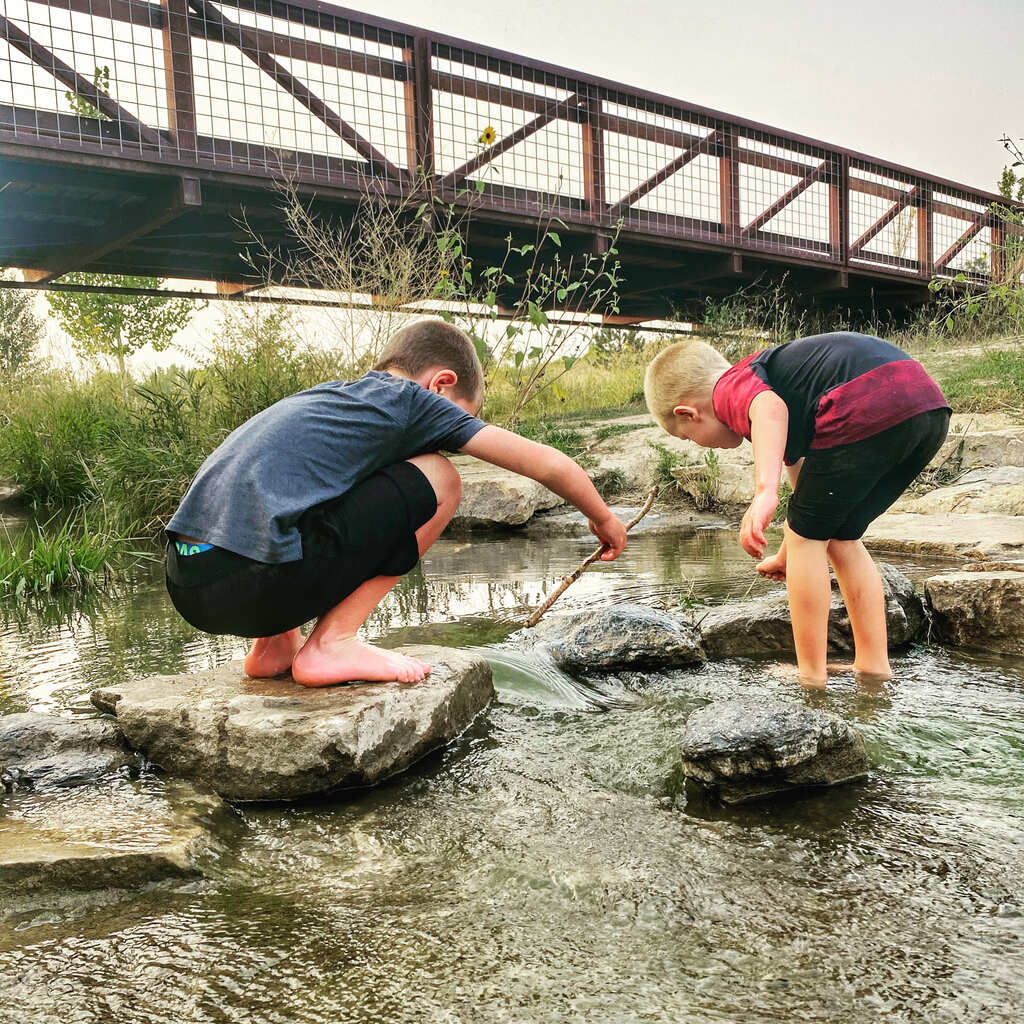

From Traditional to Alternative Schooling
What were some of the most significant factors that influenced your decision to move away from traditional schooling?
The key factors driving our decision were a desire for autonomy and location independence. Throughout our travels, we’ve considered the possibility of settling down longer-term and its implications for our children’s education. The more we travel, the harder it is to imagine our kids in a conventional educational environment with a rigid schedule, five days a week, six hours a day.
I’ve witnessed the benefits of our kids having the time to pursue their interests in a flexible, free-flowing, and self-guided manner. Our children love to learn but dislike being taught in a traditional sense. Realizing this has been pivotal in embracing a more unconventional approach to their education.
You’ve experimented with various schooling methods. Which one proved to be the least effective for your family?
The least successful overall was our earliest attempts when we first began traveling. Our older child was 7, in 2nd grade. Not knowing any better, we tried to replicate school at home. That did not work well, and I wouldn’t recommend it. Maybe there’s an opportunity to leverage that more effectively for older children, but at that age and stage, it didn’t make sense. Frankly, I probably have a lot of regrets about that.
Tailoring Education to Fit
Currently, you focus on literacy and numeracy combined with self-directed learning and special interest classes. How did you arrive at this particular approach during your worldschooling journey?
The way we arrived at our focus on numeracy and literacy, combined with self-directed learning and special interest programming, is because these core skills—really fundamental numeracy and literacy skills—are non-negotiable for me. To some extent, I have a base level of trust that some of it will come about naturally, especially in terms of literacy with my younger son. But I don’t feel confident enough to fully unschool around those two things. They both benefit from a more deliberate, sequential approach to building skills, sequentially upon one another.
Whereas other things in the realms of science, social studies, history, and all of the subtopics within those, I think can be not only effectively, but frankly, probably most effectively explored in a more self-guided fashion according to what piques our kids’ interests at any given time.
Embracing Self-Directed Learning
Can you share some examples of self-directed learning activities your children have engaged in recently?
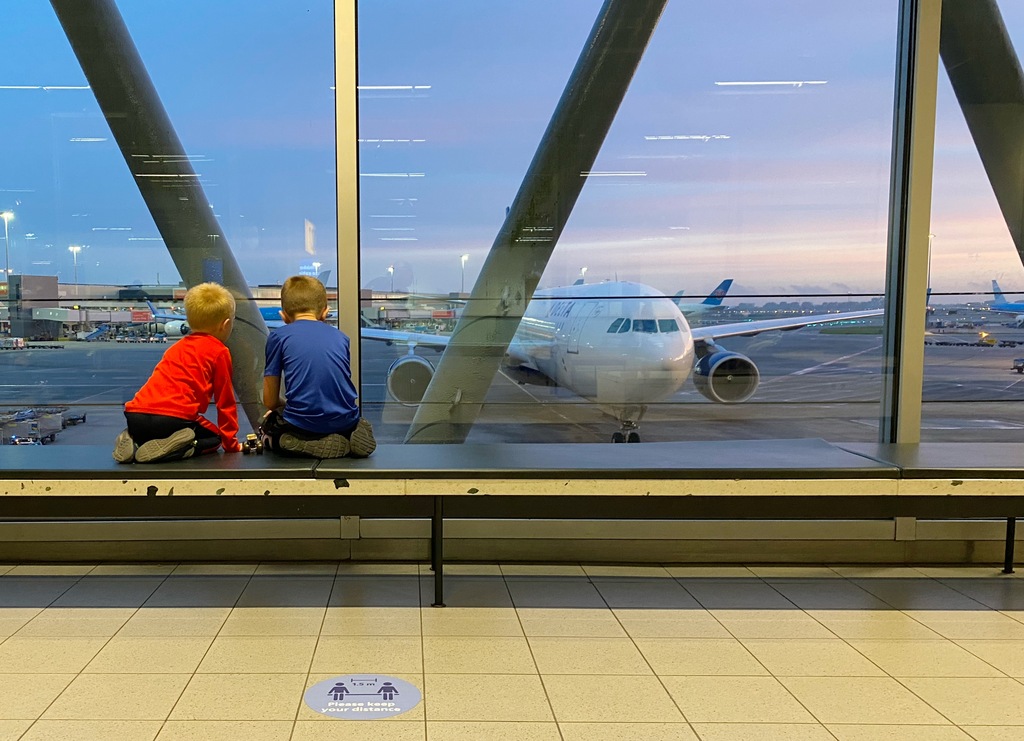
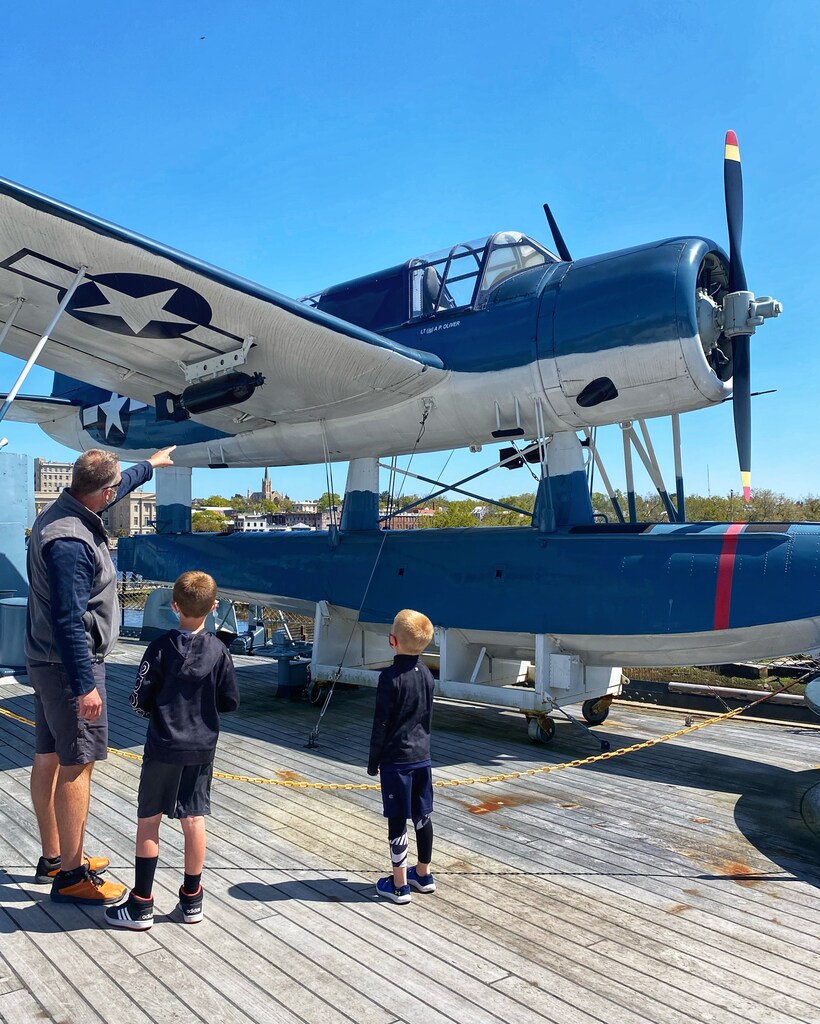
I think the most immediate example that comes to mind has to do with my younger son, who is 8. He is a lifelong aviation enthusiast and the only response he has ever had to the question of what he wants to be when he grows up is a pilot. We’ve fostered that love in various ways. He has learned an incredible amount about the mechanics and physics of flight via YouTube, developing almost savant-level knowledge of different airplanes. He can identify them by sight even when flying thousands of feet in the air.
We’ve supported his interest by visiting aviation museums and airshows and exploring different flight careers during our travels. Given our lifestyle, we spend a lot of time in airports. Any place we go, if there is a space, flight, aviation museum, or air show, we partake in those. This approach ensures he develops a greater depth of interest and gains new learnings from these experiences. His first essay in first grade was also about flight, showing how we incorporate this passion into literacy activities.
The Eclectic Approach to Education
What are the benefits of using an eclectic approach to education, especially for a digital nomad family?
Well, the degree of autonomy we enjoy individually and as a family, especially around location independence, is significant. For example, adopting a very specific, resource-heavy curriculum, like the Charlotte Mason approach, would be challenging. This curriculum, Ambleside Online, requires access to numerous books, which isn’t feasible for us. While there are adapted methods like using e-readers, it binds you to a particular approach. Many homeschool curriculums are designed to sell materials, making them resource-heavy.
Moreover, eclectic homeschooling contrasts with faith-based curriculums, which wouldn’t suit our agnostic family. It gives us the freedom to experiment and adapt as needed.
One specific example is how my older son prefers worksheets, needing to see them graded, a habit from his time in conventional school. Conversely, my younger son refuses to work with that kind of material. This flexibility is crucial as it lets us meet our children’s individual learning preferences.
What has been the most rewarding aspect of using these alternative schooling methods for your family?
Using Khan Academy for math has been a revelation. I laugh at the irony since I grew up not liking math and often joked about having the skills of a third grader. However, guiding my kids through Khan Academy’s curriculum has taught me two things: I’m better at math than I thought, and I wish I had learned math this way. Modern math curriculums are different from what I experienced. This “new math” is incredibly intuitive and practical, making it fun and easy to help my son develop his knowledge. For the kids, it reduces the pressure and anxiety found in conventional classrooms.
Alternative schooling offers individualized and intuitive learning experiences, significantly enhancing their self-confidence, sense of self, and long-term development as humans. This personalized approach to education is incredibly rewarding for both me and my children.
Socialization and Peer Interaction While Worldschooling Tweens
I know every homeschooling family dislikes this question. But how do you handle socialization and peer interaction for your children while using these alternative schooling methods?
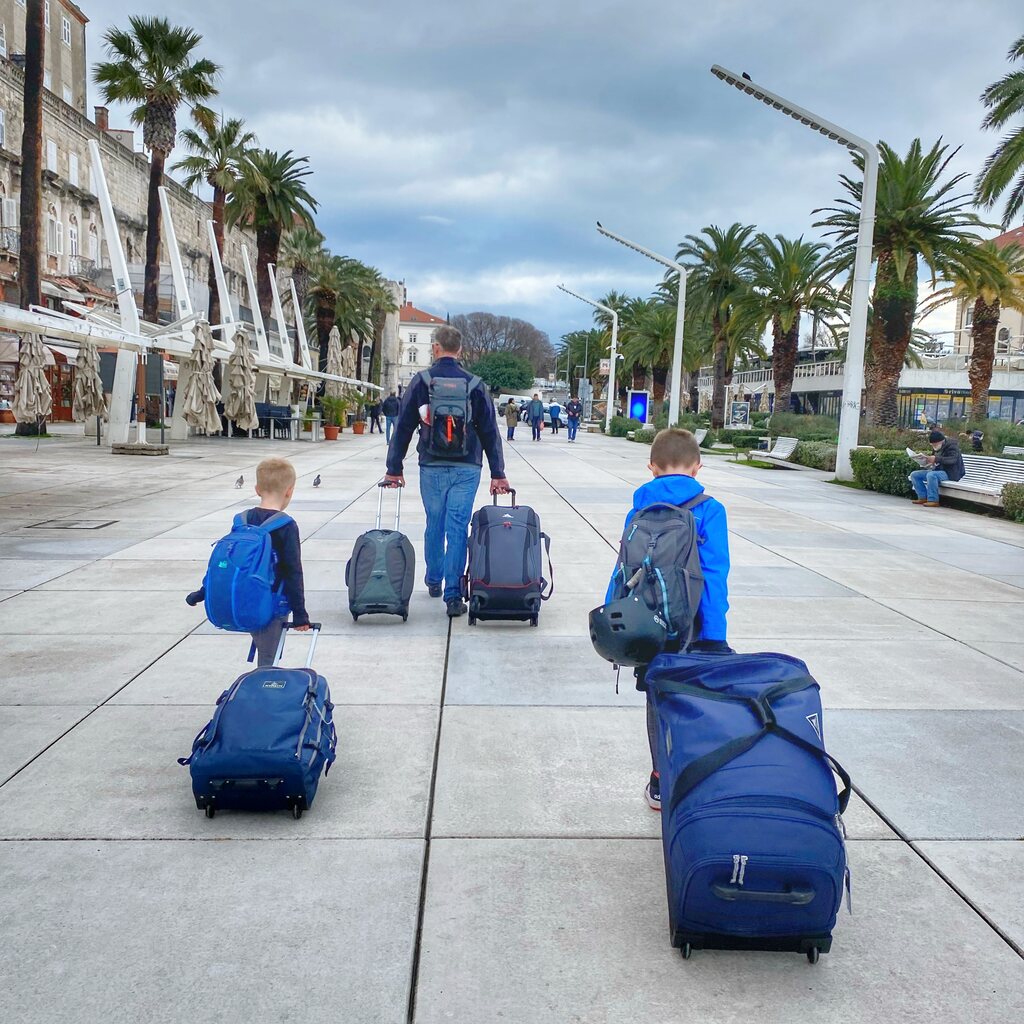
Certainly, socialization has been an area where we’ve faced challenges as a nomadic family. There were times, especially during pandemic surges, when we were quite isolated. However, from the very beginning of our travels four years ago, we quickly connected with other nomadic families who started their journeys around the same time. Meeting these families helped us form lasting friendships, even though it might sound odd to some that we began this lifestyle amidst a global pandemic.
Our initial connections were often by chance, just being in the same place at the same time. But we later took a more intentional approach. For example, participating in Boundless Life a couple of years ago not only provided our children with a community of peers but also gave them a shared experience. Following that, we traveled to Mexico, where we continued to connect with other families, many of whom had previously been part of Boundless Life. This continuity and shared reference frame were beneficial for our children.
Regarding socialization concerns, I believe these issues often resolve themselves due to the abundant opportunities out there. However, it’s essential to acknowledge the changes in social dynamics as children grow older. Our older son, for example, has become more self-conscious and discerning about his friendships. He no longer plays with just anyone at the playground like he did when he was younger. This awareness and understanding of social dynamics are part of his development.
It’s okay and normal that he doesn’t have to be friends with everyone he meets, just as I am not friends with every person I meet. I want my kids to be friendly and polite, but I no longer expect them to play with every child they meet. This shift in expectation is right and good, allowing them to form meaningful and genuine connections.
👉 You might also find these articles interesting:
– Deschooling and Unschooling
– What is Worldschooling?
– Life as a FIRE Digital Nomad Family
– Traveling as a Single Parent
– The 15 Best Digital Nomad Family Destinations
Advice for New Digital Nomad Families
What advice would you give to digital nomad families who are just starting to explore alternative education options and worldschooling?
Don’t prepare, begin. The hardest part is just going from 0 to 1. Many who are curious about world schooling or alternative education often spend enormous time researching, seeking a magic bullet to ease their minds. This can lead to spinning wheels rather than taking action. While some preparation is needed, it’s not as significant as people fear. Just go for it.
If you adopt an alternative approach to education, expect differences in learning outcomes, timing, and methods. Children may excel in one area and lag in another, but these will balance out over time. So, my two pieces of advice are: Don’t prepare, just begin with the mindset of “what’s the worst that could happen?” and be prepared for different learning outcomes. After four years, I can attest that these goals will be achieved, sometimes when you least expect it.
Don’t prepare, just begin with the mindset of “What’s the worst that could happen?”.
If something you try doesn’t work well, you have the autonomy to redirect, shift gears, and try something different. Take what you know, combine and adapt successful elements from various areas. Be adaptable, intentional, and a lifelong learner yourself. By modeling curiosity and a proactive approach to learning new things and finding resources, you instill those values in your kids. To raise lifelong learners, you need to be one yourself.
Thank you so much, Erin, for sharing your amazing journey with us! Your experiences in worldschooling are truly inspiring and offer valuable insights for any family considering this lifestyle.
Do you have any questions for Erin? Please let us know in the comments!
Thank you for reading! Yours, Lulu
Worldschooling Programs That Work for Tweens
One of the most practical things Erin shared is that you don't have to figure this out alone. Several structured programs exist specifically for nomadic families with kids at the tween stage.
Boundless Life runs cohort-based programs in locations like Sintra, Portugal, where nomadic families spend several weeks together. Kids get peer interaction, structured learning time, and a shared reference frame that follows them even after the cohort ends. Erin's family joined one of the early cohorts and found the community aspect just as valuable as the academic side.
The Field School of Hvar (Croatia) is a newer alternative education project that blends local and nomadic children, which Erin describes as a genuinely enriching mix. They were part of the first cohort.
For older tweens with a tech bent, Erin is organizing a six-week camp in Cyprus focused on digital skills: development, design, generative AI, video editing, and game design. It's a formal cohort environment built around skills that are genuinely useful in 2026 and beyond.
The through-line in all of these? A community of peers. At the tween stage, that matters more than it did at age six.
What Changes About Education at the Tween Stage
Worldschooling a 7-year-old and worldschooling an 11-year-old are not the same job. Erin is clear about this.
At the tween stage, a few things shift. Academically, the foundations of literacy and numeracy need to be deliberately built, not just absorbed through travel. Erin uses web-based tools for this, Khan Academy for math, structured literacy resources, because she's not comfortable fully unschooling around core skills. Everything else: science, history, social studies, those she's happy to let be self-guided.
Socially, tweens become more discerning. Erin's older son no longer plays with just anyone at the playground. He's more self-conscious about friendships. Rather than seeing this as a problem, Erin frames it as healthy development: you don't have to be friends with everyone you meet, and neither does he.
Academically, the jump from primary to middle school years raises real questions about what comes next. Erin describes this as a time of 'significant academic change' and says her family is actively rethinking its approach as her older son heads into 6th grade equivalent work.
Key Takeaways
- Started fall 2020, still going strong in 2026.
- Core subjects (literacy, math) need deliberate structure.
- Self-directed learning works well for science and history.
- Tween socialization improves through cohort programs.
- Eclectic approach: no single curriculum, full flexibility.
- Don't prepare endlessly. Just begin.
- Khan Academy works well for nomadic math learning.
- Tween social dynamics shift. That's normal, not a problem.
FAQ
What age counts as a tween for worldschooling purposes?
Tweens are generally children aged 9 to 12. For worldschooling families, this age range brings specific challenges: core academic foundations (literacy and numeracy) need more deliberate attention, and social needs shift from open playground play to more selective, meaningful friendships.
How do worldschooling tweens keep up academically?
Most worldschooling families use a combination of structured online tools for core subjects and self-directed learning for everything else. Khan Academy is a widely used option for math. Literacy gets deliberate, sequential attention, while science, history, and social studies tend to be explored through travel and the child’s own interests.
What worldschooling programs are available for tweens?
Several programs cater specifically to nomadic families with tweens, including Boundless Life (cohort-based programs in locations like Portugal), the Field School of Hvar in Croatia, and various informal digital nomad family hubs. Some families also organize or join niche camps focused on digital skills like coding, design, and video editing.
How do worldschooled tweens make friends?
Tweens in worldschooling families often build friendships through structured cohort programs like Boundless Life, informal nomadic family hubs, and recurring connections with families they meet on the road. At the tween stage, social dynamics naturally shift: kids become more selective about friendships, which worldschooling families generally treat as healthy development rather than a problem to fix.
What is eclectic worldschooling?
Eclectic worldschooling means drawing from multiple educational approaches rather than committing to one curriculum or method. A family might use Khan Academy for math, follow the child’s interests for science and history, join structured cohort programs for peer interaction, and take self-directed detours whenever something captures a child’s curiosity. It suits nomadic families because it requires no fixed set of materials and adapts as children’s needs change.
Is worldschooling legal for tweens?
Worldschooling is legal in most countries when the family maintains compliance with homeschooling laws in their home country or state of legal residence. Requirements vary widely: some jurisdictions require annual assessments or portfolio reviews, others have almost no oversight. Families should confirm the rules in their legal home base before departing.


2 Responses
You’re so awesome! I don’t believe I have read a single thing like that before. So great to find someone with some original thoughts on this topic. Really.. thank you for starting this up. This website is something that is needed on the internet, someone with a little originality!
So happy I found this blog. It’s a treasure trove.