


When my husband and I quit our jobs and booked one-way tickets to Thailand, we thought we had it all figured out. Well, we didn’t.
It wasn’t the flights or the packing or finding Wi-Fi that threw us off. It was the mental part. The mindset.
Some days felt like total freedom. Other days? Total chaos. Uncertainty, disconnection, self-doubt. We wondered if we were doing the right thing.
Fast forward to now: we’ve been digital nomads since 2019. We run several businesses, raise two girls, and live out of two suitcases.
And what’s kept it all going? Not perfect planning (even though I think I’m pretty good at planning our lives nowadays). Not lucky breaks. It was the mindset.
Here are the 12 mindset shifts that made this lifestyle work long term.

What is the Digital Nomad Mindset?
A digital nomad mindset is the inner engine that keeps you going when the flight’s delayed, the client ghosts you, or you just really miss your old bed. It’s about resilience, flexibility, clarity, and joy on the road. Without it, you’ll burn out.
With it, you’ll thrive. Here are the 12 biggest mindset shifts that helped us make this lifestyle sustainable, exciting, and actually fun (even with two little ones in tow).
1. Know Your Why
Practical tip: Write down your reason for becoming a digital nomad. Whether it’s spending more time with your kids, escaping burnout, or building location independence. Keep it somewhere visible (like your laptop wallpaper or journal).
Why it works: Studies on goal-setting (like Locke & Latham, 2002) show that clarity of purpose boosts motivation and persistence, especially when things get hard, which they will.
2. Tune Out the Noise
Practical tip: Unfollow social accounts that trigger comparison. Use tools like Freedom or StayFocusd to block social media while working. I deleted Instagram and Facebook from my phone. Now I can only access them on my laptop, which helps me use them less and avoid late-night doom scrolling.
Why it works: Constant comparison leads to decision fatigue and lower satisfaction (Iyengar & Lepper, 2000). Creating mental space helps you stay focused on your own goals, not someone else’s highlight reel.
3. Build a Flexible Routine
Practical tip: Create a “minimum viable day.” What’s the bare minimum structure you need to feel productive? For example:
- 8–9 am: Morning work block
- 1–3 pm: Client calls
- 5 pm: Family or free time
Why it works: Research shows that routines reduce cognitive load and boost productivity, even when traveling (Baumeister et al., 2011). I know that my personal most productive time of the day is in the morning. So I block every morning from 8–12 for work.

4. Think Long-Term About Money
Practical tip: Use the 50/30/20 rule (needs/wants/savings) to plan expenses. Track your income with tools like Hello Bonsai or Notion. I always recommend having savings that make sure that you can live comfortably for at least 3 months and afford a flight ticket back home.
Why it works: Nomads who budget and plan ahead report higher satisfaction and lower stress (according to MBO Partners’ State of Independence report, 2024).
5. Separate Needs From Wants
Practical tip: Before booking anything (housing, transport, gear) ask: “Do I need this to stay productive, safe, and healthy?”
If not, it’s probably just a want. And that’s totally fine, just don’t let those wants drain your money or add to your stress. I actually enjoy having a self-imposed rule: I can only buy a new piece of clothing if I give one away first. We travel with just two suitcases, so space is tight. It forces me to think twice before buying anything new.
Why it works: Minimalist digital nomads often report higher mobility and less overwhelm.
6. Find Your People
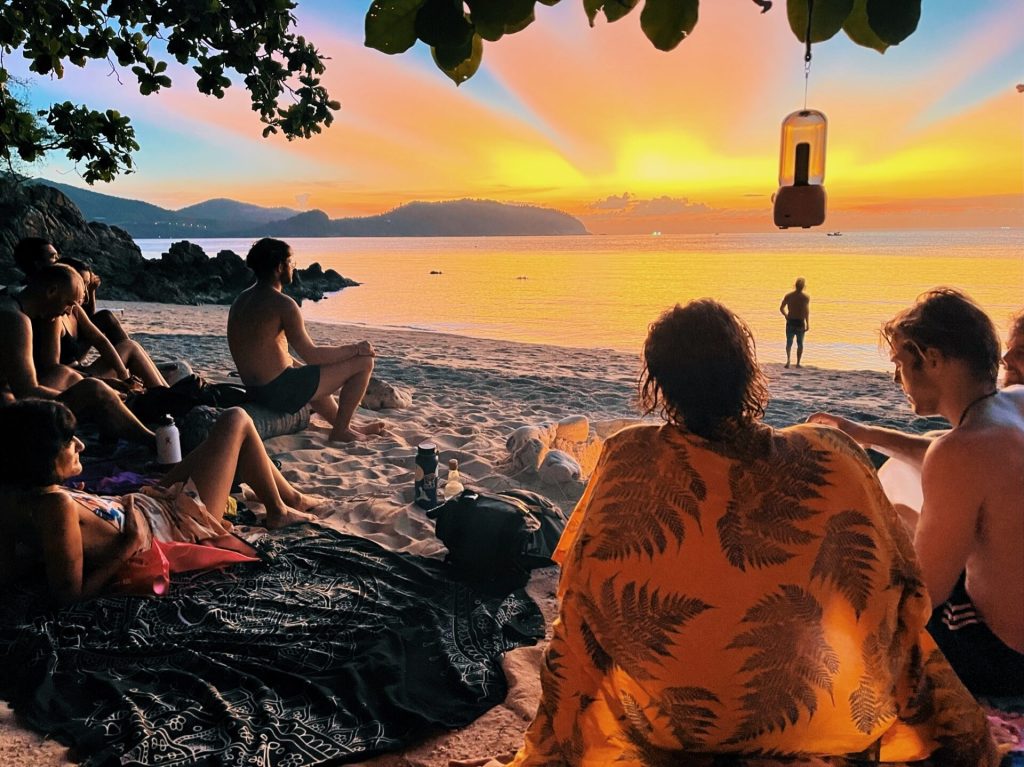
Practical tip: Join local Facebook groups, attend weekly nomad meetups, or use apps like Workfrom or Fairbnb to find community. As a family, it’s a bit easier because we’re never really alone. But still, we always feel better when we make real connections in new places. Some of our closest friendships started while traveling.
Why it works: Social support increases resilience and reduces loneliness. Even one strong connection can significantly boost well-being (Holt-Lunstad, 2015).
7. Keep Learning
Practical tip: Dedicate 1 hour a week to upskilling: Watch a tutorial, read industry blogs, or practice a new tool. Platforms like Skillshare, YouTube or Coursera are perfect for this.
Learning new things helps you adapt better and enjoy your work more (OECD 2021). The more skills you have, the more flexible and employable you become.
8. Travel Light
Practical tip: Stick to one carry-on + one backpack per person. Use packing cubes. Follow a capsule wardrobe approach: 3 tops, 3 bottoms, 1 outer layer, etc.
Why it works: Fewer belongings = fewer decisions and less stress. It also reduces costs (budget airlines, taxis, storage) and makes travel days smoother.
We still travel with one check-in suitcase, but only while the kids are little. Once they’re big enough to handle their own carry-on, we’ll get rid of the check-in one and travel lighter as a family.
9. Prioritise Your Health
Practical tips:
- Choose accommodation with a kitchen
- Stick to a simple sleep routine (even just no screens 30 mins before bed)
- Do 15 minutes of bodyweight exercise daily (even on hotel floors)
Why it works: Sleep, food, and movement affect your mood and cognition more than you think. Studies show poor sleep leads to reduced work output and emotional regulation (Walker, 2017). My husband is a total gym addict. So whenever we arrive somewhere new, the first thing he does is look for the best gym around and plan his workout schedule.
10. Fail, Learn, Move On
Practical tip: Keep a simple “Lessons Learned” doc. Every time something goes wrong (missed flight, bad Airbnb, work hiccup) write what you’d do differently.
Why it works: Reflective learning boosts confidence and prevents repeated mistakes. It also helps shift your brain from panic to problem-solving mode (Dweck, 2006, growth mindset research).
11. Get Comfortable With Uncertainty
Practical tip: Start small. Let go of rigid travel plans. Try booking one-way tickets, or leaving a few weeks unplanned. Build a flexible routine, but don’t panic when life throws surprises.
Why it works: Uncertainty is part of this life. The sooner you make peace with it, the less stressful it becomes. Most nomads say they become more adaptable over time. Things do not get easier. They just stop needing everything to be certain. If plans change (and they will), treat it as part of the story.
I wish I had learned this earlier. In the beginning, I spent so much money booking flights and long stays in advance, only to have life shift and suddenly move us somewhere else.
12. Build Confidence Through Action
Practical tip: Do one uncomfortable thing each week: Pitch a client, talk to a stranger, share your work online. Keep a “Did It Anyway” list to track little wins.
Why it works: Confidence grows with experience. Not perfection. Every time you take a small risk and survive it, your brain says: “Hey, maybe I can do this.” And that’s exactly how you keep going, even when everything feels new or scary.
For me, this often means overcoming social anxiety. Like starting a conversation with other parents at a new school. It still feels awkward sometimes, but it always gets easier once I take that first step.

Bonus Tip: Mindset Shifts for Digital Nomad Families
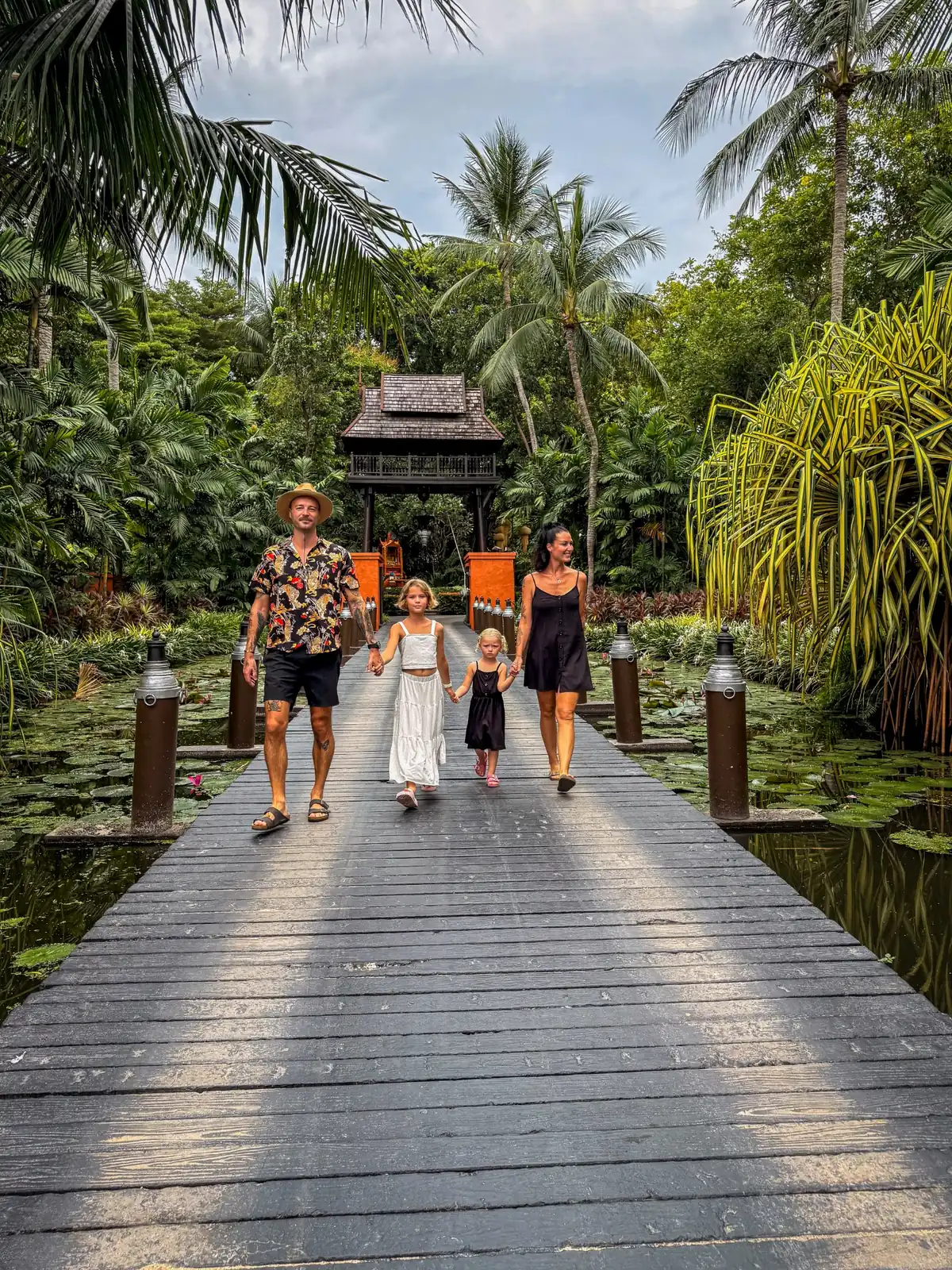
Traveling with kids is harder, for sure. You are no longer balancing only your needs and your partner’s. There is someone else in the equation.
You need more patience, more planning, and way more snacks. But you also build resilience together. Your children watch you work, learn, adapt, and explore. And that’s a mindset lesson in itself.
Practical tips for nomad parents:
- Plan longer stays to avoid burnout
- Let go of the pressure to “do it all”
- Create daily rituals, even when the location changes
- Find family-friendly hubs where routines are easier (like Koh Phangan or Bali)
- Read my Digital Nomad Parents Survival Guide for more helpful tips
Key Takeaways
- Your mindset matters more than your gear or plans
- Know your “why” and keep it visible
- Tune out comparison and build your own rhythm
- Plan your money with the long term in mind
- Travel light physically and mentally
- Keep learning and reflect on mistakes
- Connect with others, especially offline
- Take small risks to build confidence
- Stay healthy because it fuels everything else
- Accept uncertainty as part of the journey
👉 You might also like my other Koh Samui articles:
– Expat Jobs in Thailand: Foreigner Work Guide
– No Office, No Boundaries: The New Digital Nomading Trend
– How to Become a Digital Nomad Copywriter
– How to Travel Around The World and Make Money
– 20 Remote Work-From-Home Jobs With No Experience Needed
Final Thoughts on the Digital Nomad Mindset
Behind the cool spots and the hammock photos, digital nomad life is about showing up for yourself. Growing a little every day.
Learn to handle uncertainty. Create routines that keep you grounded. Take care of your health, your finances, and your relationships. You’ve got this. If we can do it, you can, too!
What’s your favorite digital nomad mindset hack? Please let me know in the comments. I’d love to hear it!
Thank you for reading and for making me part of your day! Yours, Lulu
FAQ: Your Digital Nomad Mindset Questions
What is the digital nomad lifestyle really like?
The digital nomad lifestyle means learning to live and work from different places while balancing freedom and routine. Some days are smooth, others chaotic. The real key? Having the right mindset to adapt and grow along the way.
How do I build the right mindset for digital nomadism?
Start with knowing your “why.” Then build small habits: set up a flexible routine, learn something new each week, and reflect on your mistakes. Even 10 minutes of journaling or meditation daily can make a huge difference in your personal development and emotional resilience.
What’s the hardest part of being a digital nomad?
Honestly? The uncertainty. Plans change, Wi-Fi cuts out, or you miss home. And if you’re a parent like me, it’s also about helping your kids adjust to each new environment.
How do you make new friends when you’re always moving?
It’s easier than it sounds. Join coworking spaces, Facebook groups, or local meetups. Talking to other parents at the playground or a café can open up real connections, even if it feels awkward at first. Always remember that others are feeling the same way you are. Most people are happy if someone makes the first step and starts a conversation.
How do digital nomads make money?
There are so many different ways. You can run an online business, freelance, sell digital products, or offer remote services. Some nomads take on online courses to build new income streams. Others are remote employees who simply live the 9-to-5 life in different places.
What’s the best way to handle your finances as a nomad?
Track your spending, set financial goals, and build an emergency fund (enough for at least 3 months and a flight ticket back home). Use digital tools like Wise or Revolut for banking, and Notion or Hello Bonsai to manage clients, invoices, and money flow. Thinking long-term helps you feel safer and freer.
How do you stay productive in a new city?
Build a minimum routine that works anywhere. For example: mornings for deep work, afternoons for meetings, evenings off. Find a solid internet connection, a cozy coffee shop, or a coworking space. Creatures of habit still need structure, even on the road.
What digital tools do you recommend for remote work?
I love using Notion for planning, Trello for projects, and Hello Bonsai for time tracking and creating invoices. Freedom helps block distractions. These tools support your daily routine, no matter your time zone or location.
Can I do this with kids?
Yes, but it’s a different kind of lifestyle. You need more planning and flexibility, especially for schooling. But raising your kids around different cultures and new experiences is priceless. Read my full Digital Nomad Parents Survival Guide if you’re curious.
What are the best places for digital nomads in Southeast Asia?
Some of our favorites are Koh Phangan, Koh Samui and Chiang Mai (Thailand), Canggu and Ubud in Bali (Indonesia). They offer a mix of great internet, nomad communities, and affordable living. Plus, that beautiful sunset lifestyle you probably dream about.
Just a heads up: some links in “Digital Nomad Mindset” are affiliate links. If you click and buy, we might earn a small commission at no extra cost to you.