
Is a Cape of Good Hope Day Trip Worth It?
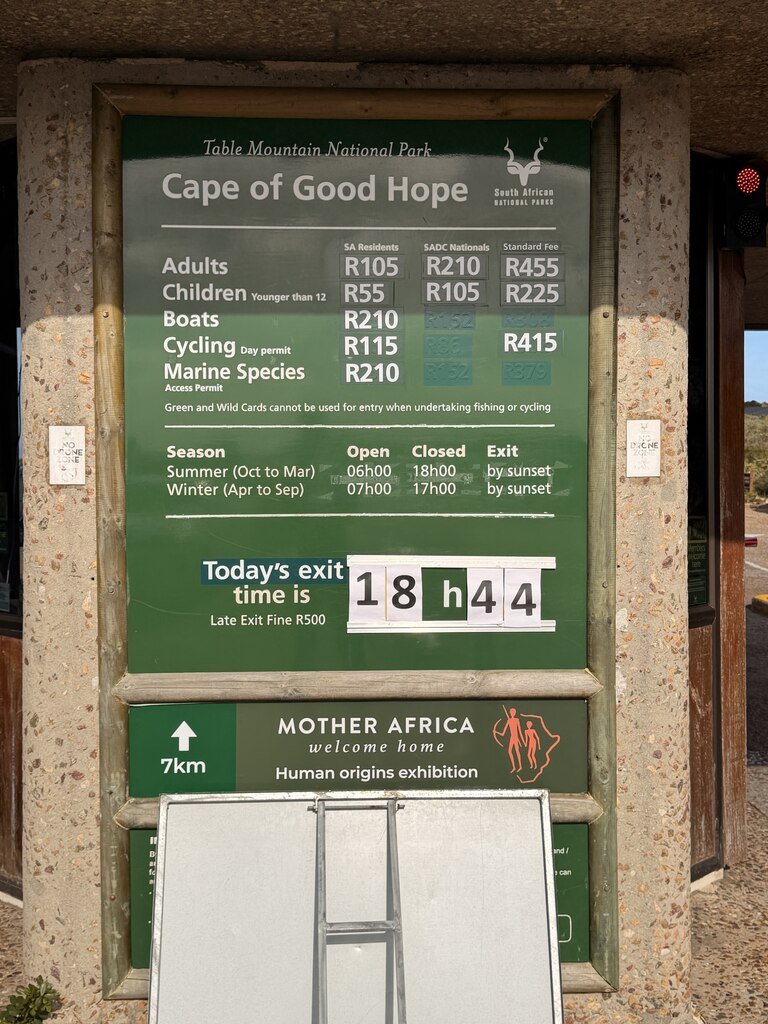
Yes, a Cape of Good Hope day trip is absolutely worth it. Plan for 3-5 hours minimum inside the reserve. You’ll see the famous wooden sign, dramatic cliff viewpoints, ostriches, baboons, and the old Cape Point Lighthouse, all in one loop. Families with young kids can cover the highlights comfortably in half a day. If you want beaches, longer hikes, and a stop at Boulders Beach penguins, bring a full day. Entry is R400 per adult (~$20 USD) for international visitors, and the reserve opens daily from 6 am to 6 pm.
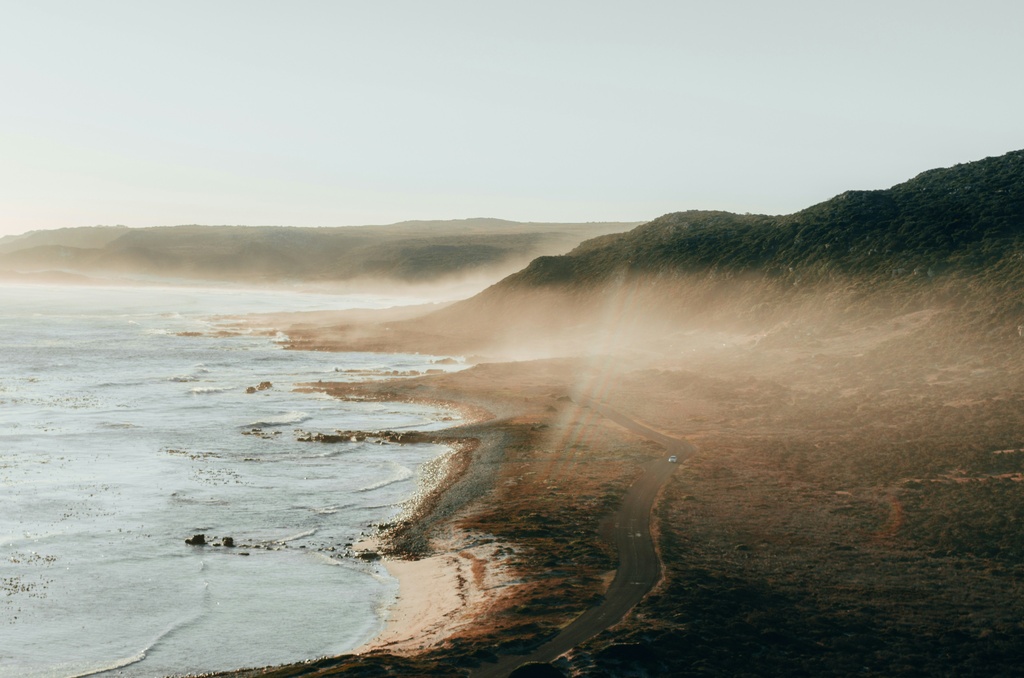
The Cape of Good Hope is one of those names you’ve probably heard since childhood. It sounds like the end of the world, right? In reality, it’s only the southwestern tip of Africa, not the southernmost point (that’s Cape Agulhas). But it still feels wild, dramatic, and very special.
We went on a Saturday at the end of September. It was lunchtime, windy, and we were already a bit tired after a busy week. And still, this day ended up being one of our absolute highlights in Cape Town with the kids. Let me walk you through our day, what worked well, what didn’t, and how you can plan your own Cape of Good Hope adventure with your family.

Entrance Fees and Opening Hours
Before you go, here’s what you need to know:
- Opening hours: Daily from 6 am to 6 pm (last entry 5 pm)
- Entry fee (international visitors): R400 per adult (~20 USD / ~19 EUR), R200 per child 2-11 years (~10 USD / ~9 EUR)
- Entry fee (South African residents): R90 per adult (~4.50 USD / ~4 EUR), R45 per child (~2.50 USD / ~2 EUR, SA ID required)
- Funicular ride (Flying Dutchman): R95 one way (~5 USD / ~4.50 EUR) or R160 return (~8 USD / ~7.50 EUR) for adults, half price for kids
Why We Loved Our Cape of Good Hope Family Trip
The Cape of Good Hope is one of those places that genuinely lives up to the name. We went on a Saturday at the end of September, kids in tow, not entirely sure what we were walking into. It turned out to be one of the best days we’ve had since moving to Cape Town. Here’s exactly what happened.
Getting There and the First Surprise
From Cape Town CBD, it’s about a 1.5-hour drive if you go straight. But the fun is in the journey. You can take the Atlantic coast route via Chapman’s Peak Drive, breathtaking, if the weather allows, or drive past Simon’s Town and maybe stop at Boulders Beach to see the penguins. Find my detailed Penguins of Cape Town Guide here).
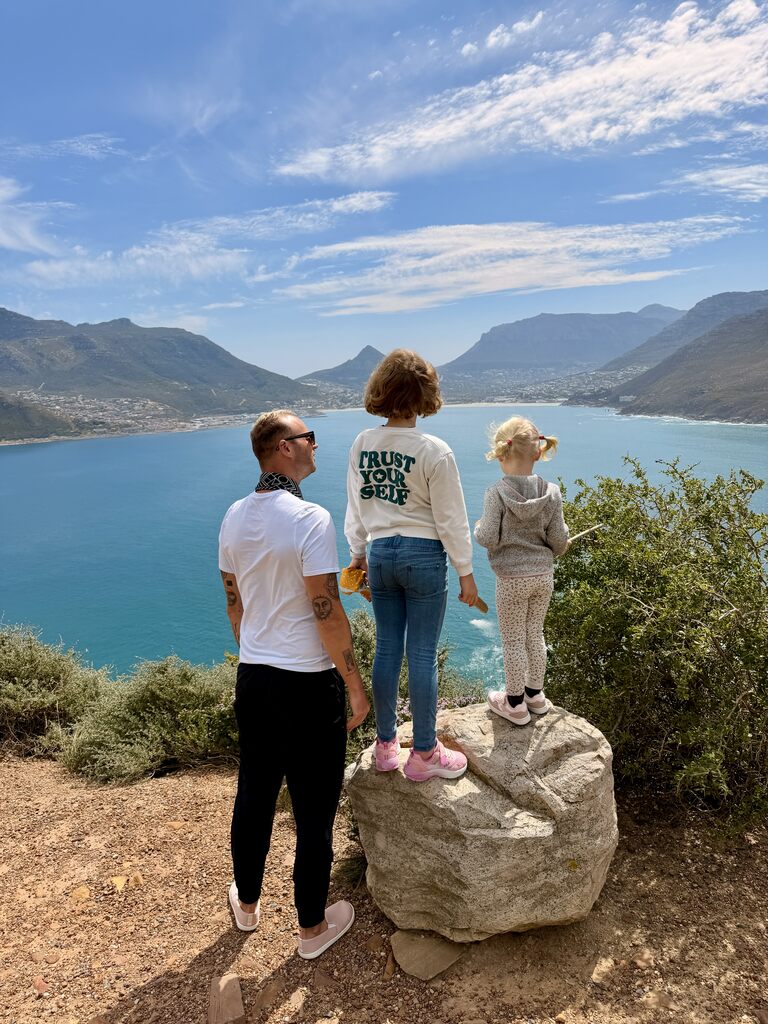
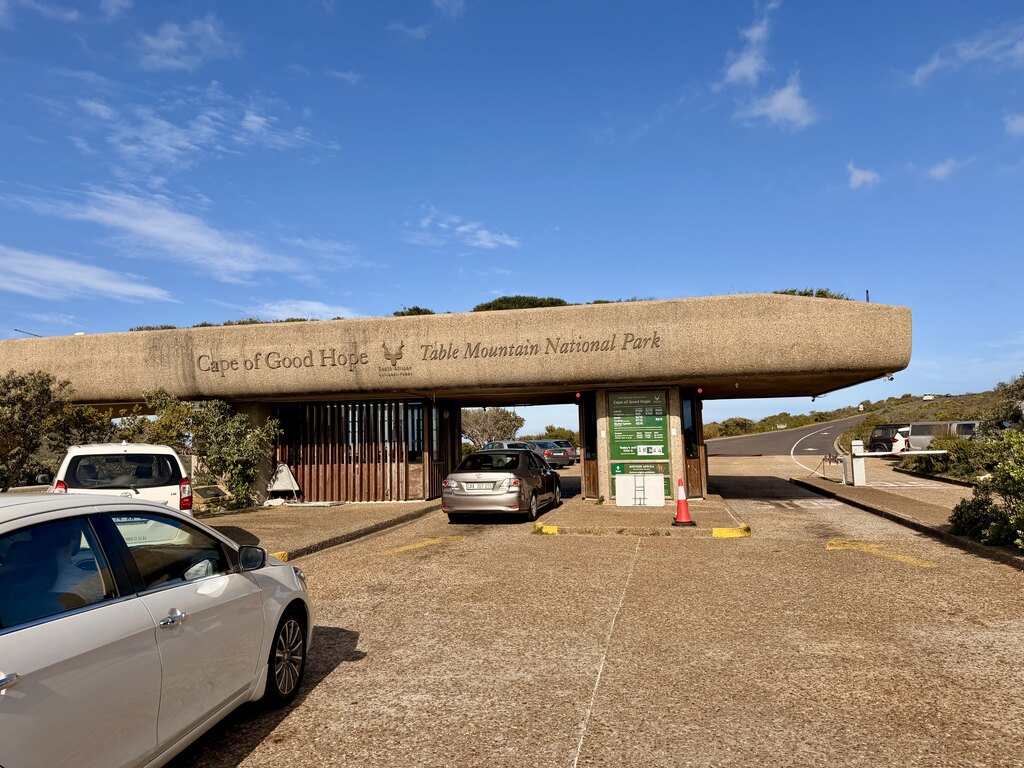
At the entrance to the Cape Point Nature Reserve, we joined the queue of cars. It looked long, but we waited only about six minutes until it was our turn to buy tickets. Not bad for a Saturday.
👉 Don’t have time to read the whole article? These are the best Cape Town Tours!
👉 Find Family-Friendly Hotels in Cape Town.
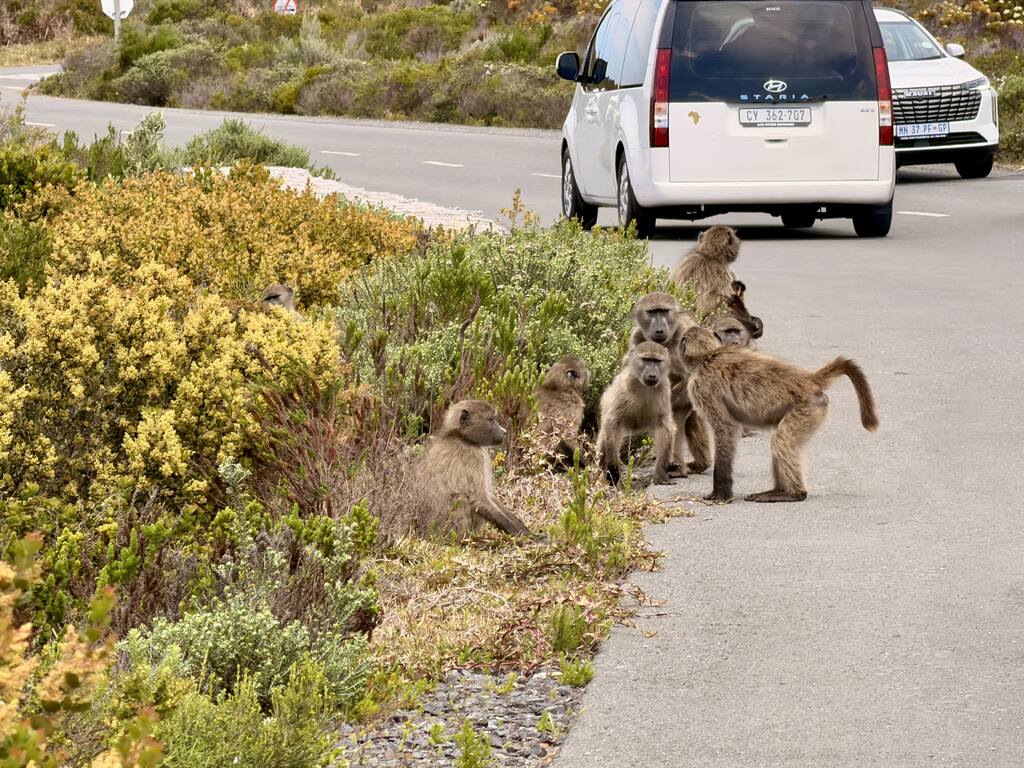
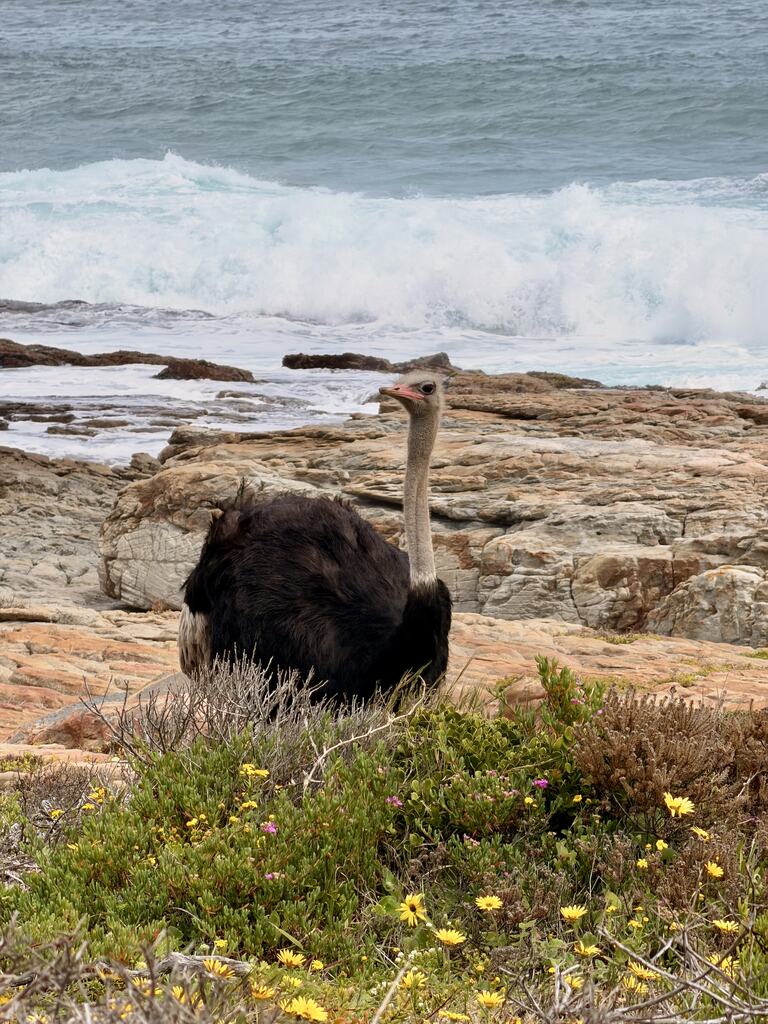
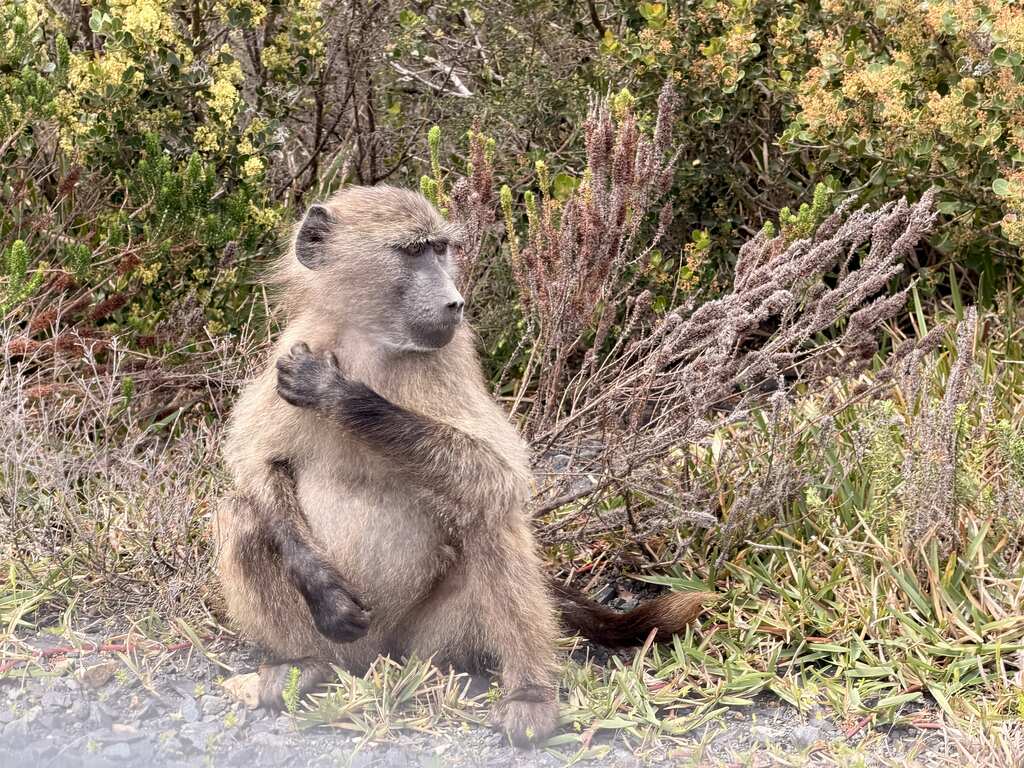
On the way to the first parking lot, we already spotted wildlife: a group of baboons sitting close to the road and two ostriches walking calmly by the sea. An absolute highlight for the girls and us!
First Stop: The Famous Cape of Good Hope Sign
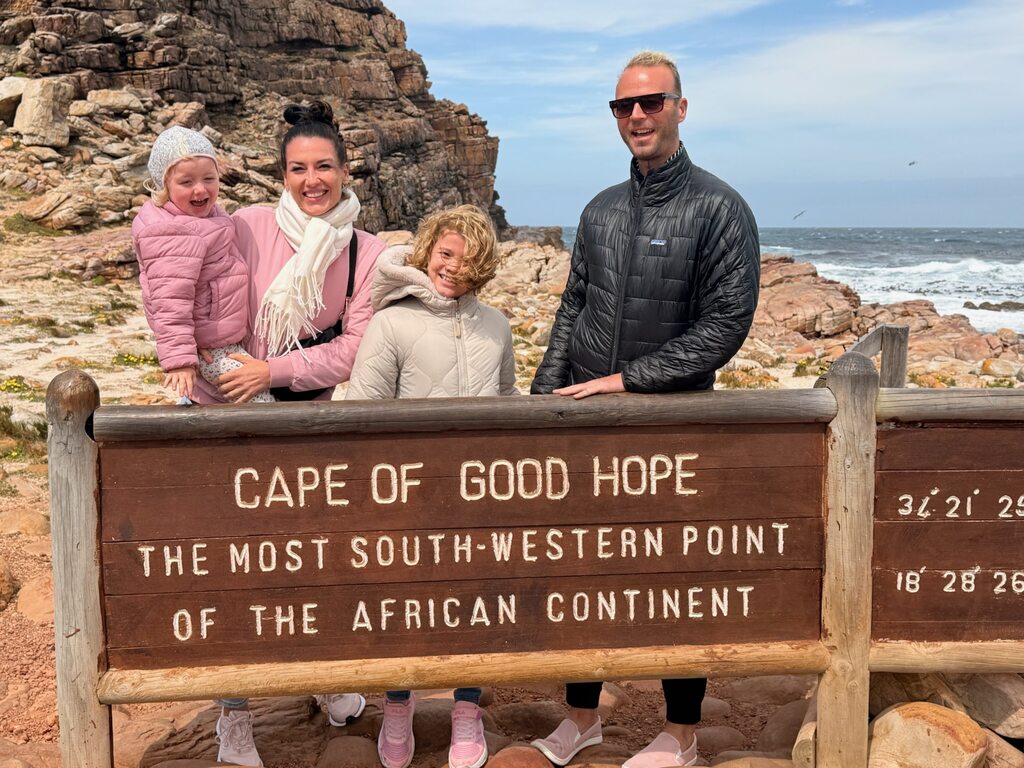
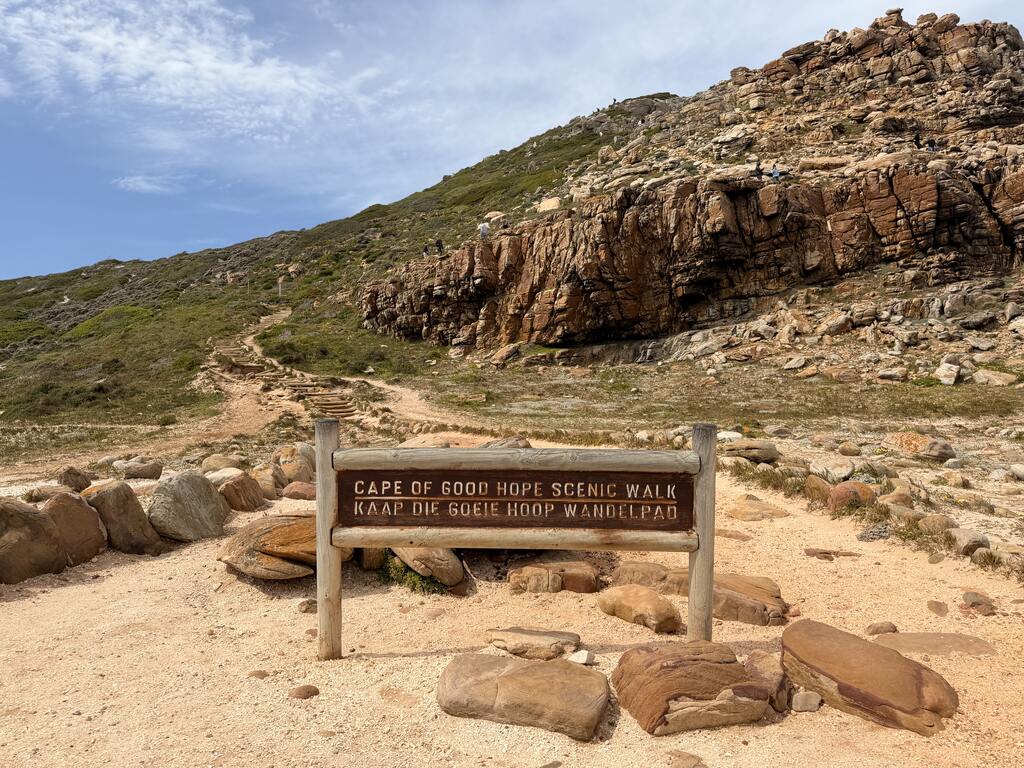
Everyone wants this photo. The big wooden sign that proves you made it to the Cape of Good Hope.

When we arrived, we got lucky. No tour buses in sight! The parking lot was busy but not overcrowded. We snapped our family picture in peace before the crowds rolled in. And then we went for a little hike.

Trail Voetpad, An Easy Walk for Kids
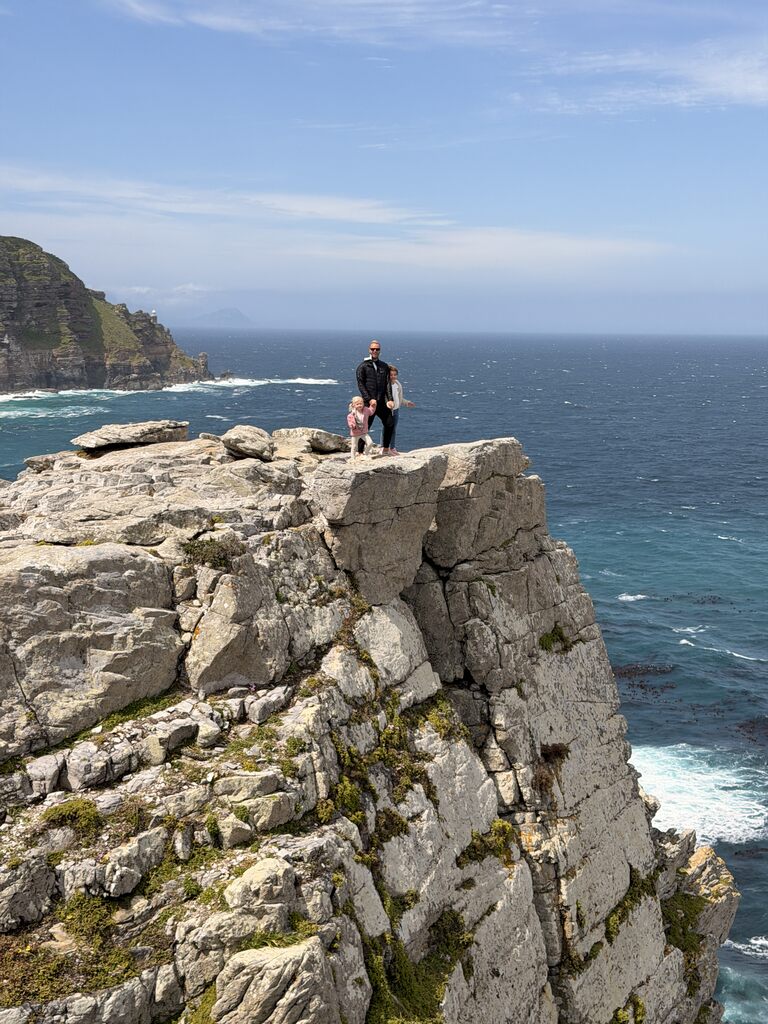
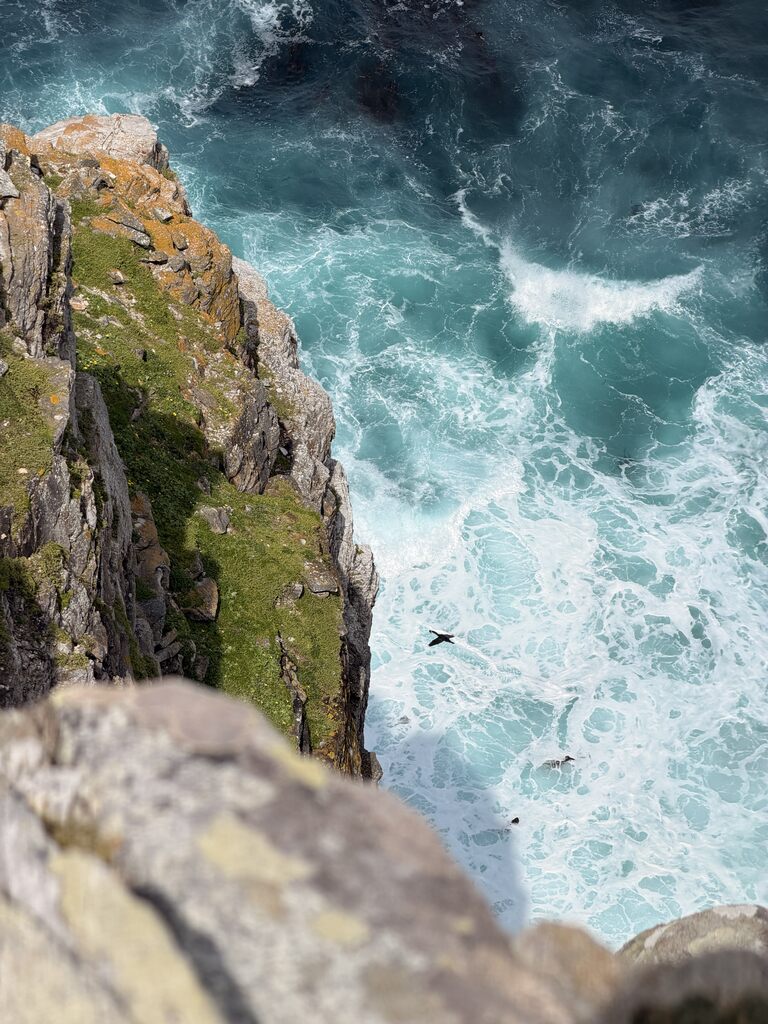
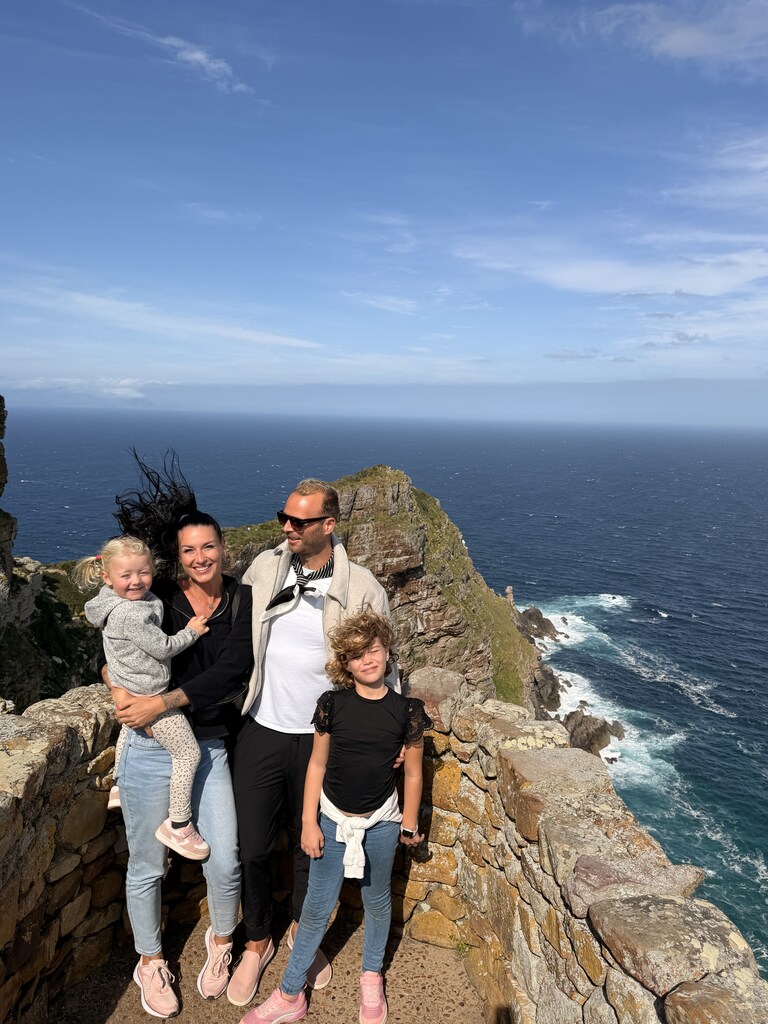
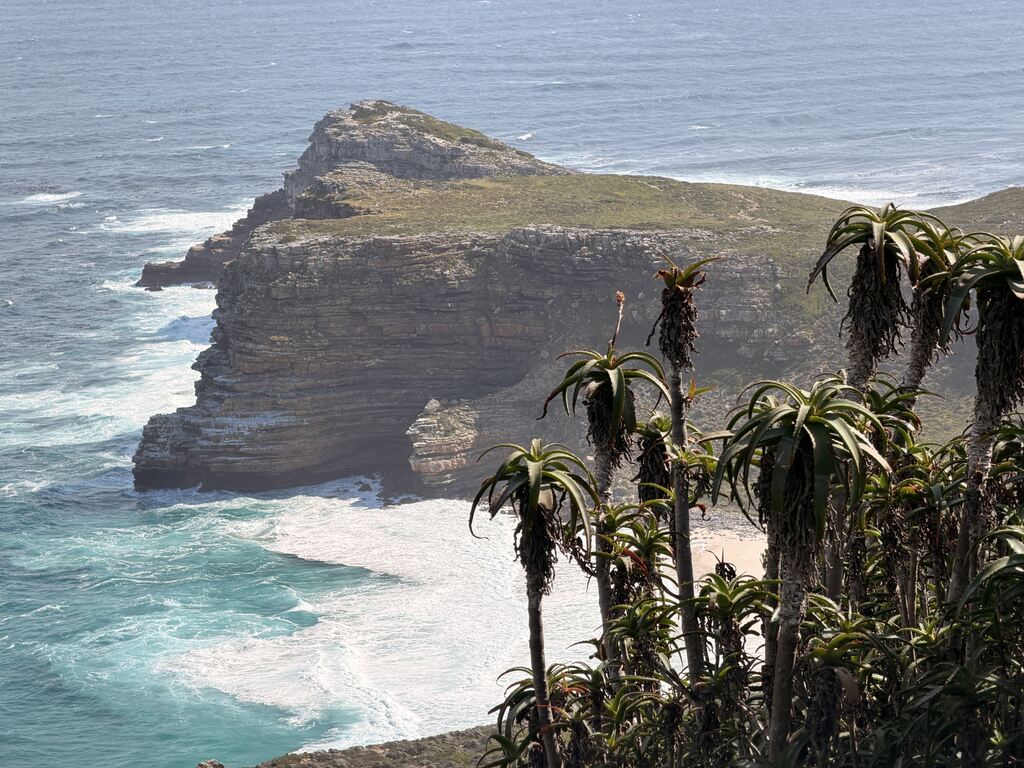
From the parking lot, there’s a short trail called the Kaap die Goeie Hoop Wandelpad. Even our four-year-old Ruby managed it with a smile. The path winds up gently, and in less than 20 minutes we stood on top of the cliffs. The views? Unreal. Jagged rocks, turquoise waves crashing against the shore, seabirds soaring above us.
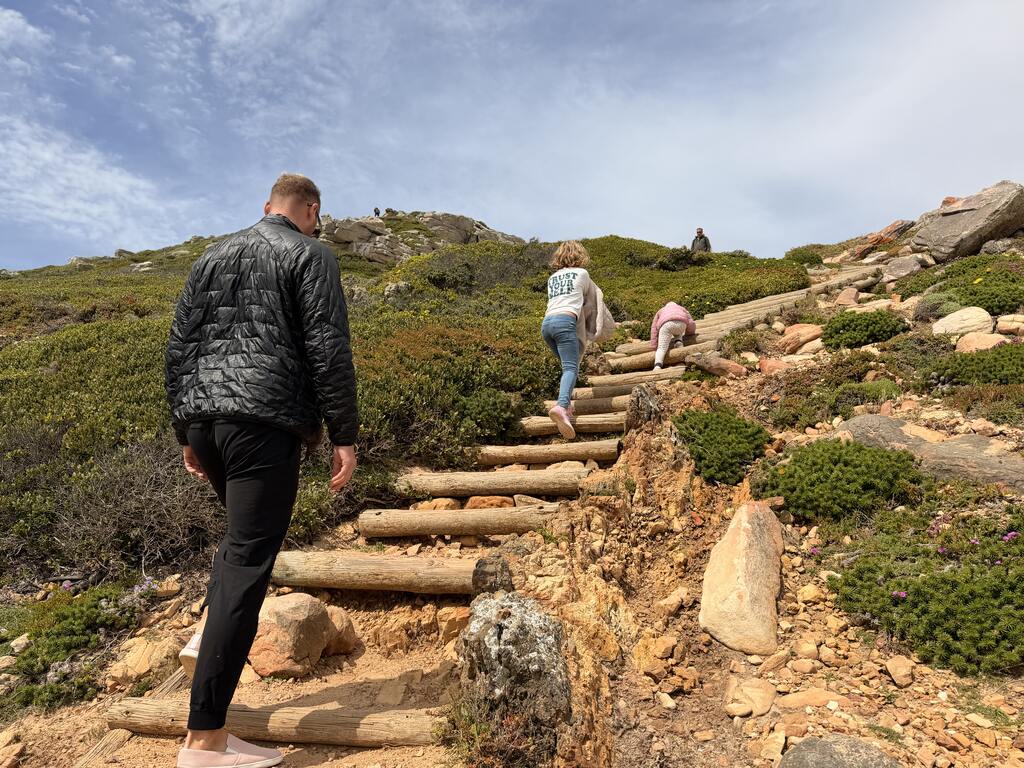
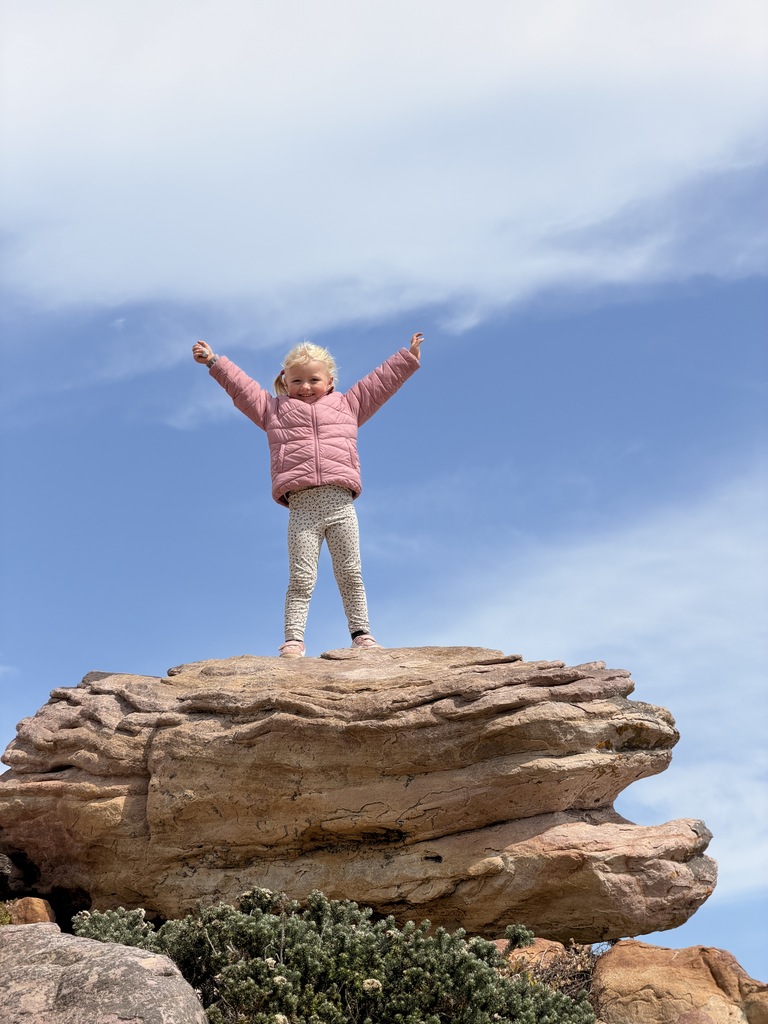
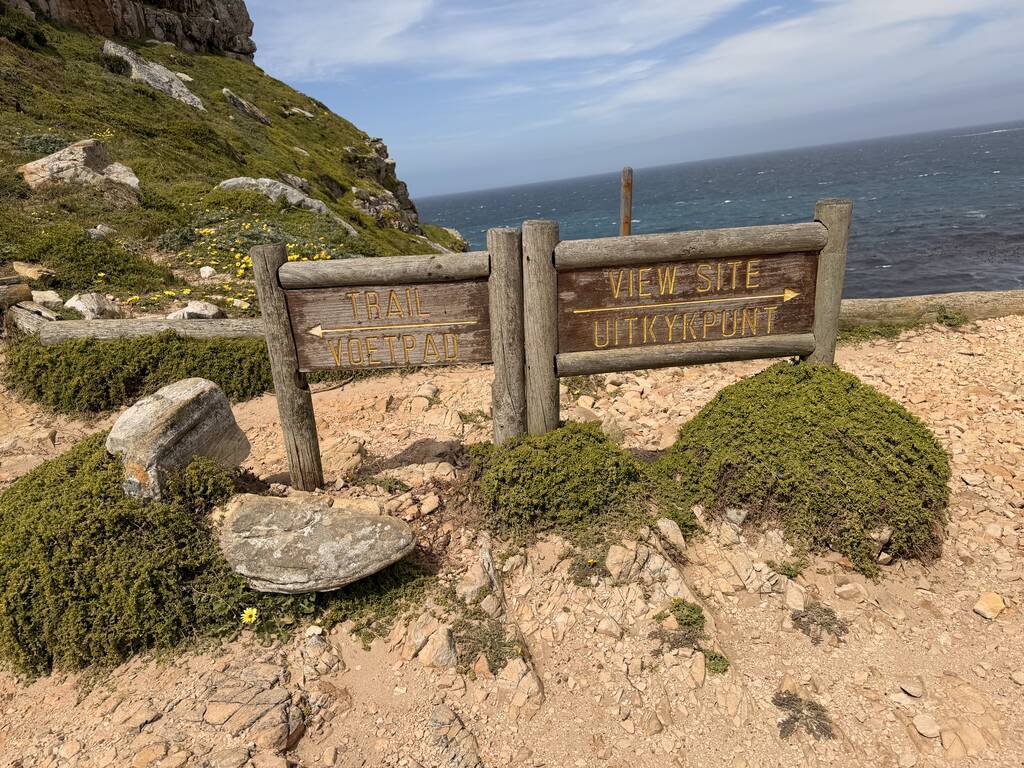
We also continued to the View Site Uitkykpunt. Phenomenal. Stone cliffs dropping into the ocean like something from a movie.
By the time we walked back, the parking lot had exploded with tour buses. Dozens of people queuing for that same photo. Lucky us for arriving when we did.
Next Stop: Cape Point and the Old Lighthouse
From the Cape of Good Hope sign, it’s just a five-minute drive to Cape Point. Don’t be alarmed if you see cars parked along the road before you get there. Just keep going until you reach the main parking lot next to the gift shop. We got a spot right there.


From here, you’ve got choices: a 1.5-hour return walk that takes you along the cliffs between Cape Point and the Cape of Good Hope, or the straight-up walk to the old lighthouse (don’t confuse it with the new one).
We picked the lighthouse.
The Uphill Walk to the Lighthouse
The girls were already a bit tired from the morning. Ruby especially. So what should have been a 10-minute climb took us around 25 minutes with breaks. The path is steep but paved, so it’s kind of stroller-friendly, though pushing one up there might be a serious workout.
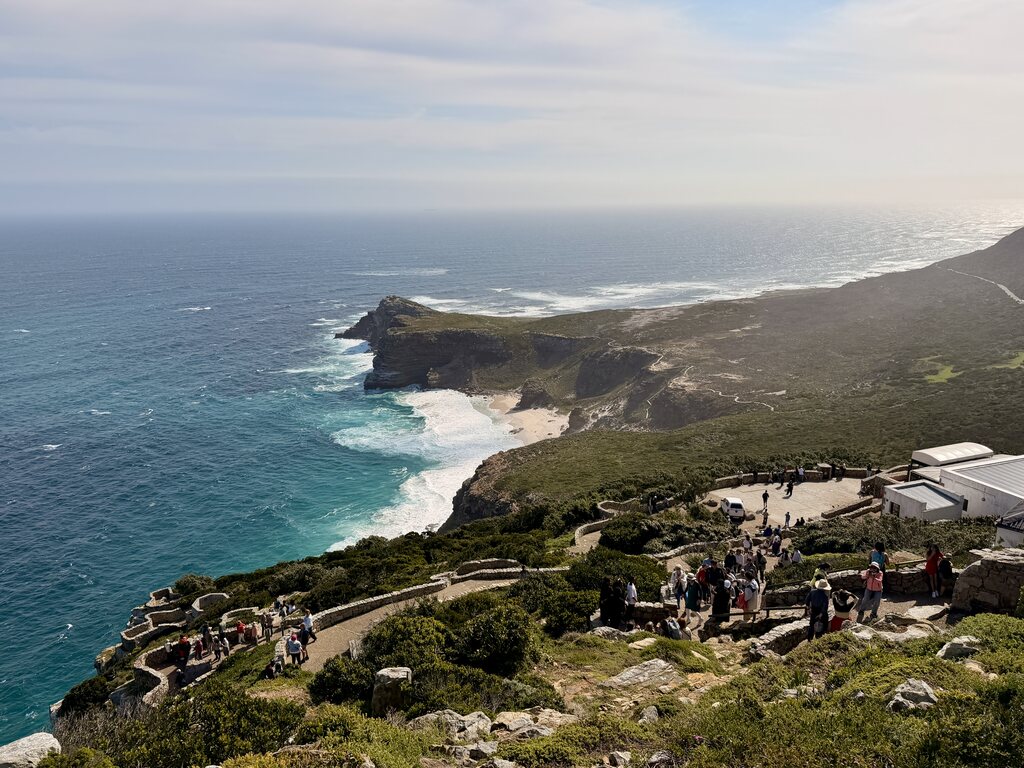
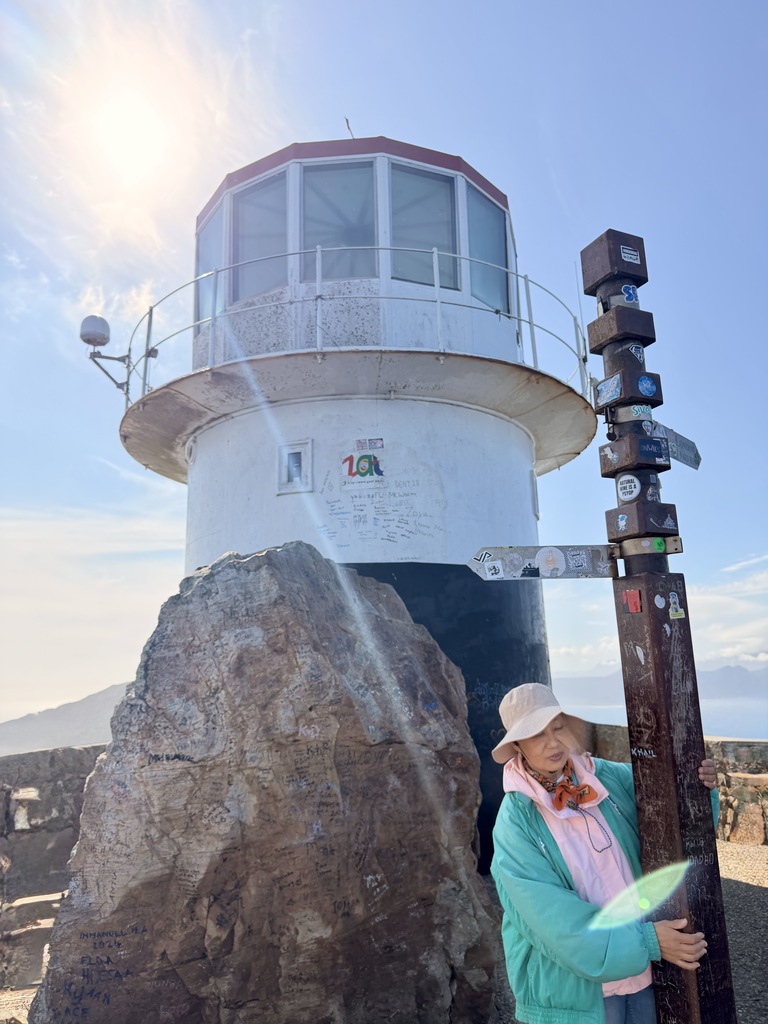
When we finally reached the top, it was… crowded. Very crowded. Honestly, it felt a bit like being at a tourist attraction rather than in nature. The views were wide and dramatic, but I actually preferred the peace of our first hike.
The Flying Dutchman Funicular
If walking isn’t an option, there’s a little train called the Flying Dutchman Funicular. It runs up and down between the parking lot and the lighthouse. My tip? Only use it if you really need it. The ride is short, and I found the ticket price too high for just two minutes.
Facilities at Cape Point
Here’s where you’ll find the most infrastructure: toilets (clean and plenty), a restaurant with sea views, and a gift shop that sells everything from postcards to stuffed penguins. This is also where most people linger, so it feels busier than the rest of the park.
Should You Self-Drive or Book a Guided Tour?
This is the question most people Google before they go. Here’s the honest answer: both work, but they suit different travellers.
Self-driving gives you total freedom. You choose when you stop, how long you linger, and whether you add Boulders Beach or Chapman’s Peak Drive. If you’re comfortable driving on the left and navigating South African roads, it’s genuinely the better option for families. You can pack your own snacks, start early, and leave when the kids are done.
A guided tour makes sense if you’re new to Cape Town, don’t want to rent a car, or prefer someone else to handle the logistics. Most tours pick you up from the City Bowl or V&A Waterfront and drop you back. They typically include Boulders Beach penguins and Cape Point in one loop. The trade-off is that you’re locked into the group’s schedule, and the most popular stops can feel rushed.
Our day? We self-drove from Constantia. Highly recommend it if you have the option.
Half-Day vs. Full Day: Which Should You Choose?
| Feature | Half-Day Visit (3-4 hrs) | Full Day Visit (6-8 hrs) |
|---|---|---|
| Cape of Good Hope sign | Yes | Yes |
| Voetpad trail / Uitkykpunt | Yes | Yes |
| Cape Point Lighthouse | Yes | Yes |
| Tidal pool picnic (Buffels Bay) | No | Yes |
| Boulders Beach penguins stop | No | Yes |
| Chapman’s Peak Drive return | No | Yes |
| 1.5-hr Cape Point to Good Hope trail | No | Yes |
| Best for | Toddlers, tight schedule | Older kids, full exploration |
- Half-day (3-4 hours): Drive straight to the reserve, do the Cape of Good Hope sign and Voetpad trail, drive up to Cape Point, and head home. You skip the beaches and longer hikes, but you hit the highlights. Good option for young toddlers or anyone with limited time.
- Full day (6-8 hours): Add Boulders Beach penguins on the way, stop at one of the tidal pool picnic areas (Buffels Bay is great for kids), and take the 1.5-hour Cape Point to Cape of Good Hope trail. You could also add Chapman’s Peak Drive on the return route.
Our four hours felt like the sweet spot with a toddler and a school-age child. We saw everything that mattered without anyone melting down. But if your kids are a bit older, a full day here is 100% worth it.
Beaches and Picnic Spots
If you have more energy than we did, add a stop at one of the picnic areas. Buffels BayandBordjiesrif both have safe tidal pools for kids to splash in. On a sunny summer’s day, it must be perfect.
There’s also Diaz Beach, a wild and beautiful stretch of sand. But beware, the stairs down are long and steep. Better for older kids or adventurous teens.
Our Timing: Four Hours of Exploring
In total, we stayed about four hours. Honestly, we could have spent the whole day here. There are shipwreck trails, birdwatching points, and more beaches we didn’t see. But by then the wind was cold, the kids were wiped out, and we were ready to call it a day.
Tips for Visiting the Cape of Good Hope with Kids
Best Time to Visit
Go in the morning to avoid crowds (and tour buses). Spring and summer are lovely, but it can be windy any time of year.
What to Bring
- Snacks and water (there is only one restaurant)
- Sunscreen, hats, and a windbreaker
- Comfortable shoes (lots of steps and sandy paths)
- Baby carrier if you have toddlers, strollers are tough, I wouldn’t recommend
Facilities
- Toilets at Cape Point
- Restaurant and gift shop at the lighthouse area
- Picnic areas with tidal pools at Buffels Bay and Bordjiesrif
Safety Notes
- Don’t feed the baboons
- Watch kids on cliff paths, there are no fences
- Always lock your car and keep valuables out of sight (the general Cape Town rule)
Where to Stay in Cape Town
We live in Constantia, in the southern suburbs of Cape Town. For tourists, I’d recommend choosing a hotel in the City Bowl, V&A Waterfront, or Camps Bay. Here are a few hotel tips for you, or simply check the map below.
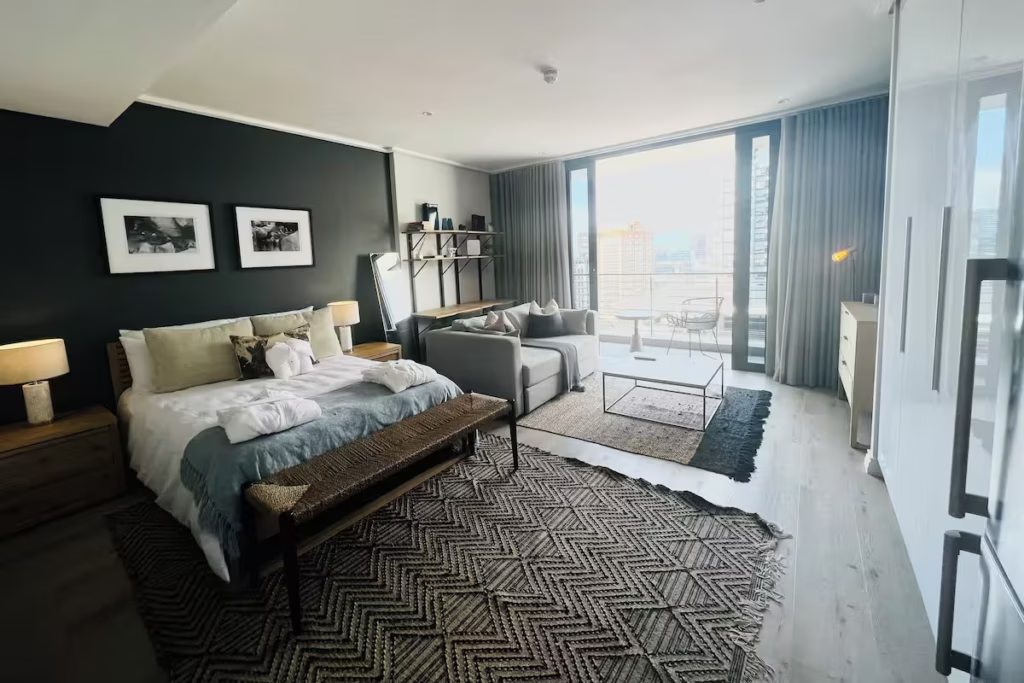
Urban Elephant 16 on Bree
- From $120 (€110) per night (Studio)
- Serviced apartments with rooftop pool and modern kitchens in trendy De Waterkant
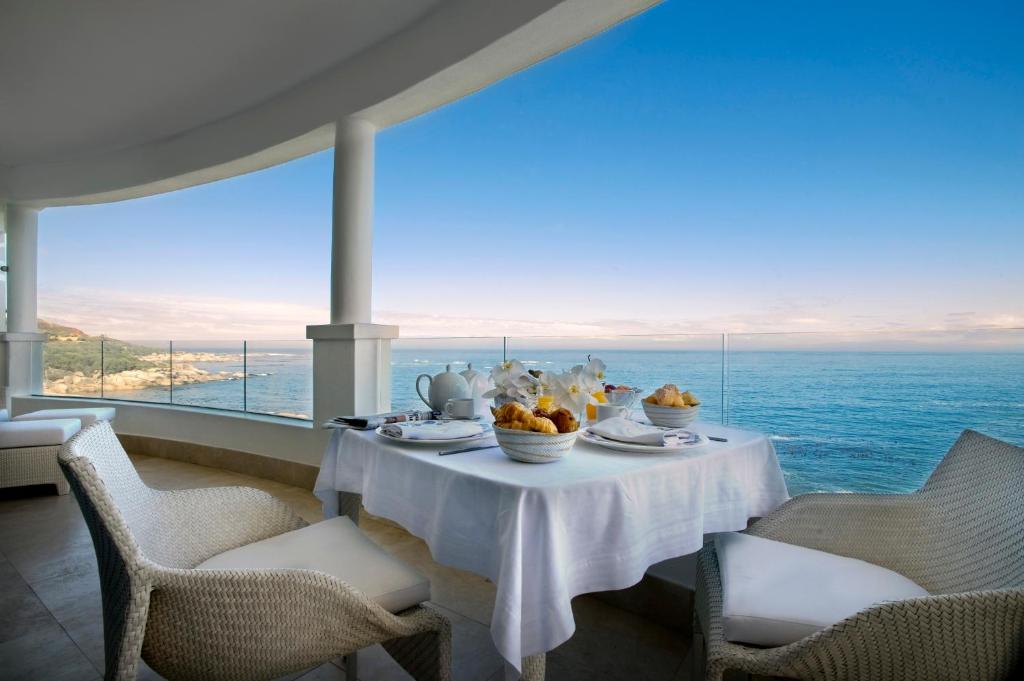
Twelve Apostles Hotel and Spa
- From $400 (€431) per night (Classic Room)
- Rooms with ocean views, kids staying free, 2 pools, gardens, and even a private cinema

Cape Grace Hotel
- From $995 (€1,011) per night (Fairmont Room)
- Spacious suites with harbor or mountain views, pool, spa, and family-friendly service right on the V&A Waterfront
Key Takeaways
- Time needed: 3-5 hours for highlights, full day if you add beaches and longer trails
- Opening hours: Daily 6 am, 6 pm, last entry 5 pm
- Fees: R400 per adult, R200 per child (international visitors); locals pay less with SA ID
- Go early to beat tour buses and crowds, it makes a real difference
- Cape Point and Cape of Good Hope are just a five-minute drive apart inside the same reserve
- Wildlife: Ostriches, baboons, dassies, seabirds, and whales in season from the cliffs
- Best kid-friendly hike: The Voetpad trail, gentle, short, and doable even for toddlers
- No swimming: Strong currents at all beaches in the reserve make them unsafe for swimming
Final Thoughts on a Cape of Good Hope Day Trip
If you’re in Cape Town with kids, the Cape of Good Hope should be at the top of your list. It’s not just another tourist stop. It’s history, adventure, and raw nature all wrapped in one. The kids get space to run wild, and you get views that take your breath away.
Yes, it can get crowded. Yes, the wind might blow your hat off. But it’s worth it.
Go for the sign photo, stay for the hikes, and don’t forget to look out the car window, because you might just spot an ostrich walking by the sea.
Do you plan to visit Cape Point Nature Reserve? Please let me know in the comments!
Thank you for reading and for making me part of your day!
Yours, Lulu
Frequently Asked Questions
Is the Cape of Good Hope worth visiting with kids?
Yes. It’s one of the best family day trips in the Western Cape. Kids of all ages love the short hikes, wildlife (ostriches, baboons, dassies), and the dramatic ocean cliffs. Parents get scenery that’s genuinely jaw-dropping. It’s inside Table Mountain National Park, so you get nature, history, and proper facilities in one trip.
How much is entry to the Cape of Good Hope?
International visitors pay R400 per adult (~$20 USD / 19 EUR) and R200 per child aged 2-11 ($10 USD). South African residents pay R90 per adult and R45 per child with a valid SA ID. The Flying Dutchman Funicular costs R95 one way or R160 return for adults, half price for kids.
Is Cape Point the same as the Cape of Good Hope?
No. Cape Point is the higher rocky headland with the old lighthouse and the Flying Dutchman Funicular. The Cape of Good Hope is the lower, westernmost point where you find the famous wooden sign and the sheer cliffs. Both are inside the same reserve and just a five-minute drive apart.
What animals can you see at the Cape of Good Hope?
The reserve is home to ostriches, baboons, antelope, dassies (rock hyraxes), and a wide variety of seabirds. In season, southern right whales are sometimes visible from the cliffs. Never feed the baboons, they’re wild and can be aggressive.
Can you see where the Indian and Atlantic Oceans meet at the Cape of Good Hope?
No, that’s a common misconception. The true meeting point of the Indian and Atlantic Oceans is Cape Agulhas, further east. At the Cape of Good Hope you still get sweeping views over False Bay and the Atlantic, which is spectacular in its own right.
What is the best hike for families at the Cape of Good Hope?
For young children, the Voetpad trail (Kaap die Goeie Hoop Wandelpad) is ideal, gentle, short, and doable for toddlers. The Uitkykpunt viewpoint is a quick add-on with stunning cliff views. Older kids can manage the 1.5-hour Cape Point to Cape of Good Hope trail. Bring water and sturdy shoes for all of them.
Is the Cape of Good Hope safe for children?
Yes, but keep a close eye on kids near the cliffs and rocky viewpoints, there are no fences. The wind can be very strong. Tidal pool areas like Buffels Bay and Bordjiesrif are safe for young children to splash in. Ocean swimming is not recommended anywhere in the reserve due to strong currents.
Should you book a Cape of Good Hope tour or self-drive?
Self-driving gives you the most flexibility, especially with kids. You control your schedule, can start early, and pack your own snacks. Guided tours work well if you’re not renting a car or prefer a hassle-free day, most include Boulders Beach penguins and Cape Point in one loop. The trade-off is that you follow the group’s schedule, which can feel rushed at busy stops.