

Is a 1-Week Road Trip the Best Way to See Northern Thailand in 2026?
Yes, a 1-week road trip is the best way to see northern Thailand in 2026. With your own vehicle, you can reach remote mountain villages, national parks, and local restaurants that aren’t accessible by buses or standard tours. The classic counter-clockwise route from Chiang Mai through Mae Kampong, Chiang Rai, Pai, Ban Rak Thai, Khun Yuam, and Doi Inthanon covers around 1,000km in 7 days. I drove it myself and found it the most rewarding way to experience the north’s natural beauty and culture.
I spent over two months traveling in Thailand. I did all kinds of odd and fun adventures, but the one that is most memorable in my eyes is the 1-week northern Thailand road trip.
There are two kinds of travelers in this world: those who follow the crowd and those who throw their bags in the trunk, blast their favorite road trip playlist, and set off on an adventure through the remote areas of a foreign country and enjoy the ride. If you’re reading this, I’m guessing you’re the latter—or at least you want to be.
In 2026, I heard of some cool roads and beautiful destinations around the north of Thailand, so naturally, I turned it into a main character moment. I spent a week driving through remote towns, to different local restaurants, and the popular northern Thailand tourist hotspots to see it all.
I left no stone unturned as I drove my way through the mountains, explored all the national parks, and ate my way through the north.
Why Do a Road Trip Through Northern Thailand?
There are so many ways to experience Thailand. It is a destination that promises an interesting vacation no matter what. However, a road trip is an uncommon and often unthought-of activity when there, and it’s so underrated!
Northern Thailand is a unique place. It is vast, it is filled with greenery, and it is all jaw-droppingly beautiful. What really makes it special, though, is its remote areas that still celebrate traditional Thai culture. These places are best traveled to by car (or motorbike, if you’re feeling extra adventurous).

A 1-week northern Thailand road trip is an amazing activity for a solo explorer looking for some “main character” moments or a car full of family members. While Southern Thailand is known for its beautiful beaches and island life, the mountainous region of the north offers entirely different, unique experiences that you shouldn’t miss when visiting Southeast Asia.
Sure, you could take a bus or book a tour, but where’s the fun in that? A road trip gives you the freedom to stop for a roadside noodle stall, pull over for a spontaneous waterfall dip, or take a detour just because a mountain road looks interesting. Let’s be honest, some of the best travel stories come from the moments that weren’t planned.
In this post, I’ll take you through my 1-week northern Thailand road trip itinerary that will show you the best places in northern Thailand. It includes a detailed itinerary, route, when to go, and where to stay throughout your trip.
When to Go to Northern Thailand
First things first, when is the best time for a road trip in Thailand? Thailand’s weather is a peculiar thing, especially in the north.
For your 1-week northern Thailand road trip, aim to visit between November and February, this is the sweet spot. Skies are mostly clear, temperatures are cooler, and the roads are in their best condition. If your schedule is tight, even late October works well since the high season is just beginning to pick up.
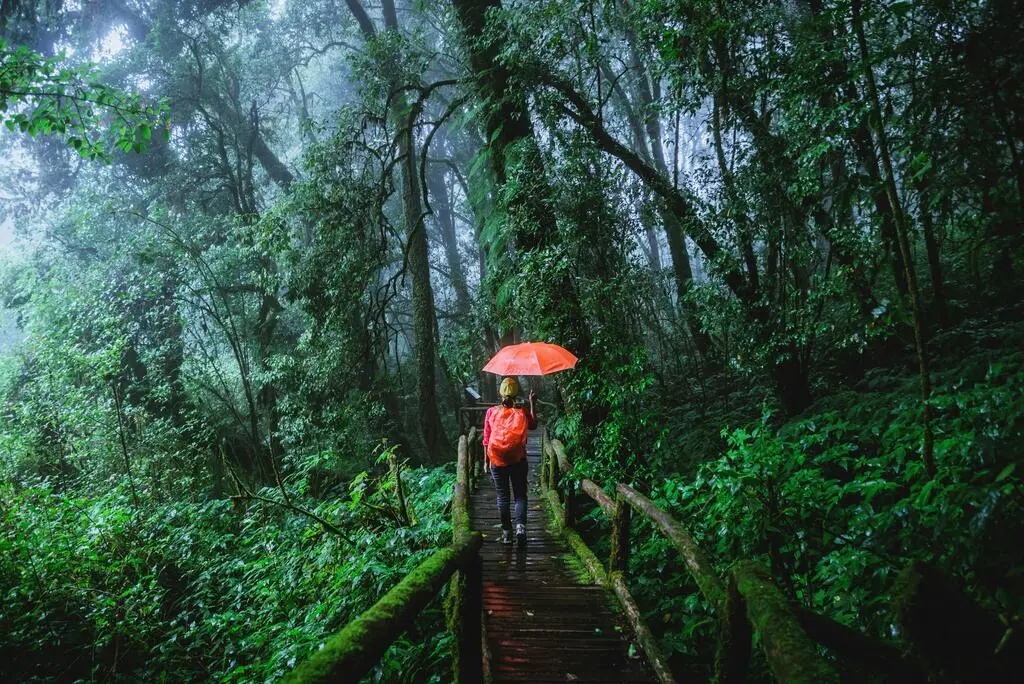
The northern Thailand roads vary in shape, size, and condition. Some of them lead into very remote areas, so paying close attention to weather and road conditions isn’t optional, it’s essential. During the right seasons, you’ll have no issues. But driving in the rain or the burning season is a different story entirely.
What Is the Northern Thailand Road Trip Route?
One of the most famous driving routes in northern Thailand is the Mae Hong Son Loop, which takes you through the entire province of Mae Hong Son. If you’re looking for a shorter adventure, you can complete the loop in about 3-4 days. While this drive is undeniably stunning, it skips some of the north’s most popular destinations, such as Pai and Chiang Rai, as well as other incredible spots on the eastern side of the country.
If you’re looking to experience even more of what the north has to offer, a slightly longer itinerary is the way to go. That’s why I’ve put together an extended version of the Mae Hong Son Loop, one that gives you a little extra time on the road, plenty of incredible stops along the way, and even more views to soak in. So if you’re up for an adventure that goes beyond the usual route, this itinerary is for you!

The direction you travel from day one is entirely up to you. This guide takes you on a counter-clockwise circle, touring the busier tourist attractions first, then heading into quieter, more remote places, gradually escalating the scenic mountain views and beautiful scenery as the week builds toward its peak.
Day 1 – Chiang Mai
We start in the main city of Chiang Mai! Chiang Mai is a hub of activity and buzz in the north, with a unique ability to encompass a bustling city with genuine Thai charm. The city is split into distinct sections, and each one has something fun to explore.
If you are spending a few days in Chiang Mai, it’s a good idea to walk around and explore all the beauty of this city. Wander through the old city and enjoy the night markets every evening. Don’t miss Wat Chedi Luang, one of the most impressive Buddhist temples in the old city, dating back several centuries. There is the lively shopping quarter of Nimman, which is growing fast to accommodate the rise in expats. And then there are the jungle areas around Chiang Mai city that hold so much history, hiking, and elephants.
Chiang Mai is also the best place to rent your scooter or car for the week. Due to its popularity, there is a huge variety of rental shops to choose from, I’ll get into the best options later on.

Day 2 – Chiang Mai Old Town to Mae Kam Pong
We start off with a relatively easy first day on the road. It’s just an hour’s drive from Chiang Mai to the charming town of Mae Kampong, nestled in the forest. This works perfectly as a day trip if you want to stay in Chiang Mai for another night, or you can lean into the adventure and spend the evening in a treehouse surrounded by jungle.
The Town of Mae Kam Pong
Mae Kampong is a mountain village with cute forest cafes and beautiful restaurants woven right into the landscape. It’s a small town celebrated for its traditional agriculture, tea, and coffee, along with buildings that feel like they grew out of the nature surrounding them. At night, many of the hotels transform into a fairy-lit forest, it’s genuinely magical.
What makes this village really special is how it handles tourism. It’s run as a community where 70% of the money from tourism is shared between all 130+ families who live there. Before tourists started coming, they mostly made their living from fermented tea (called “miang”), which they still produce the old-fashioned way. Mae Kampong sits at 1,300 meters up in the mountains, keeping temperatures under 25°C (77°F) even when the rest of Thailand is sweltering, perfect growing conditions for the excellent coffee that has become a significant business for locals.

The Day 2 Details
Chiang Mai Old Town to Mae Kam Pong Distance: 51.5km / 32mi, 1 hour drive

POIs: In Mae Kampong
Doi Saket Hot Spring, Family-friendly hot springs, donation-based. Food and drink available for purchase.
- Kew Fin, Lookout spot
- Mae Kampong Waterfall
Where to Stay
Mae Kampong is popular for its community-run homestays that offer a genuine window into village life. There are many beautiful options on booking.com.
Day 3 – Mae Kampong to Chiang Rai
Day three is the journey to Chiang Rai, a beautiful and lively town known for its unique and photogenic temples. Chiang Rai is a touristy spot, which means crowds, but it also means it’s packed with amazing food, markets, and of course, temples that can easily fill a full day of exploration.
The two biggest highlights? The White Temple (Wat Rong Khun) and The Blue Temple (Wat Rong Suea Ten), both absolute must-sees and the main attractions of the region.


The White Temple and the Blue Temple
The White Temple isn’t actually old at all, it’s modern art designed to look like a temple. A local artist named Chalermchai Kositpipat started building it in 1997 and has spent over $1.5 million of his own money on it. Look closely and you’ll spot some unexpected details, superheroes, movie characters, and even Michael Jackson hidden among the Buddhist designs. The artist plans to keep building until 2070.
The Blue Temple was only completed in 2016 on the site of an old abandoned temple. That electric blue color comes from paint mixed with crushed gemstones. Inside, there’s a massive 6.5-meter Buddha statue, with colorful paintings of Buddhist stories covering every surface.
The Golden Triangle
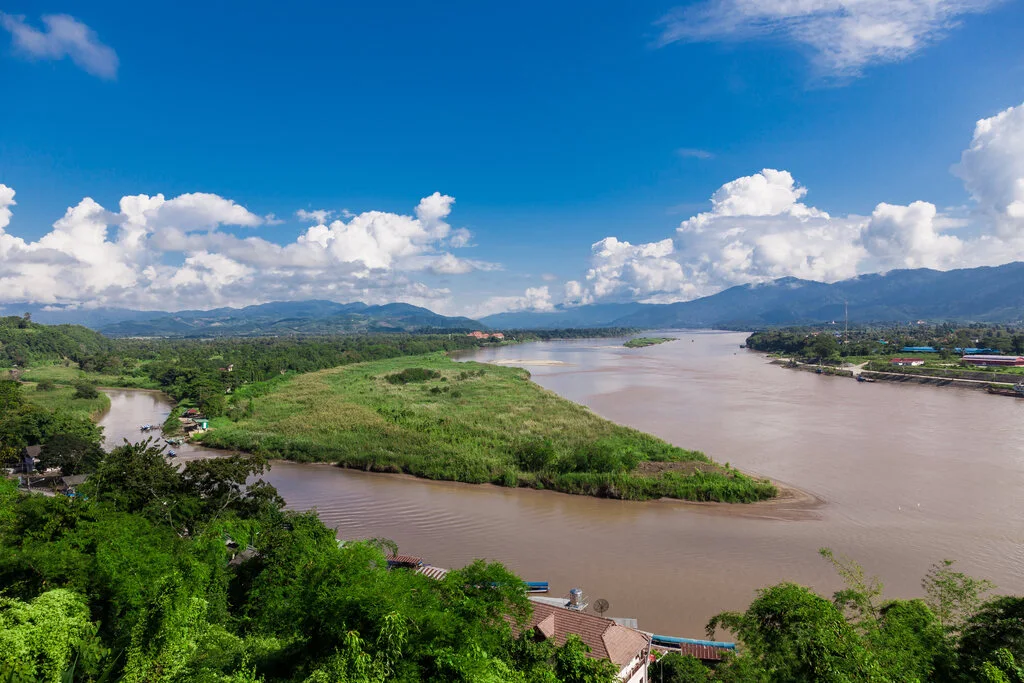
If you have enough time, consider a short detour to Chiang Saen, an ancient city on the banks of the Mekong River. This area is part of the famous Golden Triangle where Thailand meets Myanmar and Laos, a historically significant region transformed from its opium-producing past into a fascinating tourist destination. This area once grew 60% of the world’s opium in the 1960s and 70s. Now there’s a Hall of Opium Museum where you can learn about that extraordinary history. The best part? Standing at the exact spot where all three countries meet, you can literally see Thailand, Myanmar, and Laos at once. Chiang Saen itself has ruins from the 14th century when it was a key trading hub between China and Southeast Asia.
The Day 3 Details
Mae Kampong to Chiang Rai Distance: 163km / 101mi, 3-hour drive

POIs In Chiang Rai
Lalitta Cafe , Not just a café, but an experience! A beautifully decorated location designed to look like a rainforest.
Day 4 – Chiang Rai to Pai
Day four is a long and demanding drive, especially if you’re on a scooter, from Chiang Rai to Pai. Google Maps will route you all the way back through Chiang Mai before heading up to Pai. If you’d like to spend another night in Chiang Mai before making your way up, that’s a completely valid option when you have extra time and want a lighter day on the road.
However, if you’re up for the adventure, there’s a second route that takes you through local villages and more remote roads, letting you see some of the bigger yet less-visited towns in the north.
Pai Canyon
Pai Canyon is a natural wonder that absolutely shouldn’t be missed. The narrow paths are only 1 meter wide in places, with 30-meter drops on both sides. This dramatic formation was shaped by water erosion over 10,000+ years. Local Lisu tribes have treated it as a sacred site for over 200 years, long before tourism arrived in the 1990s. Today, about 100,000 visitors come here annually, so timing matters. Visit around 5:30 pm for the best golden light, when the reddish soil absolutely glows. The main viewpoint is just a 5-minute walk from parking, but if you’re the adventurous type, there are about 2km of ridge trails to explore.

The Day 4 Details
Chiang Rai to Pai Distance: 300km / 186mi, 5 hours

POIs On Route
Pang Pao Beach, A nice beachy area with great food and a relaxed atmosphere.
In Pai
- Pai Canyon
- Two Huts Lookout (sunset)
- Night Market
- Chinese lookout (sunrise)
Where to Stay
Many hostels in Pai offer beautiful and affordable options. Some of my favorites include:
Hotels
Day 5 — Pai to Ban Rak Thai: Where the Real Adventure Begins
The drive from Pai to Ban Rak Thai is where things start getting really fun, both in terms of the views and the wonderfully crazy winding roads. As you head into Mae Hong Son province, you’ll notice the scenery changing fast. Forests get thicker, mountains rise higher, and suddenly you’re completely surrounded by nature.
Now, let’s talk about the roads. This stretch is nothing but twists, turns, and hairpin curves, so whether you’re driving or riding a scooter, take it slow and enjoy the ride. It’s steep in some parts, narrow in others, and there are plenty of blind corners. But honestly? That’s part of the fun. It’s one of those drives where you can’t help but pull over every 20 minutes just to take in the views.
Ban Rak Thai Village
There are tons of cool roadside spots along the way. Whether you need a coffee break, a quick bite, or just a scenic spot to stretch your legs, you’ll find plenty of little cafés and roadside stalls serving fresh Thai coffee, noodles, and snacks. On paper, this drive should take about three hours. But if you’re like me, constantly pulling over for photos, grabbing snacks, and just taking your sweet time, it’ll probably be more like four or five hours. And honestly, that’s the best way to do it. This isn’t a trip you want to rush.

Nam Lod Cave
This cave is a must-see attraction on your route. It stretches over 1.5km long and has been used for shelter for an incredible 20,000 years. Archaeologists have uncovered ancient pottery and wooden coffins from prehistoric burial sites inside. Nam Lod Cave is now home to thousands of bats and swifts, and if you time your visit for sunset, you’ll witness an amazing natural spectacle, birds returning to the cave while bats fly out at the same time, a daily choreography that’s been unfolding for centuries. Your journey through the cave happens on a bamboo raft guided by someone from the local Shan tribe. They might not speak much English, but these guides have been exploring every corner of this massive cave system since childhood, you’re in good hands.
The Day 5 Details
Pai to Ban Rak Thai Distance: 120km / 75mi, 3 hours

POIs On Route
Doi Kiew Lom Viewpoint, A beautiful first lookout of the mountains surrounding you.
Nam Lod Cave – A big cave with bamboo boat tours and fossils.
Noodle Soup House Ban Jabo, Amazing noodle shop with a beautiful view. They also serve incredible Thai tea and coffee!
Thai Elephant Coffee – A small coffee shop with an amazing lookout over a traditional Thai farm.
In Ban Rak Thai
- Go to the border of Thailand and Myanmar
- Coffee Shops
- Sunrise or sunset boat tour on the lake
Where to Stay
- Baan Khao Pook – A budget-friendly tent stay. The owner is incredibly kind and accommodating.
- Wo Ai Ni Guesthouse – A beautiful and modern hotel.
Day 6 – Ban Rak Thai to Khum Yuam
You continue on stunning winding roads and sweeping mountain views on day six as you make your way to the town of Khum Yuam. This day has so many worthwhile on-route stops that you’ll want to budget extra time just in case.

Huay Pu Keng
Huay Pu Keng is home to the Kayan Lahwi people, famous for their “long neck” women who wear brass coils around their necks. Contrary to popular belief, the coils don’t actually stretch the neck, they push down the collarbone and ribs, creating the illusion of a longer neck. Many of these families are refugees from Myanmar who fled conflict in the 1980s and 90s. While the village has become a tourist attraction, it’s important to visit respectfully, these are people’s homes, not a human zoo. The brass coils can weigh up to 10kg and are first placed around girls’ necks from age 5-9.

The Day 6 Details
Ban Rak Thai to Khum Yuam Distance: 111km / 69mi, 2.25 hours

POIs On Route
- Huay Pu Keng – Kayan Village – a beautiful and authentic Karen Tribe community that welcomes tourists to explore their customs and shop
- Su Tong Pae Bridge – A beautiful bamboo bridge
- Thung Bua Tong Fields at Doi Mae U Kho – Amazing flower field that stretches forever in the right season
Where to Stay
- Good View Guesthouse & Camping
- Ban Klang Doi Resort
- Hot Coffee Guest House and Resort, If you don’t mind driving a little further, this is a beautiful homestay along the water with a restaurant, solo and family rooms in the forest, and all proceeds going to the community.
Day 7 – Back to Chiang Mai
Alas, the last ride on your week-long road trip around Northern Thailand! Day seven is filled with Thai agriculture, farms, and beautiful views of small villages. The drive from Khun Yuam to Chiang Mai is long but packed with scenery so good you’ll want to stop constantly.
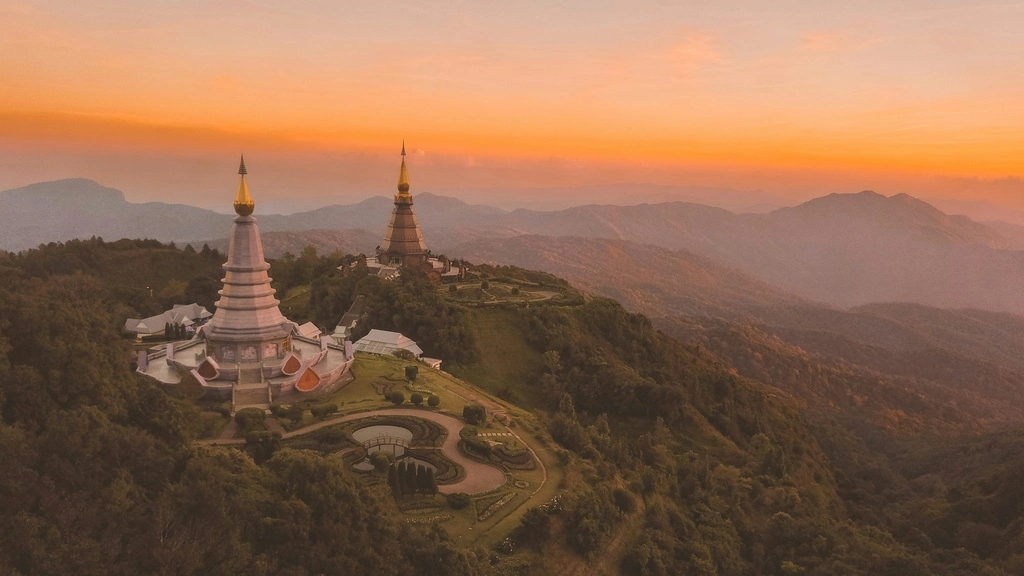
A major highlight is Doi Inthanon National Park, home to Thailand’s highest peak. The air gets noticeably cooler as you climb, and the views get even better. Make time to check out the twin pagodas, scenic hiking trails, and the gorgeous Wachirathan Waterfall before continuing toward Chiang Mai. From there, it’s a smooth, scenic ride into the city. Take it slow, enjoy the journey, and make the most of every stop!
Doi Inthanon
Doi Inthanon isn’t just Thailand’s highest mountain at 2,565 meters (8,415 feet), it’s a wildlife haven. The national park covers over 482 square kilometers and hosts more than 400 bird species, roughly a third of all bird species in Thailand. The mountain is named after the last king of Chiang Mai, and his ashes are buried at the very top.

Wachirathan Waterfall
The Wachirathan Waterfall falls 80 meters and hits the rocks with enough force to create a permanent rainbow in the mist on sunny days. Its name means “diamond waterfall” in Thai, a nod to how the sunlight sparkles in the water droplets. The area around the falls is home to some exceptionally rare plants, including orchid species found nowhere else in the world.
The Day 7 Details
Khun Yuam to Chiang Mai Distance: 220km / 137mi, 4.5 hours

POIs
Doi Inthanon – The highest point in Thailand!
The twin Pagodas, Two beautiful tributes built on Doi Inthanon, overlooking the clouds and towns below, with peaceful gardens and food.
Kew Mae Pan nature trail, A small hiking loop organized by the park, touring the mountain’s natural environment.
Choosing the Right Vehicle for Your Northern Thailand Road Trip
One of the most important decisions you’ll make for your 1-week northern Thailand road trip is your mode of transportation. The vehicle you choose will shape your entire experience — from the pace of your journey to the places you can easily explore.
Do you picture yourself weaving through bustling streets on a scooter, feeling the wind on your face? Or would you rather sit back in an air-conditioned car, comfortably cruising through scenic mountain roads? Your choice will depend on several factors: travel style, comfort level, and the kind of adventure you’re after.
Think about your trip logistics. Are you traveling solo, as a couple, or with a group? Do you pack light, or do you bring everything but the kitchen sink? Are you an experienced motorbike rider, or does navigating unfamiliar roads on two wheels make you nervous? And one key detail that catches people off guard, Thailand drives on the left side of the road. If that’s different from what you’re used to, it could be the deciding factor between two wheels and four. Bike/Scooter Rentals
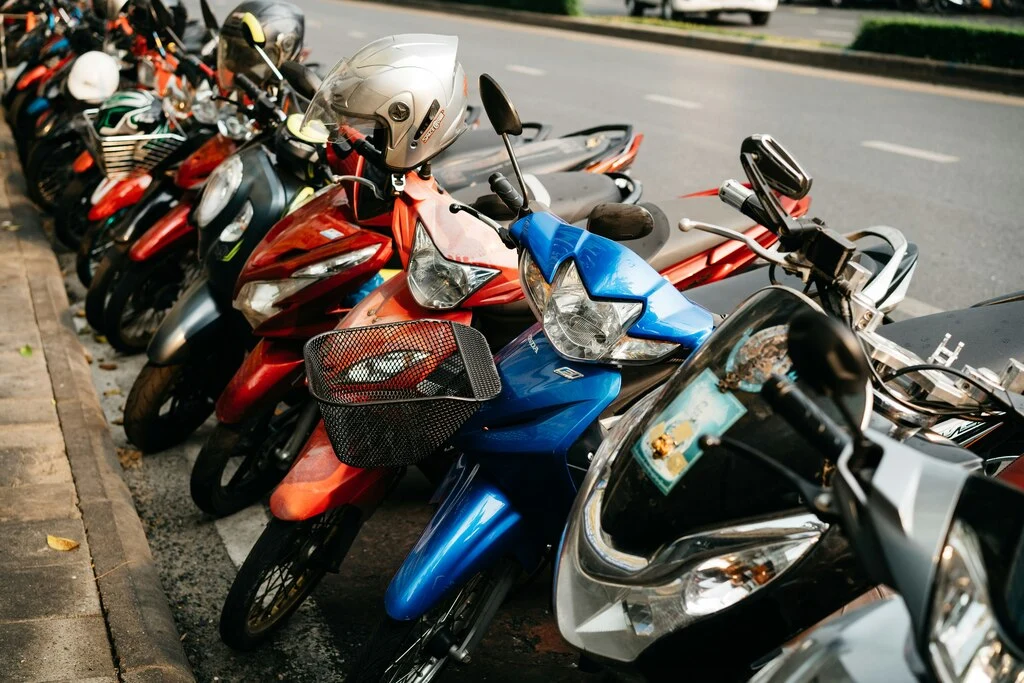
If you’re looking for an immersive experience that fully embraces Thai culture, renting a bike or scooter is the way to go. Scooters are everywhere in Thailand, and there’s something fitting about using one to explore the country. They’re perfect for zipping through traffic, navigating small villages, and experiencing the views without glass between you and the landscape. And let’s be honest, there’s something undeniably cool about cruising around on two wheels.
That said, some roads in the north are steep, winding, or poorly maintained, so you’ll want a bike with enough power to handle long distances and tough terrain. A 250cc or higher is ideal if you plan on riding all day with luggage. When renting, be upfront about your plans, let the shop know you’ll be doing long distances so they can recommend a reliable, well-maintained bike. Higher-powered models may cost a touch more, but it’s worth it to avoid engine strain or overheating issues on those mountain climbs.
Car
For those traveling in a group, carrying a lot of luggage, or simply wanting a more comfortable ride, a car is the better option. A car provides shelter from heat and rain, more storage space, and a safer, smoother experience on highways and mountain roads.
A couple of things to keep in mind: in Thailand, the steering wheel is on the right-hand side, which might take some adjusting. Also consider whether you prefer automatic or manual transmission, many rental cars in Thailand come with manual gear shifts by default, so ask specifically if you want automatic.
Both options offer a unique experience. It really comes down to what kind of adventure you’re looking for.
Vehicle Rental Suggestions
I have some suggestions below for scooter and car rentals in Chiang Mai. Whatever you choose, look for places with high ratings and plenty of reviews, that’s your best filter in a city full of options.
Scooter Rentals in Chiang Mai
– Mango Scooter Rental Chiang Mai (4.8 stars)
– Pop Big Bike Rental (4.4 stars)
Car Rentals in Chiang Mai
– Chiang Mai Car Rental by ChiangMaiWheels.com (4.9 stars)
– BudgetCatcher Rent A Car (4.6 stars)
My Experience
I originally didn’t plan on going on a 1-week northern Thailand road trip. Actually, I didn’t even know it was an option when I arrived. The idea first sparked when I heard about the beautiful town of Ban Rak Thai, someone was raving about how peaceful and stunning it is, and I decided I needed to see it for myself. After more digging, someone mentioned the Mae Hong Son Loop, and suddenly the plan started to take shape.
I can say with confidence that my 1-week northern Thailand road trip was a highlight of all my time in Thailand. I was expecting beauty, but I was genuinely blown away, by the rolling hills, the endless green farming fields, and the small villages bursting with energy and culture. Above all, by the generosity of the people and their excitement to share their home with a stranger. This trip took me away from the tourists to the unseen natural beauty of the north.
1-Week Northern Thailand Road Trip – My Final Takeaways
If you’re looking for a unique and beautiful way to explore Northern Thailand in its entirety, a one-week road trip is an amazing option to consider. Whether you’re going solo or experiencing the journey with a group, it will make a lasting impression. Have fun with it!
Yours, Shannon from Shannons Landing.
Key Takeaways
- Best months to visit: November to February, dry roads, cool temperatures, and clear skies.
- Full route distance: ~965km across 7 days, counter-clockwise loop starting and ending in Chiang Mai.
- Scooter rental cost: 200-300 THB ($5-8 USD) per day; choose 250cc or higher for mountain roads.
- Daily budget: 800-1,500 THB per person covers accommodation, food, and fuel.
- Longest driving day: Chiang Rai to Pai at 300km (186 miles), allow 5+ hours.
- Avoid burning season: Late February to April brings heavy smoke and poor visibility.
- Avoid rainy season: May to October, mountain roads become genuinely dangerous.
- Experience matters: Basic scooter or driving experience is essential; this is not a beginner route.
- Go offline early: Download Google Maps or Maps.me for every province before leaving Chiang Mai, signal drops completely in some mountain stretches.
- Carry cash: ATMs disappear quickly outside major towns. Stock up in Chiang Mai, Chiang Rai, and Pai.
- IDP required: An International Driving Permit is legally required; get one before you travel.
- Thailand drives on the left, factor that into your vehicle choice and comfort level.
Frequently Asked Questions
Do I need an International Driving Permit (IDP) for a road trip in northern Thailand?
Yes, an International Driving Permit is legally required to drive a car or motorcycle in Thailand. Get one from your national motoring authority before you travel, it’s cheap, quick to obtain, and rental shops will ask to see it alongside your home driving licence. Don’t skip this step; it also matters if you need to make an insurance claim after an accident.
Can I do the northern Thailand road trip on a scooter with no experience?
Not safely. The mountain roads between Pai and Ban Rak Thai involve steep gradients, hairpin bends, and occasional gravel patches that will catch out an inexperienced rider fast. Basic scooter experience, ideally including riding in traffic, is the minimum. If you haven’t ridden before, a car is the smarter and safer choice for this route. There’s no shame in it; the views are just as good from four wheels.
How many kilometres is the full 1-week northern Thailand road trip loop?
The full counter-clockwise loop from Chiang Mai covers approximately 965km (600 miles) across seven days. The longest single day is Chiang Rai to Pai at 300km (186 miles), and the shortest is Chiang Mai to Mae Kampong at just 51.5km (32 miles). Factor in frequent stops, the actual time on the road tends to run longer than Google Maps suggests.
What should I download or prepare before driving into remote northern Thailand?
Download offline Google Maps or Maps.me for every province on your route before leaving Chiang Mai, don’t assume you can do this on the road. Carry cash, since ATMs are scarce outside major towns. A local SIM with a data plan helps, but signal drops completely in some mountain stretches between Pai and Mae Hong Son. Also take photos of your rental agreement, IDP, and passport so you have backups if anything gets lost.
Is the Mae Hong Son Loop the same as this 7-day itinerary?
Not exactly. The Mae Hong Son Loop is a 3-4 day circuit through Mae Hong Son province. This 7-day itinerary is an extended version that includes the loop but adds Chiang Rai, Mae Kampong, and a longer stretch through the Golden Triangle area, giving you a much fuller picture of the north and including some of the region’s most iconic landmarks that the standard loop misses entirely.
Is this route suitable for a group or family?
Yes, with the right vehicle. A group traveling by car will find the route very manageable, there’s plenty of space for luggage, everyone stays comfortable through the mountain stretches, and the daily distances are reasonable. Families with young children should note that some of the longer driving days (especially Chiang Rai to Pai) are tiring, so building in extra rest stops helps. The highlights, national parks, temples, waterfall hikes, are genuinely enjoyable for a wide range of ages.
How much does the full northern Thailand road trip cost?
Budget roughly 800-1,500 THB per person per day, which covers accommodation, food, fuel, and entry fees at a comfortable pace. Scooter rental adds 200-300 THB per day per bike. Car rental varies more by vehicle type but typically starts around 800-1,200 THB per day for a compact automatic. Staying in guesthouses and eating local food keeps costs toward the lower end; boutique hotels and more restaurant meals push it higher.
What is the best direction to drive the northern Thailand road trip loop?
Counter-clockwise is the recommended direction, and the one used in this itinerary. Going counter-clockwise means you tackle the busier, more tourist-friendly destinations early in the week (Chiang Rai, Mae Kampong) before easing into the more remote, scenically dramatic stretches (Ban Rak Thai, Khun Yuam, Doi Inthanon) as the trip builds toward its finale. It’s a natural escalation, the views genuinely get better as the week goes on.



One Response
Great post, really captured the essence of a Northern Thailand road trip! Quick question: did you find the local restaurants easy to locate on the road, or would you recommend having a map or app handy? Also, any advice on car rental in that area? Thanks for sharing!