

What Are the Biggest Mistakes Digital Nomad Families Make?
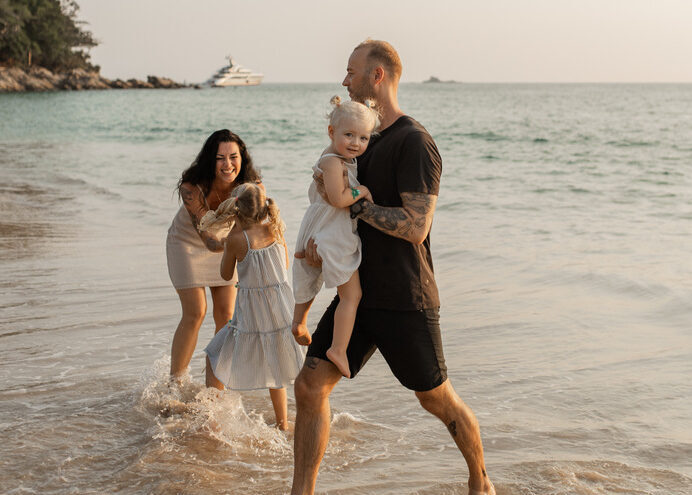
The biggest mistakes digital nomad families make are over-planning too far in advance, choosing the cheapest option over comfort, moving too frequently, and misjudging how much time visitors will demand. Financial mistakes, like underestimating family living costs and lacking a backup budget, are also common. After five years on the road with two kids, these are the lessons that cost the most money, energy, and nerves.
Do you want to avoid Digital Nomad mistakes at all costs? I hear you! Over the past five years as a Digital Nomad Family, we’ve made an insane amount of mistakes that have cost a lot of money, nerves, and time. But there were also some right decisions. Today, I want to share with you the 10 common mistakes made and the most important lessons learned from our life as a Digital Nomad Family.
Digital Nomad Mistakes You Should Avoid
1. The Cheapest Option Is Rarely the Right Option for Families
Sure, when you’re a backpacker couple traveling in your twenties, you have less of a problem with a noisy, dirty hotel room in the middle of the party district. As a Digital Nomad family of 4 with a baby and toddler, it’s different. A night of good sleep is worth so much more than saving a few dollars.
Of course, you don’t have to live large permanently. But treat yourself to something nice, especially after long trips or when you have to work a lot.
How to avoid it: Before booking, ask yourself: “Will this drain us or restore us?” If the answer is drain… pay a little more. Your productivity and your family’s mood will thank you.
2. Don’t Plan Too Far in Advance, It Will Cost You
This one has probably cost us the most money of all. I love booking houses, schools, hotels, and flights far in advance. But the life of a Digital Nomad is very flexible and sometimes unpredictable.
Maybe you want to stay longer in one place, but you can’t because you already planned the whole trip and paid for it. Or perhaps you decide to stay longer and have to pay high rebooking fees to the airline or even lose an entire stay on Airbnb. This is annoying and so expensive.
Therefore, decide, book, and pay in the short to medium term whenever it makes sense. Oh, I do not even want to add up how many flight and hotel vouchers we are sitting on worldwide.
How to avoid it: For flights, book no more than 6-8 weeks out unless there’s a genuinely unmissable deal. For accommodation, book 2-4 weeks ahead and keep your options flexible.
3. If Something Works Well, Stop Optimizing It
This sounds so boring, I know. But life as a Digital Nomad Family is exhausting enough. And when you’ve found a co-working space, a nanny, and an apartment you love? Stick with them.
Yes, maybe there’s a better option somewhere. Still, the next relocation is coming soon anyway, so you’ll have to plan everything again. Save your energy!
On the other hand, if you don’t like something, quit it as soon as possible. Sometimes, it’s more exhausting to think about renting another house than just doing it.

How to avoid it: Give yourself permission to stay loyal to what works. Constant optimization is its own kind of burnout.
4. Don’t Stay Too Short in One Place, Slow Travel Is the Answer
If you live a nomadic life with kids, do slow travel! We found out that three months in one place is the magic period: the effort of moving was worth it, you had enough time to get to know a place, and a bit of everyday life and routine could set in. At the same time, it’s still not long enough to get bored.
- My tip: As a Digital Nomad family, you can also spend six months or more in a country and change the place once. This way, you don’t have to adjust entirely to a new culture and language, but you can still explore a new area. We did this within Thailand several times. We stayed in Koh Phangan, Chiang Mai, and Koh Tao for longer periods.
- How to avoid it: When planning a new destination, book a minimum of 8 weeks from the start. You’ll thank yourself two weeks in when the kids have settled and you’ve found your rhythm.
5. Don’t Schedule Visitors When You’re Still New to a Place
Visitors in moderation are great. And even more so when you already know a place. Because visitors always mean work. The person has taken a long flight, spent money, and expects you to have unlimited time (and an activity schedule). It’s too bad if you’re busy organizing your new life at the moment. Stress is preprogrammed.
How to avoid it: Set a self-imposed rule: no visitors until you’ve been in a new place for at least four weeks. By then, you know where things are, you’ve settled in, and you can actually enjoy showing someone around.
6. Set Clear Expectations With Every Visitor, Every Time
Most people think that as a Digital Nomad family, you only sit on the beach and have a vacation. The fact that you work and have a daily routine is new to them. Therefore, communicate clearly what the visitor can expect and how much time you will have for them.
Even if it’s hard sometimes, you need to set boundaries. You know that the aunt is dependent and will be like another child to you? Then she should only come when you really have time and feel like it. Not when she can take a week off.

It is your life and your nerves!
How to avoid it: Before any visitor books their ticket, send them a friendly but honest message. Something like: “We work Monday to Friday until 2pm. After that, we’re all yours.” Clear expectations take care of 90% of the friction, really.
7. Don’t Expect Everyone at Home to Drop Everything for You
When we returned to Germany for the first time after 2.5 years, we thought that all our old friends and family would drop everything to spend time with us and take our children. Well, that wasn’t always the case, and we were quite frustrated in the end (of course, there were exceptions!).
Our conclusion: Just as we have an everyday life, the people “at home” also have a life with priorities. That’s okay. It also shows us again how important it is to set boundaries the other way around when we are visited.
8. Not Everyone Will Understand Your Lifestyle, And That’s Okay
This point was the hardest lesson. Why does the contact with the best friend flatten out? Why do I feel like I don’t understand them anymore? Have our conversations always been so superficial? Why do they get so upset about such trivialities?
It is pretty normal for people to change, especially when their lifestyles are so far apart. No one will understand how you felt when you waited for 6 hours with two children in the immigration office, wondering if you would be allowed to stay in the country. Hardly anyone can understand how lonely you sometimes feel when you arrive in a new place and don’t know anyone.
Likewise, the problems and feelings of the people back home feel so far away and often incomprehensible to you.
It is totally normal that not all relationships can withstand this dramatic life change. But the great thing is that some even become closer or reach a new level. Please don’t be frustrated, but be grateful for every deep connection (I know, easier said than done!).
9. Be Selective About Who Gets Your Time and Energy
Speaking of relationships, the topic of social interaction and friends is a huge one for Digital Nomads. Every time we move to a new place, we start from scratch (unless we’ve been there before and already have a social network). We don’t know other families and have no sports buddies or cool co-workers.
As a family, you have less time for friends anyway, so choose your relationships wisely! Don’t invest your time in the loud, self-centered personalities who only decorate themselves with the next sparkling “friend” or party. Look for real people who have the potential to become long-lasting friendships.
For us as a Digital Nomad family, that means being alone a lot more than others. But when we make connections, they are real. And we don’t give them away anymore.
10. In Each Place, Find One Thing Worth Pursuing
The significant advantage of being a Digital Nomad Family is being in so many new places. The nice thing is that every area has something different to offer. So use it!
Are you living in a surfing location for the next three months? Get on the board! Your new home is in the middle of the jungle? Find a guide and learn about the botanic.
My husband learned freediving in Koh Tao, I started drawing in Chiang Mai, and our 5-year-old went to a nature class every week in the jungle of Koh Phangan.
On the other hand, it can be very frustrating when you’re desperately trying to continue a hobby in a place that wasn’t made for it. And isn’t it nice to learn something new?!
The Money Mistakes That Hit Families Hardest
Budget planning as a solo nomad and as a family are two completely different sports. The cost of living in a new place is easy to underestimate when you’re calculating for four people, not one. School fees, bigger apartments, family-size transport, and the simple fact that kids get sick more often than adults all add up fast.
Have a financial buffer that covers at least two months of full expenses. And use more than one credit card, because the day your primary card gets blocked in a country with no English-speaking bank helpline is a day you will not forget.
Also: do your research before you land. Some places that look cheap on paper (looking at you, certain European capitals) are genuinely expensive once you factor in family-friendly housing and schooling.
School, Routines, and Kids Who Need Stability
One of the most underestimated mistakes nomad families make is treating kids’ routines as negotiable. They’re not. Children, especially younger ones, need predictability to feel safe. When you’re moving every few weeks, that predictability has to come from YOU, not from the place.
If you’re worldschooling, have a loose but real curriculum. Even 90 minutes of focused learning time each morning makes a huge difference. If you’re enrolling in local or international schools, research them before you book your accommodation, not after. School availability shapes where you can realistically stay.
And if you’re unsure about the schooling question entirely, read up on worldschooling properly before you go. It’s not just “learning from life”, it requires structure and intention.
Final Thoughts: Reliable Infrastructure Matters Too
Living the digital nomad lifestyle is exciting, but we’ve learned some lessons the hard way. Here are my top tips to avoid big mistakes and make your journey smoother.
First, research the cost of living in different places. We underestimated expenses in some spots, which strained our budget. Have a solid financial plan, including multiple credit cards for emergencies. Manage your travel expenses wisely and have a backup plan for unexpected costs. Understand the differences in handling finances abroad versus at home.
Reliable internet is a must for remote work. Invest in good setups or find coworking spaces and coffee shops with strong Wi-Fi. Balancing work and travel is key; set work hours so you can still enjoy new destinations.
Staying healthy on the road is important. Regular check-ins with healthcare providers and travel insurance can save you a lot of trouble. Also, engaging with the local culture and community enriches your experience. Join digital nomad groups to make new friends and get local tips.
What were your biggest mistakes or best decisions as a Digital Nomad? I’m curious! Let me know in the comments!
Thank you for reading and for making me part of your day!
Yours, Lulu
Key Takeaways
- Stay 3 months minimum in each place. It’s the sweet spot between effort and reward.
- Book short to medium term. Long-term plans cost money when life changes, as it always does.
- Budget for 4 people, not 1. Costs multiply fast when you add school fees, bigger apartments, and family transport.
- Set clear expectations with every visitor, every time. They don’t know you work. Tell them before they book.
- Protect your energy: quit bad situations early. Staying in a bad apartment or a draining friendship costs more than leaving.
- Slow travel beats constant moving for families. Your kids need rhythm. So do you.
- Real friendships matter more than a large social circle. Quality over quantity becomes non-negotiable on the road.
- Find one new thing to learn in every destination. It’s one of the best parts of this life. Use it.
Frequently Asked Questions
How long should a digital nomad family stay in one place?
Three months is the sweet spot for most digital nomad families. It’s long enough to settle into a routine, find good schools or learning options, and feel like you actually lived somewhere rather than just passed through. Six months works well too, especially if you split the stay between two areas of the same country.
What are the biggest financial mistakes digital nomad families make?
The most common financial mistakes are under-budgeting for family-sized costs (bigger apartments, school fees, family transport), booking too far in advance and losing money on rebooking fees, and not having a financial backup plan. Carrying only one payment method is another costly error when cards get blocked abroad.
Can you bring your family with a digital nomad visa?
Most digital nomad visas allow dependents (spouse and children) to accompany the primary visa holder, but the rules vary significantly by country. Thailand’s LTR visa, for example, explicitly covers dependents. Always check whether dependents need their own visa application, separate fees, or proof of schooling before you travel.
How do digital nomad families handle schooling for their kids?
Digital nomad families typically use one of three approaches: worldschooling (learning through travel and a structured home curriculum), enrolling in local international schools for longer stays, or using online schooling platforms. The key mistake to avoid is treating schooling as an afterthought. Research your options before booking your next destination, not after.
Do digital nomad families pay taxes?
Yes, digital nomad families still pay taxes, though where and how much depends on citizenship, residency, and how long you stay in each country. Many countries have tax treaties that prevent double taxation. A tax professional who specializes in expats or digital nomads is worth every cent for families with multiple income streams.



2 Responses
Hi there!
I have just found your blog while searching in the net for digital nomad with kids and I am very moved by it for very personal reasons. My family of husband + wife and two kids aged 12 and 10 have just returned this last Saturday to Berlin from a one gap year where we have traveled Africa and India but also spent quality time in our home country Spain and in Portugal.
We have worked as digital nomads during this year and homeschooled our kids who enrolled in a Spanish online school and despite having the best year of our lives, it was not always easy. There are big black spots caused by stress trying to find a balance between work, sight see and homeschool (oh! these horrible assignment dates!) Now our gap year is almost ending (we came back to our home in Berlin so that kids find peace to learn and prepare for their final exams in May) and we have to decide our next move.
I just simply do not want to go back to our old life in Berlin so we have considered to move back to Spain, but then, there again we will fall back into the system of the sedentary lifestyle with all what it involves (maybe a job at a physical address, for sure kids in a physical school with all ups and downs.) There is so much we have gained during this year on the move, I just do not wish to give all that up! So I am looking for ways to convince by skeptic and very much against husband to continue at least for one year more moving around. So far our kids say yes to that (which is a big plus). My husband biggest concern is that we are taking old friends away from our kids and we are not allowing new friendships to grow by constantly moving around. Well, he has certainly a point. Our kids are older now! So my big question comes: how do you connect with other similar minded digital nomads when you travel? Via FB? Do you go to Coworking spaces and look out for other families there? To coffee shops? If we can get the certainty that our kids will get to make new friends on travels, he might change his mind.
Hi Cristina, thank you so much for your comment and thank you for your openness! Your story sounds very interesting and exciting! You’ve definitely had more homeschooling experience in that gap year than we have. Our kids are still little, after all.
To your question “How do you find contacts?”: Yes, you got it right, Facebook plays a big role. What has worked well for us so far is to make a Facebook post even before we arrive at a place. For this, we just picked out the local groups for digital nomads or local families. Many places also have special meet-ups for teen families. Here in Koh Phangan, for example, there is a really big community of families with older children who meet regularly (even the kids alone with supervision, it’s called “Teens of Phangan”). My conclusion: You definitely can’t go wrong with another year! If you are worried about not getting enough connections, then you should put some energy into it and actively search for these communities. To be honest, I rather had the experience that it became too much social activity for me sometimes, and I was happy to hang out just with my family for a week. 😀